
Millions of dollars in luxury timepieces change hands annually, yet most owners leave significant value on the table by choosing the wrong liquidation channel. According to recent market data, private sales and specialized auction houses often yield 20 to 40 percent higher returns than traditional pawn shops or generic online marketplaces. This gap exists because specialized buyers understand the nuanced history, condition, and provenance that drive collector demand. If you are asking where can I sell luxury Swiss watches for the best price, the answer lies in finding a buyer who prioritizes accurate identification and fair market valuation over quick, low-ball offers.
Understanding What Drives Watch Value
Before you list a watch, you must understand what makes it valuable. A Rolex Submariner from 1965 is not just a tool watch; it is a historical artifact with specific dial characteristics that collectors hunt for. Similarly, a Patek Philippe Nautilus commands a premium due to its scarcity and iconic design. The value of a luxury watch is determined by brand prestige, model rarity, condition, and originality.
Originality is the single most critical factor in valuation. A watch with its original box, papers, and service history will always command a higher price than one without. This is because provenance reduces risk for the buyer. When you sell to a knowledgeable dealer, they can verify these details instantly. This verification process is why specialized buyers like Hess Fine Art can offer more accurate valuations than automated online tools.
Market trends also play a role. While some models appreciate over time, others may fluctuate based on economic conditions. However, the core value of Swiss craftsmanship remains stable. Understanding these dynamics helps you set realistic expectations. It also helps you identify when a buyer is offering a fair price versus a low-ball offer designed to exploit your lack of knowledge.
Comparing Your Selling Options
There are several avenues for selling luxury watches, each with distinct advantages and disadvantages. Choosing the right one depends on your priority: speed, convenience, or maximum profit.
Private Sales
Selling to an individual buyer on platforms like eBay or Chrono24 can sometimes yield the highest price. However, this method requires significant effort. You must handle photography, listing creation, customer service, and security. There is also the risk of fraud or disputes. For most owners, the time investment outweighs the marginal price increase.
Auction Houses
Auctions are ideal for rare, high-end, or historical pieces. They provide access to a global pool of serious collectors. However, auctions come with seller fees, which can range from 10 to 25 percent. Additionally, there is no guarantee your watch will sell. If it does not meet the reserve price, it remains unsold. This uncertainty makes auctions less suitable for standard luxury models.
Specialized Dealers
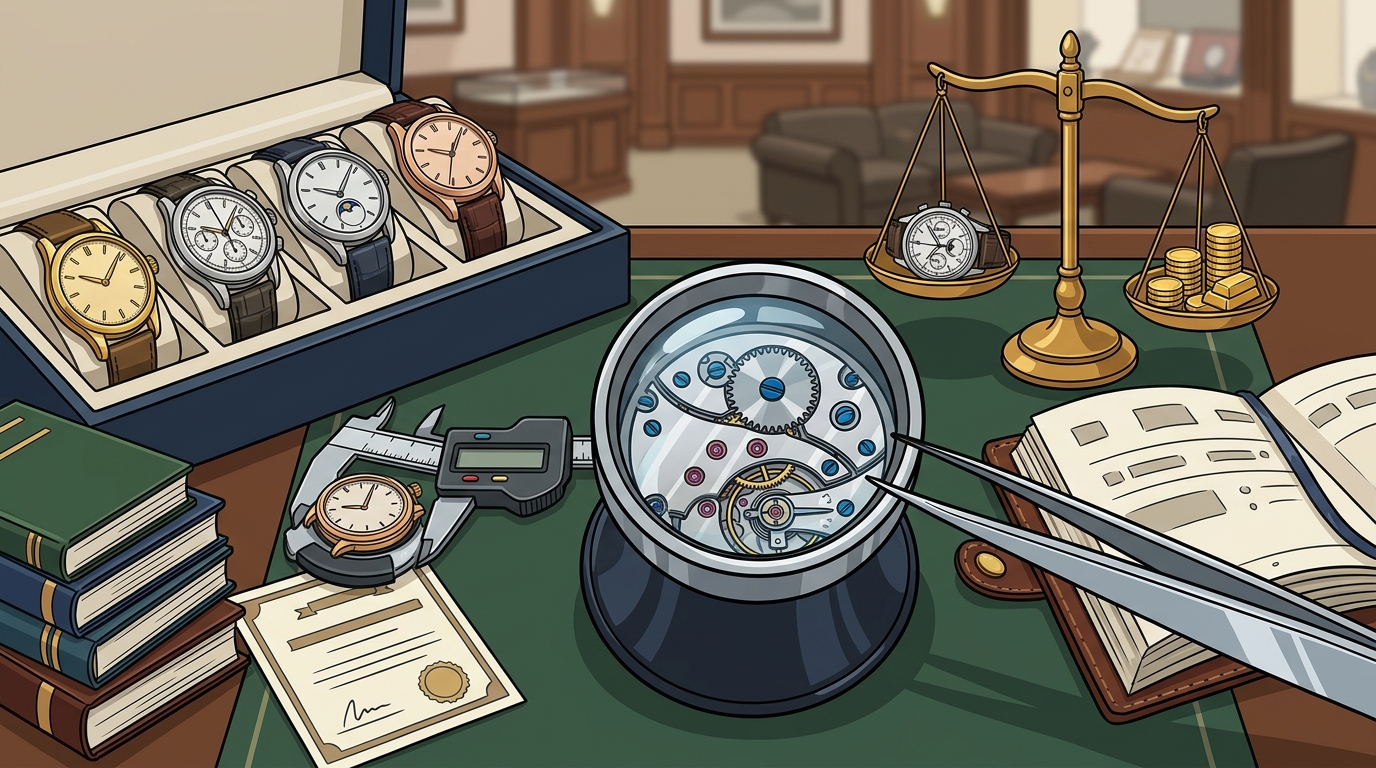
Selling to a specialized dealer offers the best balance of speed, security, and fair value. Dealers like those at Hess Fine Auctions have immediate access to a network of buyers. They can pay cash on the spot, eliminating the wait for auction results or private buyer payments. Because they resell these items regularly, they have a clear understanding of current market rates.
General Pawn Shops
While convenient, general pawn shops often lack the expertise to value luxury watches accurately. They may offer significantly less than the market value because they need to resell the item at a large markup to make a profit. This option should be considered a last resort for immediate cash needs.
The Role of Expert Evaluation
The accuracy of your valuation depends entirely on the expertise of the person evaluating your watch. A GIA Graduate Gemologist or a certified watch appraiser can identify subtle details that affect value. For example, a replaced crystal or a non-original dial can reduce a watch's value by 30 percent or more. Only an expert can spot these issues immediately.
At Hess Fine Art, the staff includes certified professionals who specialize in luxury timepieces. They use a rigorous evaluation process that considers the watch's history, condition, and market demand. This expertise allows them to offer fair prices that reflect the true worth of your timepiece. Their reputation as a top buyer in the USA is built on this commitment to accuracy and fairness.
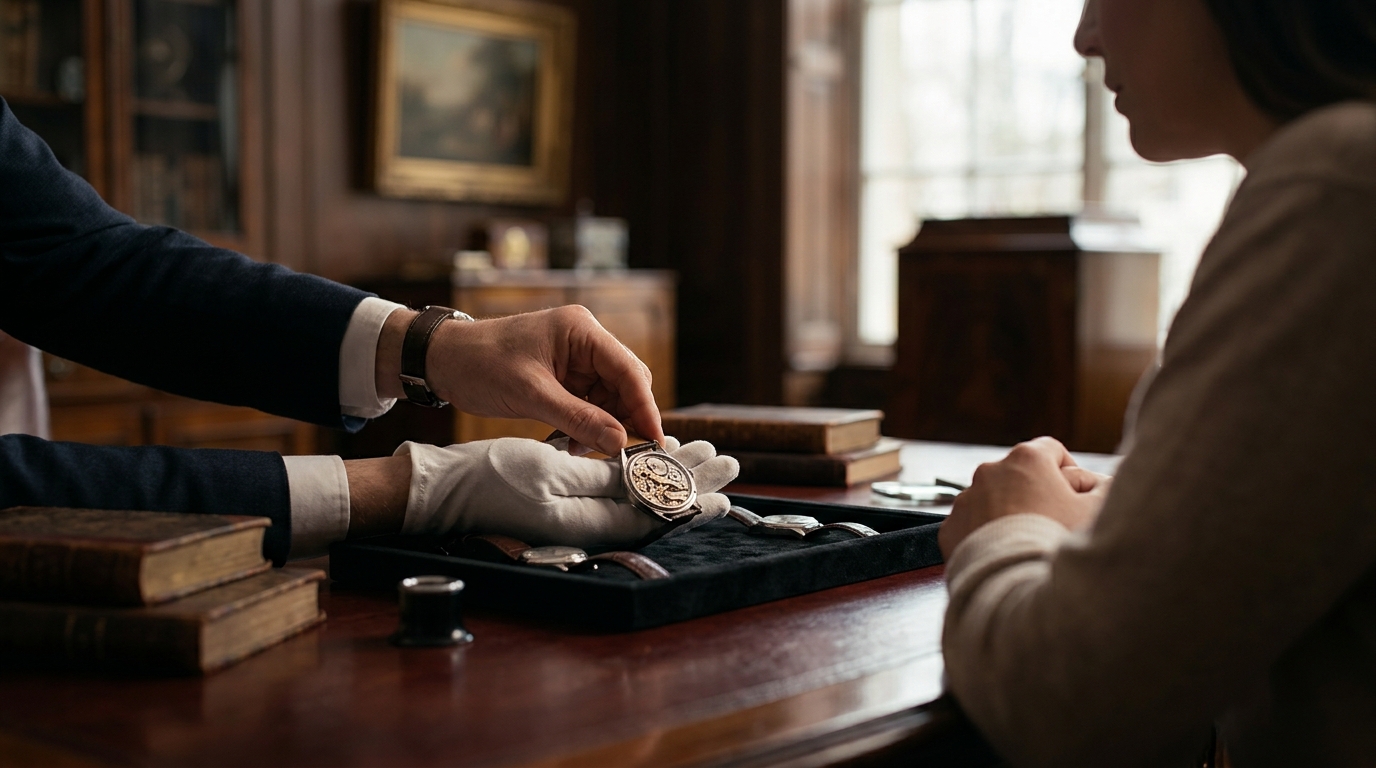
When you visit a specialized dealer, expect a thorough inspection. They may use magnification to check the movement, verify serial numbers, and assess the case condition. This process ensures that the offer you receive is based on facts, not guesswork. It also protects you from being misled by unqualified buyers.
Preparing Your Timepiece for Sale
Proper preparation can significantly impact the price you receive. Start by gathering all original documentation, including the warranty card, service records, and original box. These items prove the watch's authenticity and history. If you have lost any items, do not worry. A reputable dealer can still provide a fair offer based on the watch itself.
Clean the watch gently before your appointment. Use a soft, dry cloth to remove dust and fingerprints. Do not attempt to clean the movement or disassemble any parts. Improper cleaning can cause damage that reduces value. If the watch is in need of service, consider whether it is worth the cost. Often, dealers will factor service needs into their offer, so it may be better to sell it as-is.
Research your watch model online to understand its current market value. Look at recent sales of similar models to get a baseline. This knowledge empowers you during negotiations. However, remember that online prices are often retail or auction estimates, not what dealers pay. Use this information to gauge whether an offer is reasonable.
Key Takeaways
- Specialized Dealers Offer Fair Value: Buyers with expertise in luxury watches can identify accurate market values, often paying more than general pawn shops.
- Provenance Matters: Original boxes, papers, and service records significantly increase a watch's resale value.
- Expertise is Critical: Certified appraisers and gemologists can detect subtle issues that affect price, ensuring you are not underpaid.
- Speed vs. Profit: Private sales may yield slightly more but take longer. Specialized dealers offer immediate cash with competitive pricing.
- Auctions for Rare Pieces: High-end, rare, or historical watches may perform better at auction, but fees and risks are higher.
- Market Knowledge: Understanding current trends helps you set realistic expectations and negotiate confidently.
- Trust Your Buyer: Choose a dealer with a strong reputation, such as Hess Fine Art, for a transparent and honest transaction.
Frequently Asked Questions
How do I know if my watch is worth selling?
If your watch is a recognized luxury brand like Rolex, Patek Philippe, or Audemars Piguet, it likely has resale value. Even vintage or less common brands can be valuable to collectors. The condition and originality will determine the final price.
Do I need the original box and papers to sell?
No, you do not need the original box or papers to sell your watch. However, having them can increase the offer. A reputable dealer can still provide a fair price based on the watch's condition and model.
How long does the selling process take?
Selling to a specialized dealer is typically immediate. You can receive a cash offer on the spot. Auctions may take several months, while private sales can take weeks or months depending on the buyer.
What is the difference between a dealer and an auction house?
Dealers buy watches directly from you, offering immediate cash and convenience. Auction houses sell your watch to the highest bidder, which may result in a higher price but involves fees and waiting time.
Can I sell a watch that needs repair?
Yes, you can sell a watch that needs repair. The dealer will factor the cost of repairs into their offer. It is often better to sell it as-is to avoid paying for repairs that may not be recovered.
How do I verify a dealer's reputation?
Check for professional affiliations, such as the International Watch & Jewelry Guild (IWJG) or the National Association of Watch and Clock Collectors (NAWCC). Read customer reviews and look for industry recognition.
What types of watches do specialized buyers purchase?
Specialized buyers purchase a wide range of luxury watches, including Rolex, Omega, Cartier, Patek Philippe, and vintage pieces. They also buy jewelry, coins, and other collectibles.
Get Your Instant Offer
Do not leave money on the table by selling to an unqualified buyer. Contact Hess Fine Art today to receive a fair, expert evaluation of your luxury Swiss watch. Our team of certified professionals is ready to help you navigate the selling process with confidence and transparency. Visit our contact page or call us to schedule an appointment.