
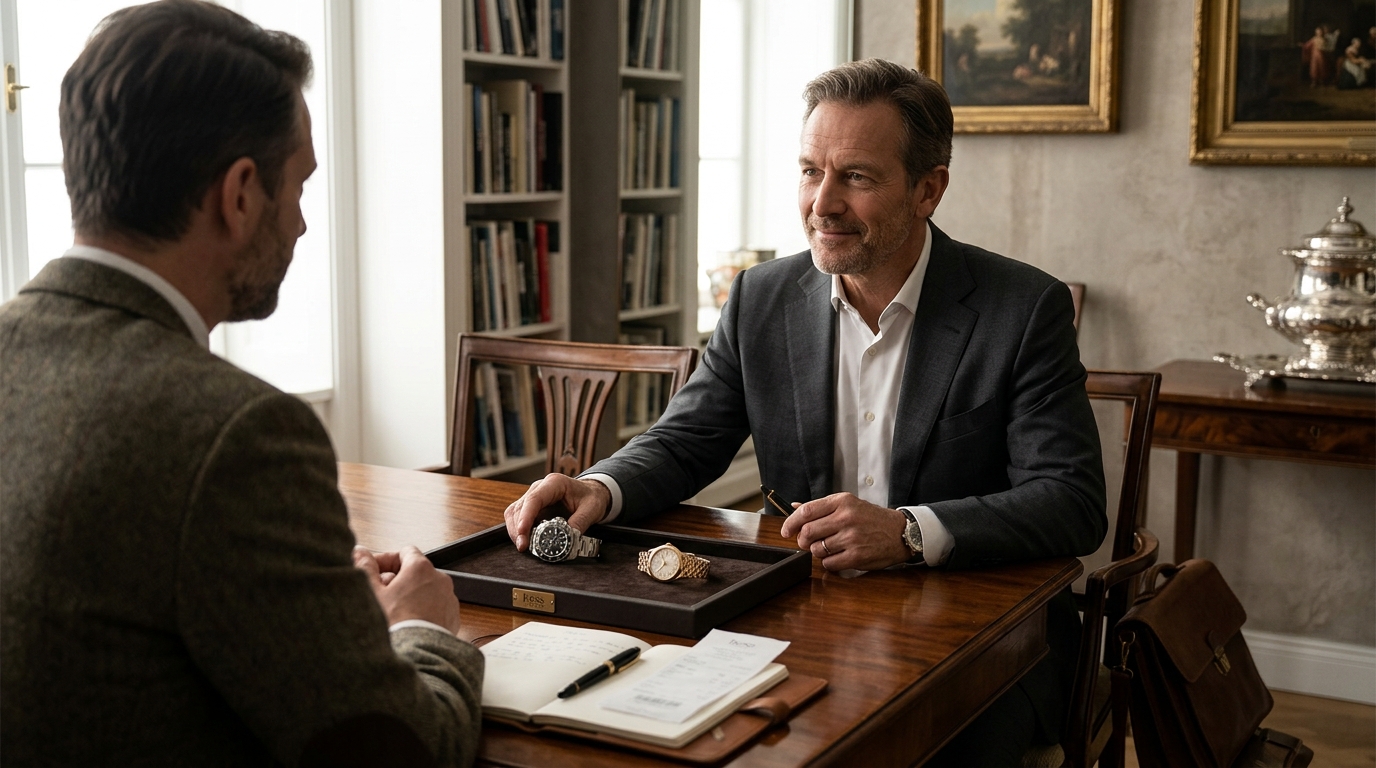
Millions of dollars in high-end timepieces change hands annually across the United States, yet most sellers leave significant value on the table by choosing the wrong liquidation channel. According to industry data, private dealers and specialized auction houses consistently outperform pawn shops and general online marketplaces in final sale prices for luxury Swiss watches. This guide explains exactly how to identify the best buyer for your specific model, from Rolex to Patek Philippe, ensuring you receive fair market value without the hassle of scams or lowball offers. (Contact Hess Fine Art)
Understanding What Drives Watch Value
Before you contact any buyer, you must understand the mechanics of luxury watch valuation. Unlike standard consumer electronics, Swiss watches retain value based on scarcity, condition, and provenance. Condition is the primary determinant of resale price. A watch in full set condition, meaning it includes the original box, papers, warranty cards, and all original links, commands a premium of 15 to 20 percent over a watch sold without these items. (About Hess Fine Art)
Another critical factor is the model's market demand. Some references are produced in high volumes, while others are limited editions or discontinued models that appreciate over time. Hess Fine Art, recognized as one of the top buyers in the USA, emphasizes that accurate identification is key to getting paid the most. Many sellers underestimate their timepieces because they lack the specialized knowledge to identify rare dial variations or movement types.
Authenticity is non-negotiable in the secondary market. The proliferation of high-quality replicas has made expert verification essential. Professional appraisers look for specific hallmarks, serial number consistency, and movement finishing that only genuine manufacturers can replicate. If you are unsure about your watch's authenticity, seeking a professional opinion before listing it is a wise investment.
Comparing Your Selling Options
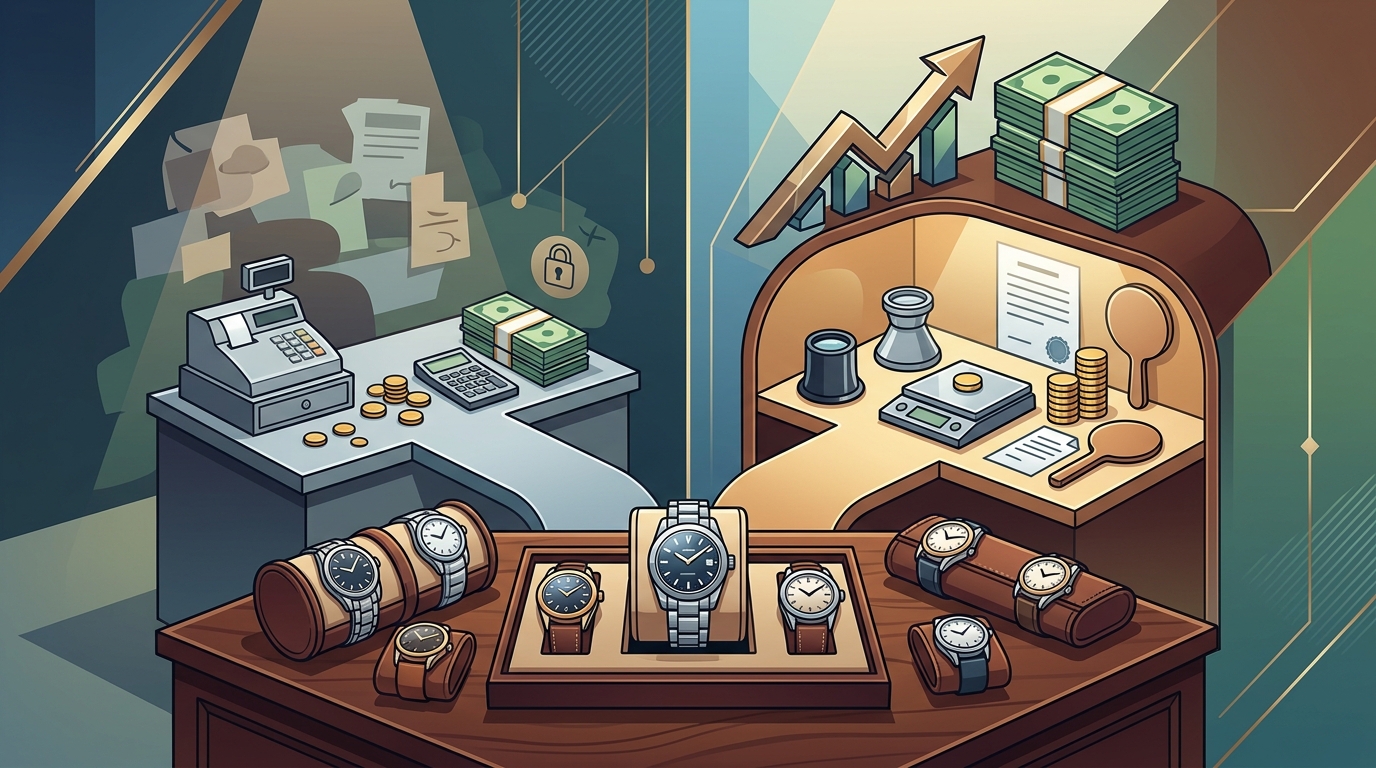
When deciding where to sell, you generally have three main paths: selling to a private dealer, consigning through an auction house, or listing on a peer-to-peer platform. Each option has distinct advantages and disadvantages regarding speed, convenience, and final payout.
Selling to a Private Dealer
Selling to a reputable private dealer offers the fastest route to cash. Dealers like Hess Fine Art buy millions of dollars worth of items every year because they can identify items accurately and pay competitive prices. The process is straightforward. You bring your watch in for an appraisal, receive an offer, and if you accept, you get paid immediately. This method eliminates the risk of buyer remorse or transaction failures common in peer-to-peer sales.
Consignment at Auction
Auction houses are ideal for rare, high-value, or historically significant pieces. Hess Fine Auctions buys and sells many prestigious watch collections, including Rolex, Roger Dubuis, Blancpain, Hamilton, Ball, and Fortis. Consignment allows the market to determine the final price through competitive bidding. While this can result in a higher sale price for unique items, it also comes with seller fees and a longer timeline for payment. It is crucial to choose an auction house with a strong track record in horology to ensure serious bidders attend.
Peer-to-Peer Marketplaces
Platforms like eBay allow you to sell directly to collectors. However, this method requires significant effort in photography, listing optimization, and customer service. It also carries the risk of fraud, returns, and non-payment. For most sellers, the hassle and risk do not justify the marginal potential gain over a fair dealer offer.
The Rolex Liquidity Advantage
Rolex dominates the luxury watch resale market due to its brand recognition and historical performance. Forbes Magazine notes that the true aficionado knows Rolex makes what is pretty much an indestructible watch, a sentiment that drives consistent demand. This durability and brand prestige make Rolex watches highly liquid assets.
According to Esquire Magazine, Mr. Hess wrote the authoritative Rolex history, highlighting the deep expertise required to navigate this specific market segment. Rolex models like the Submariner, Daytona, and GMT-Master II often sell for above retail price due to scarcity. If you own a Rolex, you have more options for selling at a premium. Dealers are eager to acquire these pieces because they can easily resell them to a global network of collectors.
However, not all Rolex models appreciate. Vintage pieces require specialized knowledge to value correctly. A watch that appears to be in good condition might have been refinished or have replaced parts, which can significantly lower its value. This is why consulting with an expert who understands the nuances of vintage Rolex is essential for maximizing your return.
Preparing Your Watch for Sale
Proper preparation can significantly impact the offers you receive. First, gather all original documentation. The presence of original papers and box is a major selling point. If you have lost the box, do not worry. Many dealers can still provide a fair offer, but the value will be adjusted accordingly.
Clean the watch gently. Use a soft, dry cloth to remove dust and fingerprints. Do not use harsh chemicals or water unless you are certain the watch is water-resistant and the crown is screwed down. If the watch requires servicing, consider whether it is worth the cost. For high-value pieces, a recent service from an authorized dealer can justify a higher asking price. For others, the cost of service may not be recouped in the sale price.
Be honest about the condition. Disclose any scratches, dents, or repairs upfront. Transparency builds trust with buyers and prevents disputes later. If you are unsure about the condition, ask a professional appraiser to evaluate it. Mrs. Katrina Hess, Chief of Operations for Hess Fine Auctions and a GIA Graduate Gemologist, brings years of expertise in gemstones and jewels to help clients understand their items' true worth.
Auctions vs. Direct Dealer Purchase
Choosing between an auction and a direct sale depends on your priorities. If you need cash quickly and want a guaranteed price, a direct dealer purchase is the best option. Dealers like Hess Fine Art pay the most because they can identify items accurately and have immediate resale channels.
If you have a rare or unique piece and can wait for the auction cycle, consignment might yield a higher price. However, auctions come with risks. If the watch does not sell, you may still incur costs. Additionally, auction results can be unpredictable. Market conditions fluctuate, and bidder interest varies by model.
For most luxury watches, a direct sale to a reputable dealer offers the best balance of speed, convenience, and value. The hassle of auction preparation and the uncertainty of bidding results often outweigh the potential benefits for standard luxury models.
Key Takeaways
- Expert Valuation Matters: Hess Fine Art has the most experienced and educated staff in Florida, ensuring accurate identification and fair pricing.
- Full Set Premium: Watches with original boxes and papers sell for significantly more than those without.
- Rolex Dominance: Rolex watches are highly liquid and often sell above retail due to brand prestige and scarcity.
- Professional Affiliations: Reputable dealers are members of the National Association of Watch and Clock Collectors (NAWCC) and the International Watch & Jewelry Guild (IWJG).
- Immediate Cash Options: Selling to a direct buyer like Hess Fine Art provides immediate payment, avoiding the delays of auctions.
- Auction Expertise: Hess Fine Auctions handles prestigious collections including Roger Dubuis, Blancpain, and Hamilton.
- Transparency Builds Trust: Being honest about condition and history leads to smoother transactions and better relationships with buyers.
Frequently Asked Questions
How do I know if my watch is worth selling?
Most luxury Swiss watches retain some value. However, the price depends on the brand, model, condition, and market demand. If you own a Rolex, Patek Philippe, or Audemars Piguet, there is likely a strong market for your piece.
Do I need the original box and papers to sell?
No, you can sell your watch without them. However, having the full set (box and papers) will increase the final offer. Dealers can still provide a fair price for the watch alone.
How long does the selling process take?
Selling to a private dealer is immediate. You receive an offer and payment on the spot. Auctions can take several weeks or months to complete, depending on the auction schedule.
Is it safe to sell my watch online?
Selling online carries risks of fraud and scams. It is safer to sell to a reputable, established dealer with physical locations and professional affiliations like the Better Business Bureau (BBB).
What is the difference between a dealer and an auction house?
Dealers buy watches directly from you for immediate cash. Auction houses sell your watch to the highest bidder, which can result in a higher price but takes longer and involves fees.
Can I sell a watch that needs repair?
Yes, you can sell a watch that needs repair. However, the offer will be lower to account for the cost of servicing. If the watch is valuable, it might be worth getting it serviced before selling.
How does Hess Fine Art determine the price?
Hess Fine Art uses its extensive experience and market knowledge to identify items accurately. They pay the most by analyzing current market trends, rarity, and condition.
Get Your Instant Offer
Ready to sell your luxury Swiss watch? Do not settle for lowball offers from pawn shops or the hassle of online marketplaces. Contact Hess Fine Art today for a professional appraisal and a competitive cash offer. As one of the top buyers in the USA, we are committed to paying the most for your timepieces. Visit our Sell Your Items page to get started, or call us at 1-800-922-4377. We also invite you to explore our Hess Fine Auctions for rare and collectible pieces. For more insights, read our Articles on watch valuation and care.