
How to Evaluate the Condition of Antique Furniture for Sale
Evaluating antique furniture requires a shift from modern consumer expectations to historical appreciation. According to industry data from the National Association of Watch and Clock Collectors, collectors prioritize originality and structural integrity over cosmetic perfection. This focus on authenticity drives the market for pieces that have survived centuries of use. Understanding these nuances is critical for anyone looking to invest in or sell high-value items through platforms like Hess Fine Auctions.
1. Assessing Structural Integrity and Joinery
The foundation of any antique piece lies in its construction methods. Modern furniture relies heavily on staples, nails, and glue. Antique furniture, particularly pieces from the 18th and 19th centuries, utilizes complex joinery techniques that are both durable and repairable. When evaluating a piece, you must look for evidence of these traditional methods.
Checking for Loose Joints
Gently attempt to rock the piece. A stable antique should feel solid. If you hear creaking or feel movement, the joints may be loose. This is often repairable, but it indicates wear. Check the corners of tables and chairs. Mortise and tenon joints should be tight. If the tenon has pulled out, the structural integrity is compromised.
Identifying Joinery Types
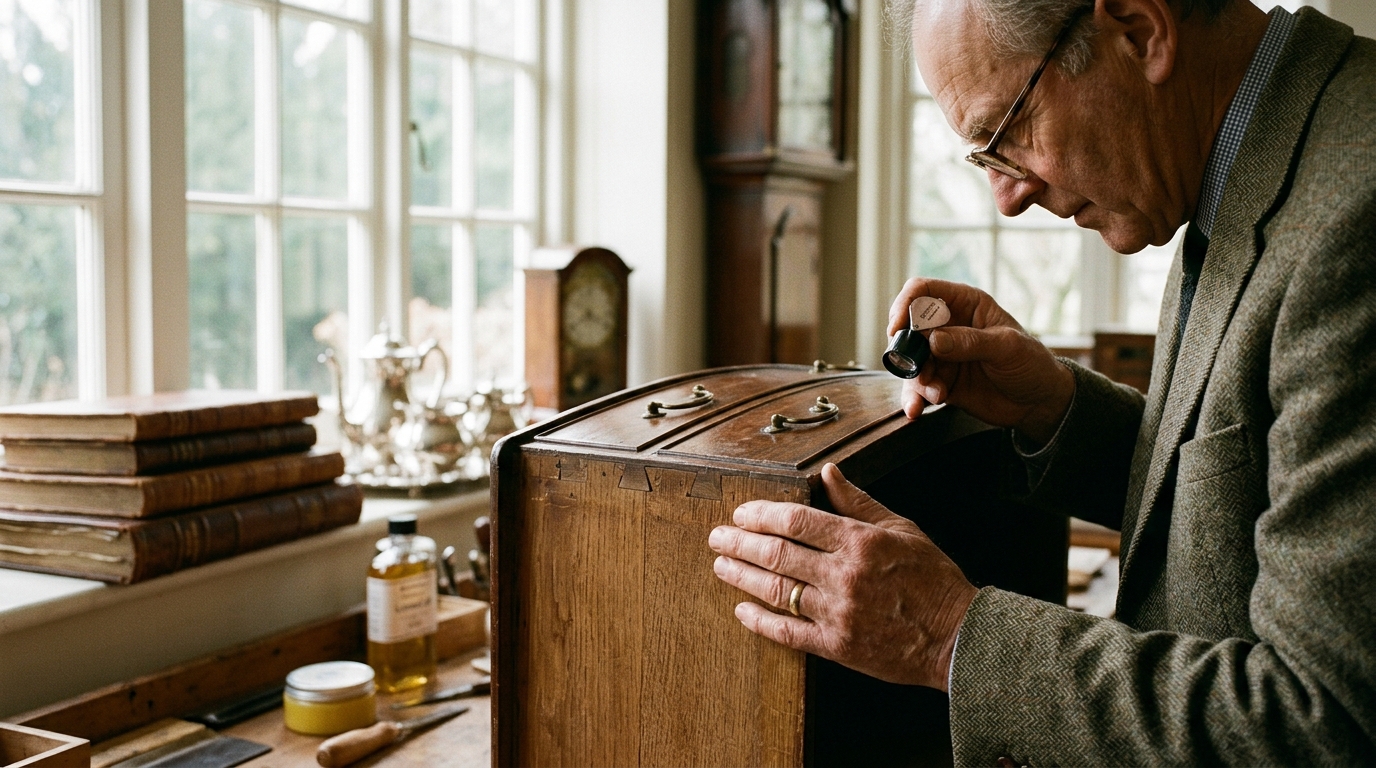
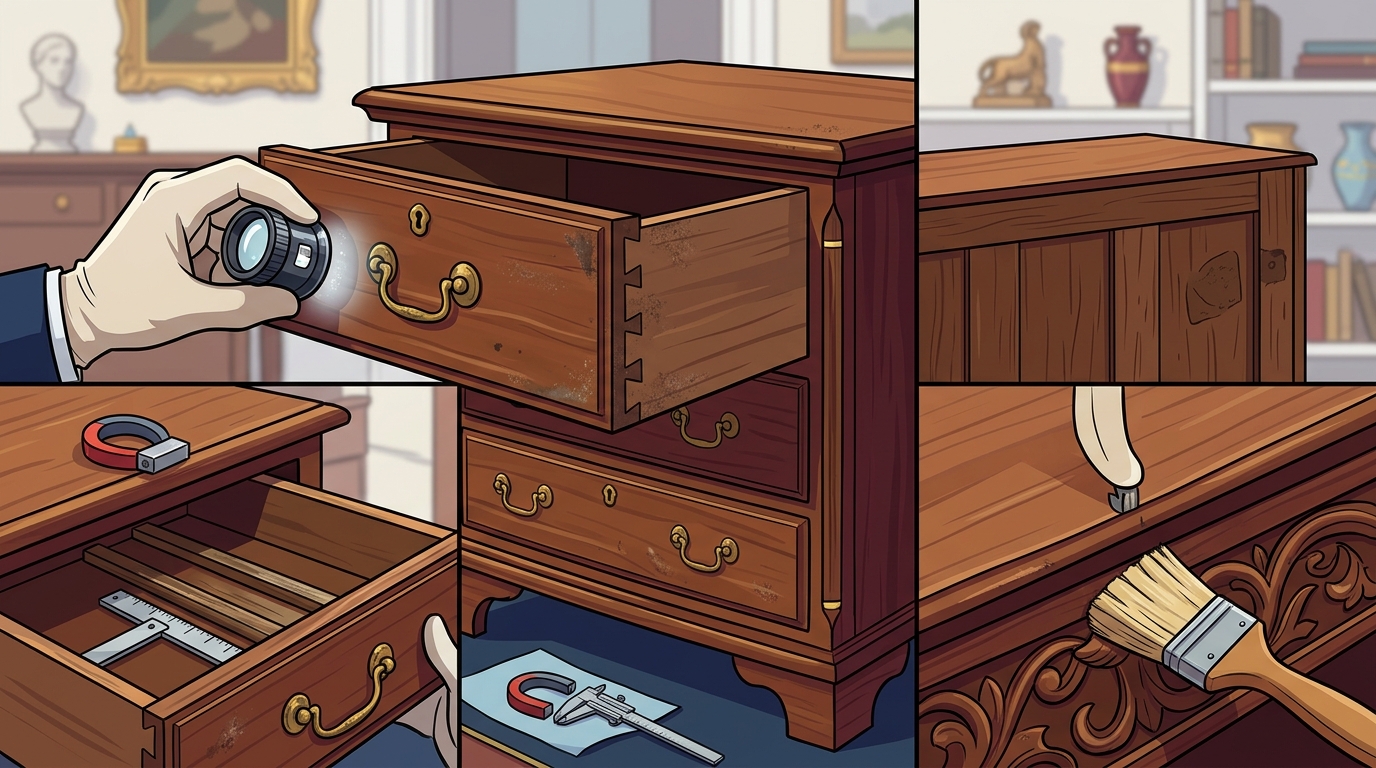
Dovetail joints are a hallmark of quality antique craftsmanship. They interlock like the fingers of two hands. If you find dovetails in the drawers, it suggests a higher-quality piece. Conversely, the presence of machine-cut dovetails can help date the piece. Uniform, machine-cut dovetails typically indicate production after the mid-19th century. Hand-cut dovetails, which vary slightly in size and spacing, are characteristic of earlier, more labor-intensive work.
For more insights on evaluating collectible items, explore our articles section which covers various appraisal topics.
2. Identifying Original Wood and Grain Patterns
Understanding the wood type is essential for accurate valuation. Different woods were used in different eras and regions. Mahogany, walnut, and oak were popular in American and European antiques. Rosewood and satinwood were often used for inlay work during the Regency period.
Verifying Wood Authenticity
Look at the back, bottom, or inside of drawers. These hidden areas often reveal the true wood type. If the front is a high-quality veneer but the back is pine or poplar, this is normal for many antiques. However, if the entire piece is described as solid mahogany but the back shows signs of being a different wood, verify the description. Original wood is the primary driver of value.
Spotting Veneers
Veneers are thin slices of expensive wood glued to a cheaper base. They are common in high-quality antiques. Check the edges for seams. If the veneer is peeling or bubbling, it requires restoration. Minor peeling is common and fixable. Large-scale delamination significantly reduces value. Always inspect the underside of tables and the backs of chairs for veneer application.
For expert guidance on wood identification, consider consulting with professionals at Hess Fine Art who specialize in material analysis.
3. Distinguishing Patina from Refinishing
Patina is the surface appearance that develops over time due to age, handling, and exposure. It is a combination of oxidation, dirt accumulation, and wear. Collectors highly value original patina because it tells the story of the piece. Refinishing, while sometimes necessary for preservation, often destroys this historical narrative and reduces value.
What is Patina?
Patina is the subtle sheen and color change on the surface of wood or metal. It is not dirt. It is a result of the wood's pores absorbing oils from hands and the environment. A good patina feels smooth and slightly raised. It should look like it belongs to the piece, not like a coat of paint.
Identifying Refinishing
Refinished pieces often look too perfect. The color may be uniform and lack the depth of aged wood. Check for "hot spots" where the finish is thicker or shinier. These areas often indicate where previous owners attempted to repair damage. Use a blacklight if possible. Old finishes react differently to ultraviolet light than modern polyurethanes or lacquers. If the piece glows uniformly under UV light, it has likely been refinished with modern materials.
Understanding the difference between restoration and refinishing is crucial. For a deeper dive into preservation techniques, read our guide on antique care and maintenance.
4. Examining Hardware and Decorative Details
Hardware such as hinges, locks, and handles can provide critical dating clues. Original hardware is often hand-forged and shows signs of file marks or irregularities. Machine-made hardware is uniform and smooth. Replacing original hardware with reproductions can significantly lower the value of a piece.
Inspecting Locks and Keys
Check if the locks operate smoothly. Original locks are often complex and may require specific keys. If the lock is missing or broken, note this in your evaluation. Sometimes, the key is still inside. Never force a lock. If it resists, it may be rusted or misaligned. Professional restoration can often repair these mechanisms without damaging the surrounding wood.
Looking for Maker's Marks
Maker's marks are stamps or labels found on the back or bottom of furniture. They identify the cabinetmaker or manufacturer. A known maker's mark can increase value dramatically. Use a magnifying glass to inspect hidden areas. Common marks are found on the underside of drawers or on the back panel. If you find a mark, research it carefully. Provenance adds immense value.
For assistance with identifying maker's marks and provenance, contact our team at Hess Fine Art.
5. Recognizing Common Defects and Repairs
No antique is perfect. Understanding the difference between acceptable wear and significant damage is key. Some defects are cosmetic and do not affect value. Others are structural and require expensive restoration.
Acceptable Wear
Wear on high-touch areas is expected. Look for wear on chair arms, table edges, and drawer fronts. This wear should be consistent with the piece's age. If the wear looks recent or inconsistent, it may be fake distressing. Fake distressing is a modern technique used to make new furniture look old. It often looks too uniform or artificial.
Significant Damage
Cracks in the wood are common. Small, hairline cracks are usually stable and do not affect value. Large, structural cracks that compromise the integrity of the piece are more concerning. Check for insect damage. Look for small holes or frass (sawdust-like material). Active infestation is a major red flag. It requires immediate treatment and can spread to other pieces.
For professional assessment of damage and repair options, visit our sell your items page to schedule an appraisal.
6. Key Factors Influencing Valuation
Valuation is not just about condition. It is a combination of condition, rarity, provenance, and market demand. A piece in perfect condition may be worth less than a piece in good condition if the latter is rarer or has a famous history.
| Factor | High Value Indicator | Low Value Indicator |
|---|---|---|
| Condition | Original finish, tight joints, minimal repair | Refinished, loose joints, extensive repair |
| Provenance | Documented history, famous owner, maker's mark | No history, unknown origin, generic style |
| Rarity | Unique design, limited production, rare wood | Mass-produced, common style, abundant supply |
| Market Demand | Trending style, collector interest, auction results | Outdated style, low demand, oversupply |
Understanding these factors helps you make informed decisions. For real-time market insights, check our auction results for recent sales of similar items.
Key Takeaways
- Originality is Key: Pieces with original finish and hardware command higher prices than refinished counterparts.
- Joinery Matters: Hand-cut dovetails and mortise-and-tenon joints indicate quality construction and older age.
- Patina vs. Refinish: A natural patina adds character and value. Refinishing often destroys historical integrity.
- Hidden Details: Inspect the back, bottom, and inside of drawers for wood type, maker's marks, and construction methods.
- Damage Assessment: Distinguish between cosmetic wear and structural damage. Structural issues are more costly to repair.
- Provenance Adds Value: Documented history or famous ownership can significantly increase a piece's worth.
- Professional Appraisal: For high-value items, seek expert evaluation to ensure accurate valuation and preservation advice.
Frequently Asked Questions
How do I know if an antique is real or a reproduction?
Look for signs of hand craftsmanship, such as irregular dovetails, tool marks, and natural wear patterns. Reproductions often have uniform, machine-made features and artificial distressing. Check for maker's marks and provenance documentation.
Is it bad if an antique has been refinished?
Refinishing can be necessary for preservation, but it often reduces value. Original finish is highly prized by collectors. If a piece has been refinished, ensure the work was done professionally to maintain its aesthetic appeal.
What should I look for when buying antique furniture online?
Request detailed photos of the back, bottom, inside of drawers, and any damage. Ask for the dimensions and condition report. Be wary of pieces with poor lighting or hidden flaws. Consider purchasing from reputable auction houses or dealers who provide guarantees.
How do I clean antique furniture safely?
Use a soft, dry cloth to dust regularly. Avoid water and harsh chemicals. For polishing, use a high-quality beeswax-based polish sparingly. Never use silicone-based polishes as they can damage the finish over time. Consult a professional for deep cleaning or restoration needs.
What is the most valuable type of antique furniture?
Value depends on rarity, condition, and provenance. Pieces by famous cabinetmakers, such as Chippendale or Hepplewhite, are highly valuable. Rare woods like rosewood and mahogany also command high prices. Unique designs and historical significance add to the value.
Can I sell my antique furniture if it is damaged?
Yes, many damaged pieces have value. Collectors often look for restoration projects. However, the value will be lower than a piece in good condition. Be honest about the damage when selling. Provide clear photos and descriptions of the issues.
How often should I appraise my antique furniture?
It is advisable to appraise your collection every five to ten years, or after significant life events such as marriage, divorce, or inheritance. Market values fluctuate, and regular appraisals ensure you have up-to-date information for insurance or sale purposes.
Contact Us for Appraisal
Evaluating antique furniture is a complex process that requires expertise and experience. At Hess Fine Art, we provide professional appraisal services for antiques, art, and collectibles. Our team of experts can help you determine the value of your items and guide you through the selling process. Contact us today to schedule an appointment and discover the true worth of your collection.