
Shipping high-value artwork requires precision, specialized materials, and a deep understanding of logistics. According to industry data, improper packaging accounts for nearly 60% of all art damage claims during transit. This statistic highlights why professional handling is not just a preference but a financial necessity for sellers. When you are moving pieces worth thousands or millions, standard courier services are insufficient. You need a strategy that prioritizes physical protection, climate control, and verified insurance. This guide outlines the exact steps to ensure your art arrives in pristine condition.
Step 1: Assessing Artwork and Documentation
Before you touch a box, you must document the current state of the artwork. This process creates a baseline for any potential claims. Take high-resolution photographs from multiple angles. Include close-ups of any existing flaws, cracks, or previous restorations. This evidence is critical if damage occurs during shipping.
Art is defined as a diverse range of cultural activity centered on creating works that have a primary purpose of being appreciated for their beauty or emotional power. Because this definition is broad, the documentation must be equally specific. Create a detailed inventory list that includes the title, artist, medium, dimensions, and current market value. Keep this documentation with you during the packing process.
At Hess Fine Art, we emphasize that accurate identification is the first line of defense. If you are unsure about the condition or value of your piece, consult with experts before shipping. Our team at Hess Fine Art provides professional appraisals that can serve as the foundation for your shipping documentation.
Step 2: Professional Packaging Materials
Standard bubble wrap and cardboard are dangerous for expensive art. Moisture and pressure can cause irreversible damage. You must use acid-free materials to prevent chemical reactions that yellow paper or degrade canvas over time.
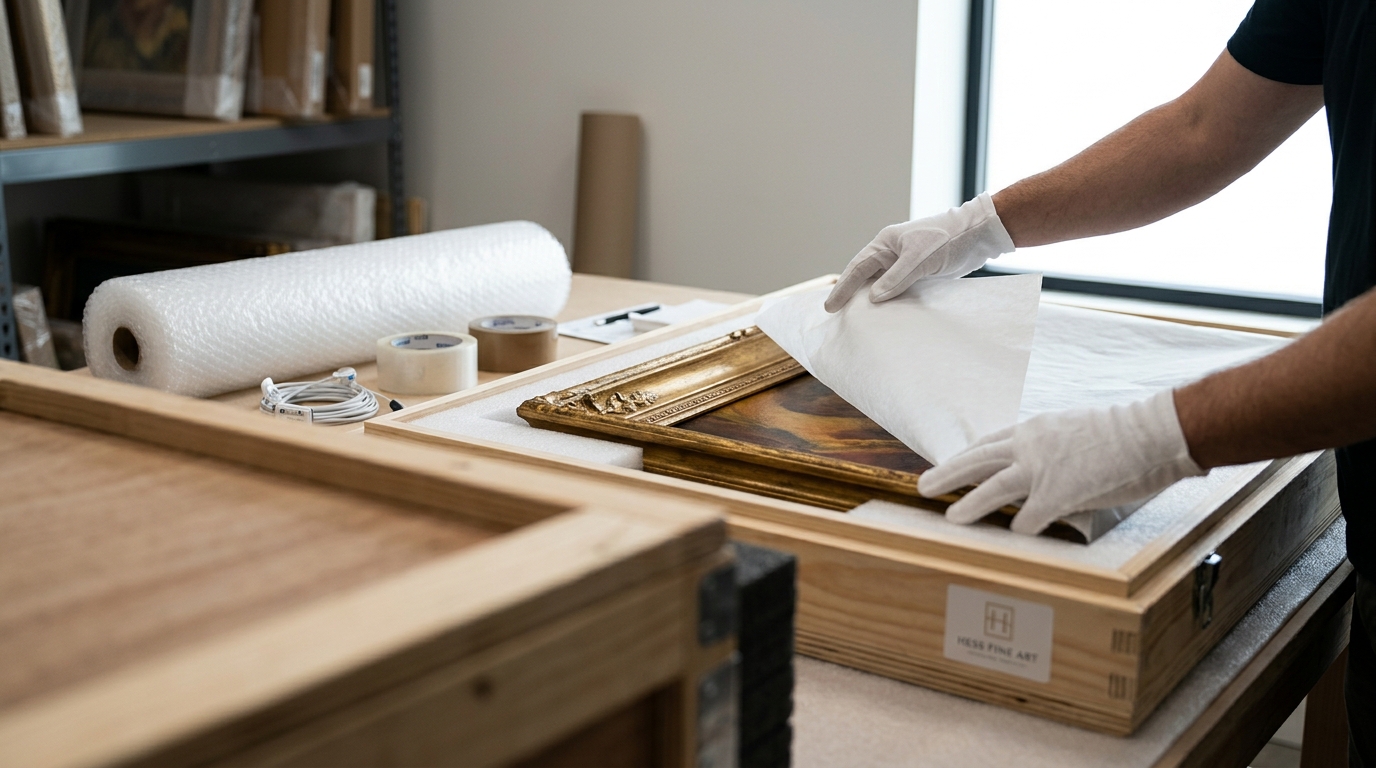
For framed paintings, start by covering the surface with glassine paper. This material is acid-free and prevents the paint from sticking to the protective layer. Next, apply a corner protectors to all four corners of the frame. These protect the most vulnerable points from impact. Wrap the entire frame in multiple layers of bubble wrap, ensuring the bubbles face inward toward the frame to cushion the surface.
For unframed canvases, use rigid backing boards. These boards prevent the canvas from bending or puncturing. Secure the canvas to the board with acid-free tape. Then, wrap the entire assembly in a waterproof plastic sheet. This step is crucial because water damage is a leading cause of art loss during transit. According to conservation reports, humidity fluctuations can cause canvas to expand and contract, leading to paint flaking.
For sculptures or three-dimensional objects, use foam inserts to fill all voids. The object must not shift inside the box. If the object has delicate protrusions, build a custom foam cage around them. This technique ensures that the weight of the box is distributed evenly, rather than resting on fragile parts of the sculpture.
Step 3: The Importance of Custom Crating
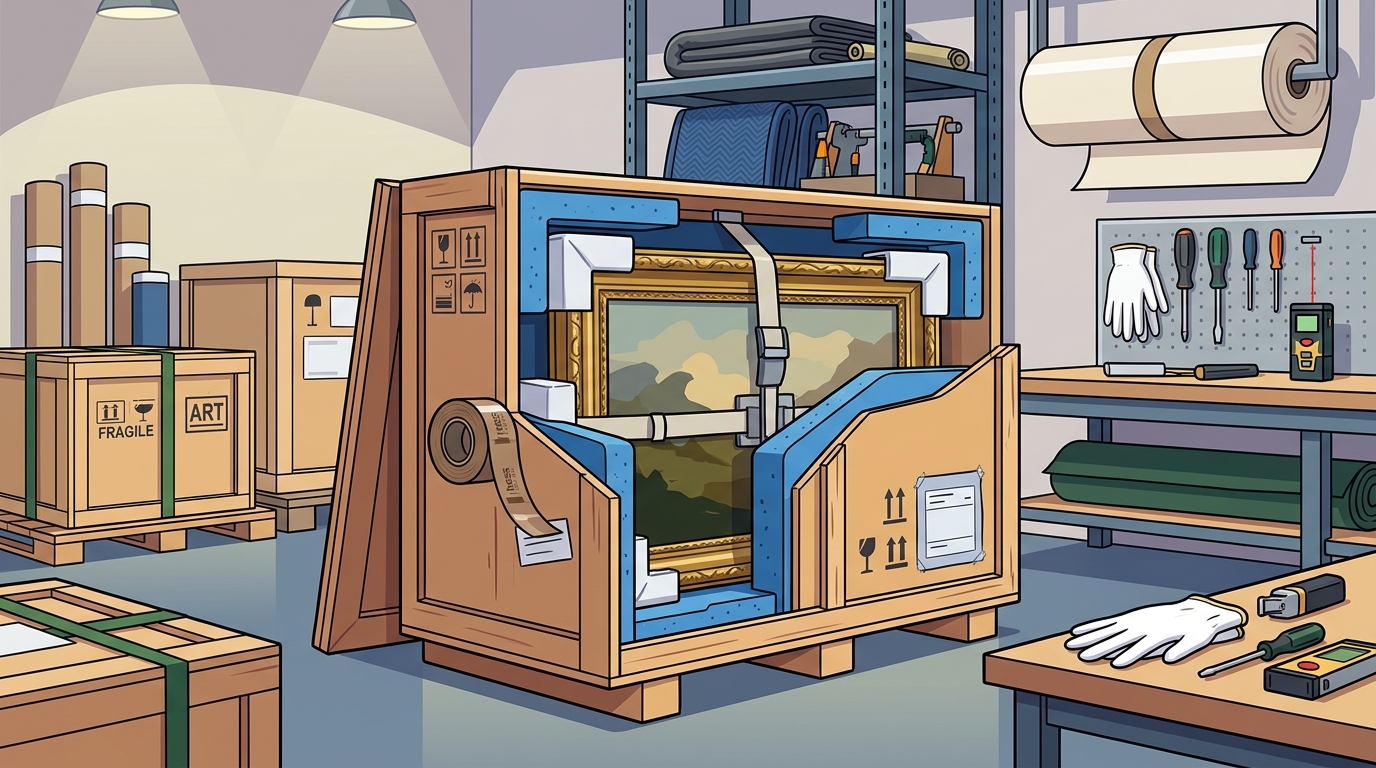
For high-value items, custom wooden crates are the gold standard. A crate is a rigid, protective enclosure made of wood or other durable materials. Unlike a box, a crate is built specifically for the dimensions and weight of the artwork. This custom fit eliminates movement during transit.
The crate should be lined with foam or felt to prevent scratches. Use vibration-dampening materials between the artwork and the crate walls. This layer absorbs the shock of bumps and drops. For extremely valuable pieces, consider a climate-controlled crate. These crates maintain a stable humidity and temperature, protecting sensitive materials like wood panels or oil paintings from environmental stress.
At Hess Fine Auctions, we utilize museum-grade crating for all high-value consignments. This level of protection ensures that your items are treated with the utmost care. If you are selling through an auction house, ask about their crating standards. Professional auctioneers often have established relationships with specialized art shippers who understand these requirements.
Step 4: Insurance and Valuation
Never ship expensive art without adequate insurance. Standard homeowner’s policies often have low limits for off-premises items. You need a specialized fine art insurance policy that covers the full agreed value of the piece.
Agreed value insurance means that the insurer agrees to pay a specific amount in the event of a total loss. This avoids disputes over market value at the time of the claim. Ensure the policy covers "nail-to-nail" protection. This means coverage begins the moment the artwork is picked up and ends only when it is delivered to the final destination.
Keep all receipts, appraisals, and shipping documentation in a separate, secure location. If a claim is filed, you will need to prove the value and condition of the item. According to financial data, insured shipments have a significantly lower rate of loss due to the rigorous handling protocols required by insurers.
Step 5: Choosing the Right Carrier
Not all carriers are created equal. For expensive art, you must use a specialized art logistics provider. These companies have experience handling fragile, high-value items. They use climate-controlled vehicles and white-glove delivery services.
White-glove delivery means the carriers will unpack the crate, remove the artwork, and place it in the desired location. They will also handle the packing materials, leaving your space clean. This service is essential for large or heavy pieces that require multiple people to move safely.
Track your shipment in real-time. Use GPS tracking to monitor the location of your artwork at all times. If the shipment deviates from the planned route, contact the carrier immediately. At Hess Fine Art, we can assist you in connecting with trusted logistics partners who understand the nuances of art transportation.
Frequently Asked Questions
How much does it cost to ship expensive art?
Costs vary based on distance, size, and insurance value. Specialized art shippers typically charge between $500 and $5,000 for domestic shipments. International shipping can exceed $10,000 due to customs and climate control requirements.
Can I ship art myself using a standard courier?
No. Standard couriers do not offer the necessary protection or insurance for high-value items. The risk of damage is too high. Always use a specialized art logistics provider.
What is the difference between a crate and a box?
A box is a generic container that may allow movement. A crate is a custom-built, rigid enclosure that fits the artwork perfectly, eliminating movement and providing superior protection.
How do I insure my artwork for shipping?
You need a specialized fine art insurance policy. Standard homeowner’s insurance is insufficient. Contact an art insurance specialist to get a "nail-to-nail" policy that covers the full agreed value.
What should I do if my art is damaged during shipping?
Document the damage immediately with photos. Contact your insurance provider and the carrier. Do not attempt to repair the item yourself. Preserve all packaging materials as evidence.
How long does it take to ship art internationally?
International shipping can take anywhere from two weeks to two months. This includes customs clearance, which can be unpredictable. Plan your timeline accordingly.
Do I need to remove the art from the frame?
For most paintings, it is safer to ship them framed with proper corner protection. However, for extremely valuable or fragile pieces, experts may recommend removing the canvas from the frame to prevent frame damage.
Protect Your Collection with Expert Guidance
Safely shipping expensive art is a complex process that requires expertise, precision, and careful planning. By following these steps, you can minimize the risk of damage and ensure your artwork arrives in perfect condition. If you are looking to sell your art, jewelry, or collectibles, consider working with established experts who understand the value of your items.
Sell your items to Hess Fine Art and benefit from our experienced staff and fair valuations. We are one of the top buyers in the USA, known for our honesty and expertise. Contact us today to discuss your needs.