

Deciding how to liquidate high-value assets like luxury watches, fine art, or rare collectibles requires more than just finding a buyer. It demands a strategic approach that maximizes return while minimizing risk. According to recent market analyses, the secondary market for luxury goods has grown significantly, with collectors increasingly seeking specialized channels to ensure fair valuation. The choice between a private sale and a public auction fundamentally alters the timeline, the final price, and the level of control you retain over the transaction. Understanding these mechanics is essential for owners of Rolex timepieces, estate jewelry, or significant art collections.
Understanding the Options: Private Sale vs. Auction
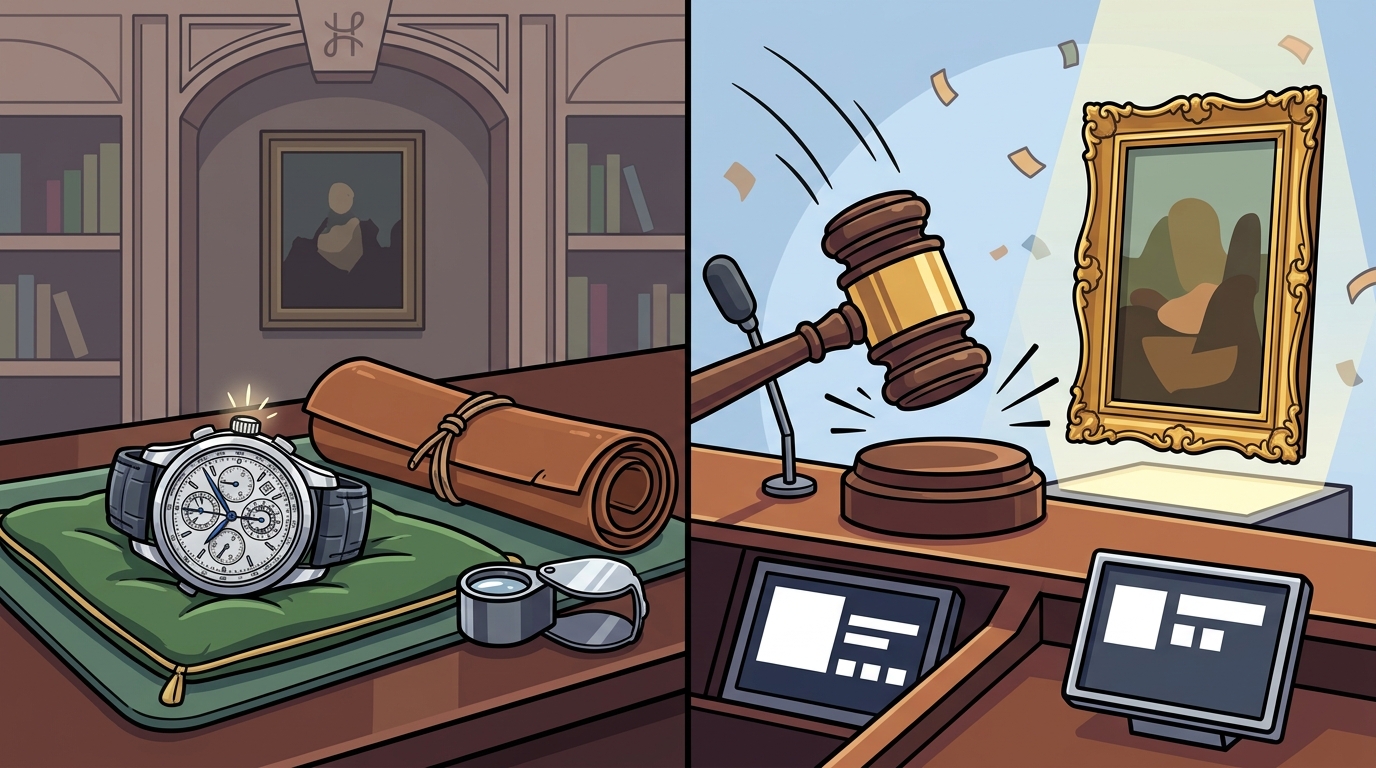
The primary distinction lies in the mechanism of the sale. A private sale, often facilitated by a reputable dealer or auction house acting as a buyer, involves a direct negotiation between the seller and a single entity. This method is characterized by discretion and certainty. In contrast, an auction is a public bidding process where multiple buyers compete for the item. This dynamic can drive prices above expectations but introduces the volatility of market sentiment on the day of the sale.
For owners of vintage watches or rare numismatic coins, the choice depends heavily on the item's rarity and the urgency of the sale. Private sales are ideal for items where a specific, knowledgeable buyer is already identified or where privacy is paramount. Auctions are better suited for unique pieces that may attract competitive bidding from a global audience, potentially unlocking premium value that a single buyer might not offer.
Speed and Liquidity: Which Method is Faster?
Time is often the most critical factor for sellers liquidating inherited estates or downsizing collections. Private sales typically offer the fastest route to liquidity. When you sell directly to a specialized buyer like Hess Fine Art, the transaction can be completed in a single visit. There is no waiting for auction catalogs to be printed, marketing campaigns to run, or bidding periods to conclude. The funds are often available immediately upon agreement.
Auctions, by comparison, follow a rigid timeline. From consignment to cataloging, marketing, the live event, and finally, payment processing, the process can take several months. While this delay allows for broader exposure, it is not suitable for sellers who need immediate cash flow. For urgent liquidation needs, the direct purchase model provides a significant advantage in speed and convenience.
Pricing and Value: Guaranteed vs. Market-Driven
The most significant difference between these methods is how the final price is determined. In a private sale, the price is negotiated and agreed upon before the transaction is finalized. This provides certainty. You know exactly what you will receive, eliminating the risk of the item failing to meet its reserve price. This is particularly valuable for items with established market values, such as luxury Swiss watches or graded rare coins.
Auctions operate on a market-driven model. The final price is determined by the highest bid at the end of the event. While this can result in a windfall if multiple bidders compete, it also carries the risk of a low final price or no sale at all. The value is contingent on the specific buyers present, their financial motivation, and the overall economic climate on that day. For items with highly variable market values, an auction can sometimes yield higher returns, but it is never guaranteed.
Audience and Exposure: Reaching the Right Buyer
Exposure is a double-edged sword. Auctions provide access to a global network of collectors, dealers, and investors. This broad exposure is crucial for niche items that may not have a ready buyer in your local area. For example, a rare piece of fine art or a specific vintage jewelry set may attract significant interest from international collectors who are actively seeking such pieces.
However, broad exposure is not always necessary. Many high-value items have a well-defined market of specialized buyers. In these cases, targeting a specific dealer or auction house with a focused clientele can be more effective than a general public auction. Specialized buyers often have deeper knowledge of the item's provenance and condition, leading to more accurate valuations. They also operate with a higher degree of discretion, which is important for many high-net-worth individuals.
Costs and Fees: Commission Structures Explained
Understanding the cost structure is vital for calculating your net return. Private sales typically involve a straightforward purchase price. The buyer assumes the risk of resale, so they may offer a price slightly below the ultimate retail market value. However, there are usually no hidden fees or commissions deducted from your payout. This transparency makes it easy to calculate your exact proceeds.
Auctions, on the other hand, involve multiple layers of costs. Sellers typically pay a seller's commission, which can range from 10% to 25% of the final hammer price. Additionally, there may be cataloging fees, marketing costs, insurance premiums, and storage fees. These costs can significantly erode the final profit, especially for items that do not sell for high prices. It is essential to request a detailed breakdown of all fees before consigning an item to an auction house.
Risk and Security: Protecting Your Assets
Security is a paramount concern when dealing with high-value items. Private sales conducted by reputable firms offer a high level of security. The items are often appraised and purchased in a secure environment, reducing the risk of loss or damage during transit or display. Furthermore, the transaction is private, protecting your identity and the details of your sale from public record.
Auctions introduce additional risks. Items must be transported to the auction house, displayed publicly, and potentially shipped to the winning bidder. While reputable auction houses have robust insurance and security protocols, the risk of loss or damage is inherently higher. Additionally, the public nature of auctions means that the existence and value of your assets become known to a wider audience, which may be a concern for some sellers.
Key Takeaways
- Speed: Private sales offer immediate liquidity, while auctions can take months to complete.
- Certainty: Private sales provide a guaranteed price, whereas auction results are unpredictable.
- Exposure: Auctions reach a global audience, which can drive up prices for unique items.
- Costs: Private sales often have lower overall costs due to the absence of seller commissions and marketing fees.
- Privacy: Private sales maintain confidentiality, while auctions are public events.
- Expertise: Specialized buyers like those at Hess Fine Art offer deep knowledge of specific categories like watches and jewelry.
- Convenience: Selling directly to a buyer eliminates the hassle of cataloging, marketing, and waiting for the auction date.
Frequently Asked Questions
What is the difference between a private sale and an auction?
A private sale is a direct transaction between the seller and a buyer, offering a guaranteed price and immediate payment. An auction is a public bidding process where the final price is determined by competitive bids, offering potential for higher value but with no guarantee of sale.
Which method is better for selling a Rolex watch?
For most Rolex watches, a private sale to a specialized dealer is often better due to speed and certainty. However, rare or vintage models may fetch higher prices at auction if they attract competitive bidding from collectors.
How long does it take to sell items through an auction?
The auction process typically takes several months, including cataloging, marketing, the live event, and payment processing. Private sales can be completed in a single day.
Are there fees for selling to Hess Fine Art?
When selling directly to Hess Fine Art, you receive a net cash offer with no hidden fees or commissions. This contrasts with auctions, where seller commissions and additional fees can significantly reduce your payout.
Is my information kept private during a private sale?
Yes, private sales are confidential. The transaction details are not made public, protecting your identity and the value of your assets from general knowledge.
What types of items can I sell to Hess Fine Art?
Hess Fine Art buys a wide range of items, including luxury watches, jewelry, diamonds, rare coins, fine art, antiques, and collectibles. They specialize in accurate identification and fair valuation.
Can I get an instant cash offer for my items?
Yes, Hess Fine Art offers instant cash offers for many items. You can visit their location or contact them to discuss your items and receive a prompt valuation.
Contact Hess Fine Art for Your Valuation
Whether you are looking to sell a single piece of jewelry or an entire estate collection, making the right choice between a private sale and an auction can significantly impact your financial outcome. For a fast, fair, and confidential evaluation of your high-value assets, contact the experts at Hess Fine Art. Their team of GIA Graduate Gemologists and watch experts is ready to provide you with a professional assessment and a competitive offer. Visit their Sell to Us page to get started today.