
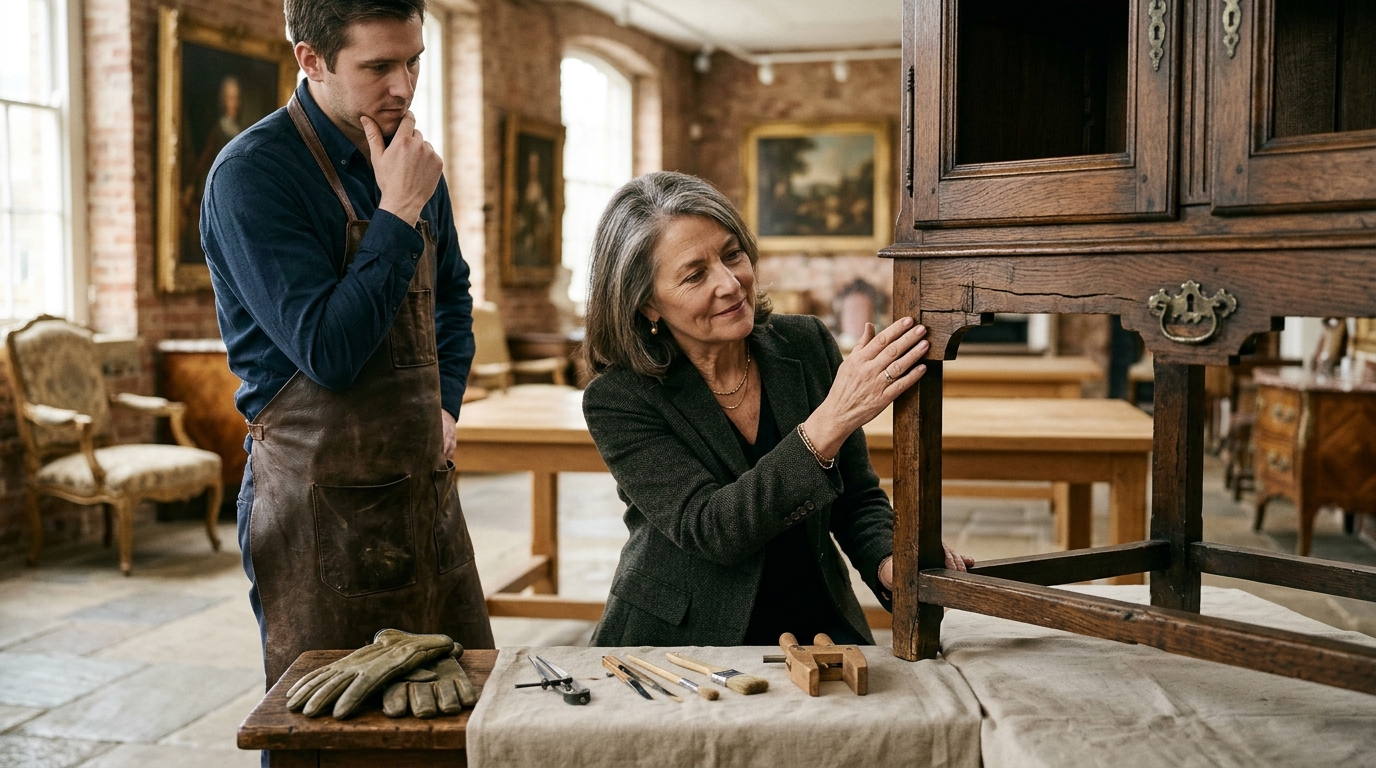
Structural soundness in antique furniture is determined by the stability of its joinery, frame, and support components. When evaluating a piece, you must look for loose joints, split wood, and compromised hardware. These physical indicators directly impact the item's safety and long-term value. For additional details, review the hessfineart com.
Identifying Compromised Joinery
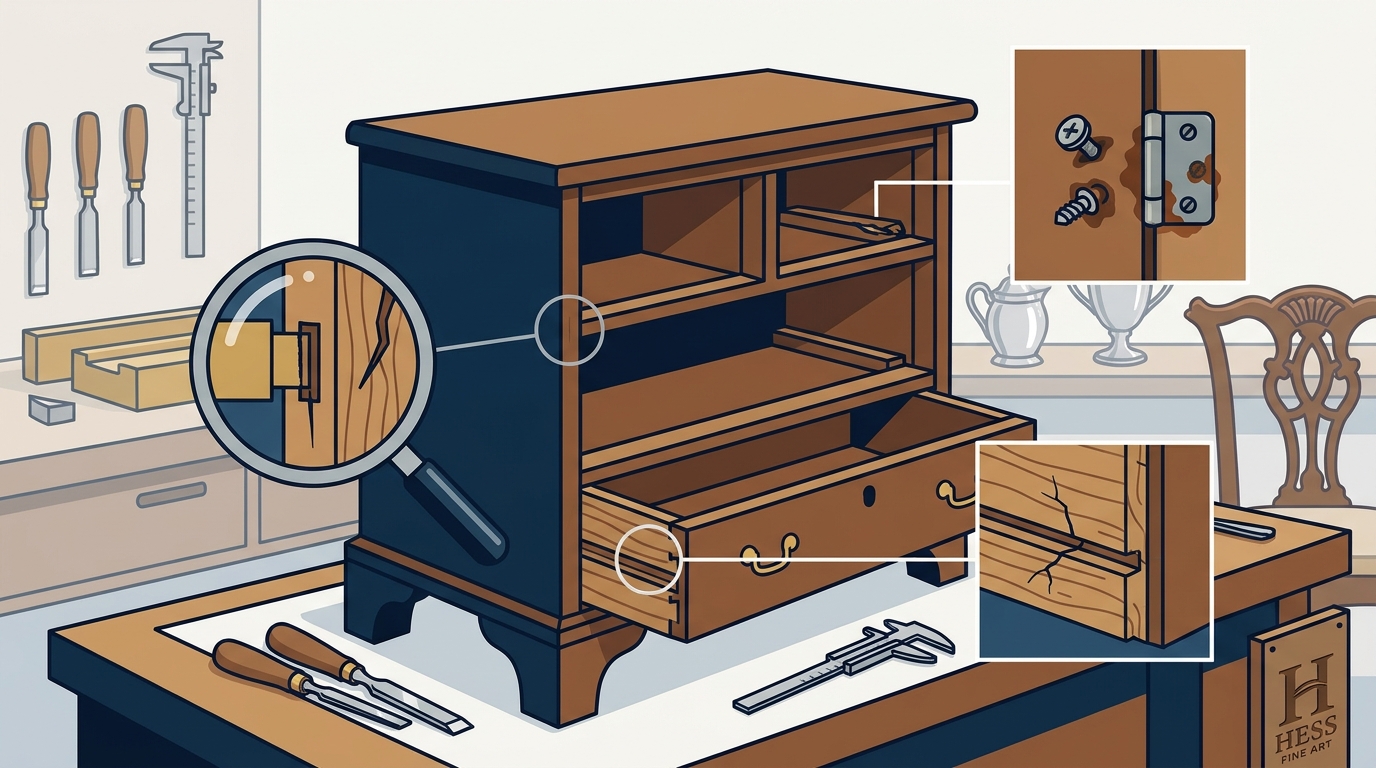
Joinery is the method used to connect wooden components, and its integrity is the primary indicator of structural health. In antique furniture, joinery is often hand-cut, such as mortise and tenon or dovetail joints. Over time, wood expands and contracts with humidity changes, which can cause these joints to loosen. A loose joint is not merely a cosmetic issue; it is a structural failure that can lead to the collapse of the piece. For additional details, review the hessfineart com.
You should inspect the corners of tables, chairs, and cabinets for gaps. If you can wiggle a joint without applying significant force, the piece is structurally compromised. In a well-maintained 18th-century chair, the joints should be tight and immovable. If the joinery has failed, the piece requires professional restoration before it can be considered safe for use or sale. For additional details, review the hessfineart com.
Assessing Wood Splitting and Cracking
Wood splitting is a critical sign of structural weakness, particularly in load-bearing areas. Cracks in the wood can weaken the material's ability to support weight. You must distinguish between surface checking and deep structural cracks. Surface checking is common in antique wood and does not necessarily affect structural integrity. However, deep cracks that run through the thickness of the wood are a serious concern. For additional details, review the hessfineart com.
Pay close attention to the legs, stretchers, and aprons of tables and chairs. A crack in a chair leg can cause the entire piece to fail under weight. For example, a solid oak table with a crack in its central stretcher is at risk of splitting further. This type of damage often indicates that the wood has dried out too quickly or has been subjected to excessive stress. If you find deep cracks, the piece is not structurally sound without repair. For additional details, review the hessfineart com.
Evaluating Hardware and Support Components
Hardware is a vital part of the structural system in many antique pieces. Screws, brackets, and pins hold components together and distribute weight. Over time, metal hardware can corrode or break, leading to structural instability. You should check many visible and hidden hardware for signs of rust, bending, or breakage. A broken screw in a drawer front may seem minor, but it can indicate larger issues with the cabinet's frame.
In pieces with metal reinforcements, such as iron brackets on a table base, you must ensure the metal is firmly attached to the wood. If the metal has pulled away from the wood, the joint is no longer secure. This is common in older pieces where the wood has shrunk around the metal. A structurally sound piece requires that all hardware is intact and properly anchored. If the hardware is failing, the piece is at risk of structural collapse.
Checking for Woodworm and Decay
Woodworm and decay are biological threats that can severely compromise structural integrity. Woodworm, or anobid beetles, bore into wood, creating tunnels that weaken the material. You should look for small holes in the wood, often accompanied by fine sawdust. If the holes are numerous and deep, the wood is likely too weak to support weight. Decay, caused by fungi, turns wood soft and crumbly. This is a more serious issue than woodworm, as it affects the wood's cellular structure.
Use a probe to test the wood's hardness. If the probe sinks easily into the wood, it is likely decayed. Decayed wood cannot be repaired easily and often requires replacement. In a structurally sound piece, the wood should be hard and dense. If you find significant decay, the piece is not safe for use. For additional details, review the hessfineart com.
Key Takeaways
- Loose joinery is a primary sign of structural failure in antique furniture.
- Deep cracks in load-bearing areas like legs and stretchers compromise stability.
- Corroded or broken hardware can lead to the collapse of the piece.
- Woodworm and decay weaken the wood's cellular structure, making it unsafe.
- Surface checking is common and does not necessarily affect structural integrity.
- Professional assessment is required for pieces with significant structural damage.
Frequently Asked Questions
What is among the most common sign of structural damage in antique furniture?
The most common sign is loose joinery, where the joints connecting wooden components have separated over time.
Does surface checking affect the structural integrity of antique wood?
No, surface checking is a cosmetic issue caused by wood drying and does not typically affect structural integrity.
How can I tell if woodworm has compromised the structure of a piece?
If the woodworm holes are numerous and deep, and the wood feels soft or crumbly, the structure is likely compromised.
Is it safe to use an antique chair with a cracked leg?
No, a cracked leg is a serious structural failure that can cause the chair to collapse under weight.
Can structural damage in antique furniture be repaired?
Yes, many types of structural damage can be repaired by a professional conservator, but the cost depends on the extent of the damage. Learn more: hessfineart com.