

Physical condition is the single most volatile variable in luxury resale. A pristine item commands a premium, while visible wear can slash value by 30 to 50 percent. Hess Fine Art evaluates these nuances daily, ensuring sellers understand exactly how wear impacts final sale prices in the current market.
The Hierarchy of Condition Grades
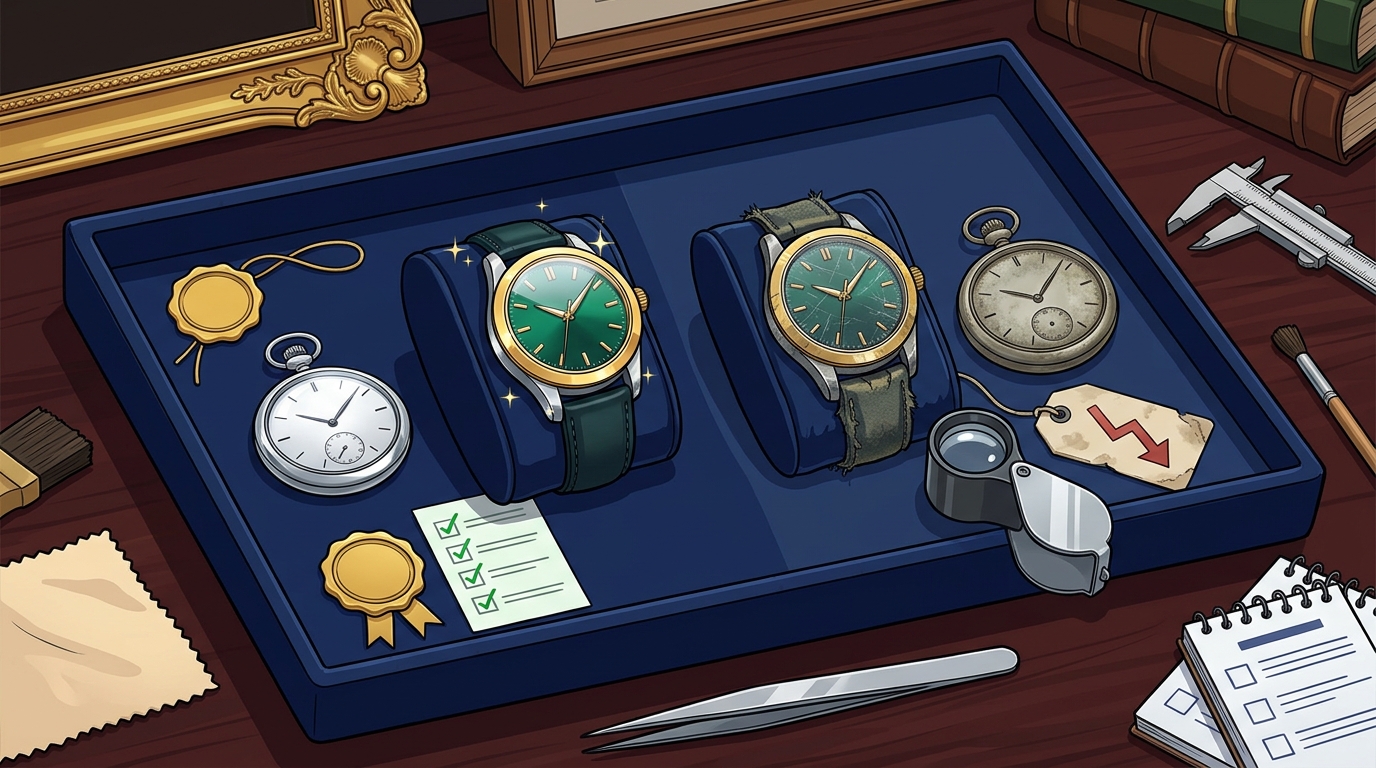
Collectors and buyers use standardized scales to judge items. Mint condition is a state where an item shows no visible flaws under normal lighting. Excellent condition is a grade where minor, barely visible wear exists but does not affect function. Good condition is a classification where noticeable wear is present, yet the item remains fully operational and structurally sound.
These grades are not subjective opinions. They are market benchmarks. A watch in mint condition with its original box and papers will sell for significantly more than the same model in good condition. The gap between these grades often exceeds the cost of professional restoration. Buyers pay for originality and untouched surfaces. They view restoration as a compromise, even if the work is high quality.
Surface Wear and Structural Integrity
Buyers are far more forgiving of surface wear than structural damage. A scratch on a silver plate is a minor deduction. A dent or crack in the same plate is a major red flag. This distinction matters because surface wear is expected over time. Structural damage implies misuse or accident. It signals a higher risk of future failure. Sellers should disclose structural issues upfront. Hiding them leads to failed sales and damaged reputations.
The Role of Original Packaging and Documentation
Original packaging is part of the physical condition. A luxury watch without its box is a different asset than one with it. The box, warranty card, and instruction manual are physical components of the item. They prove provenance and authenticity. Missing papers can reduce value by 10 to 20 percent, even if the item itself is pristine.
Documentation is not just paper. It is physical evidence of history. A certificate of authenticity is a physical object. It has weight, texture, and condition. A faded or stained certificate is less valuable than a crisp one. Buyers treat these documents as part of the core item. They are not optional extras. They are integral to the total physical presentation. Hess Fine Art advises sellers to store these items with the same care as the luxury good itself.
Material Specifics: Silver, Art, and Watches
Different materials age differently. Silver tarnishes. Art canvases crack. Watch dials fade. Each material has specific condition markers. For silver, tarnish is expected but heavy oxidation is not. For art, canvas tension and paint adhesion are critical. For watches, dial patina and movement health are key.
Understanding material-specific wear helps sellers set realistic expectations. A silver item with light tarnish is normal. A silver item with heavy black oxidation needs cleaning. Cleaning can restore value, but aggressive cleaning can damage the surface. Art requires stable humidity and temperature. Fluctuations cause physical stress. Watches require regular servicing. A stopped watch is a different asset than a running one. These material nuances define the physical condition landscape.
Market Perception and Buyer Psychology
Condition affects not just price, but speed of sale. A pristine item sells faster. A worn item sits longer. Buyers perceive condition as a proxy for care. A well-kept item suggests a careful owner. A worn item suggests neglect. This perception influences bidding behavior. Buyers bid higher for items that feel safe and preserved.
Market trends also shift condition preferences. In some eras, vintage wear is desirable. In others, mint is king. Currently, the market favors originality. Restored items are viewed with skepticism. Buyers want the original story. They want the original surface. This shift means that preserving condition is more valuable than restoring it. Sellers should prioritize preservation over repair when possible.
Key Takeaways
- Physical condition is the most volatile factor in luxury resale value.
- Mint, excellent, and good conditions have distinct market premiums.
- Structural damage is penalized more heavily than surface wear.
- Original packaging and documentation are part of the physical item.
- Material-specific aging markers define condition for silver, art, and watches.
- Buyer psychology favors items that show careful preservation.
- Preservation is often more valuable than restoration in the current market.
Frequently Asked Questions
Does professional restoration increase resale value?
Professional restoration can stabilize value, but it rarely increases it above the pre-restoration baseline. Buyers often view restoration as a compromise. They prefer original, untouched surfaces. Restoration is best used to prevent further damage, not to boost price.
How much does missing packaging reduce value?
Missing original packaging can reduce value by 10 to 20 percent. The exact impact depends on the item type. Watches and high-end jewelry are more affected by missing boxes and papers. Art is less affected by missing frames, but more affected by missing certificates.
Is light wear acceptable for luxury items?
Yes, light wear is acceptable and expected. It does not significantly reduce value. Heavy wear, however, does. The key is the degree of visibility. If wear is only visible under close inspection, it is minor. If it is visible from a distance, it is major.
How does tarnish affect silver resale value?
Light tarnish is normal and does not significantly reduce value. Heavy oxidation or black tarnish does. It suggests poor storage or neglect. Professional cleaning can restore value, but it must be done carefully to avoid surface damage.
Do buyers care about the original box?
Yes, buyers care about the original box. It is part of the physical condition. It proves authenticity and provenance. A missing box is a deduction. A damaged box is a smaller deduction. A pristine box adds value.
Can I sell a luxury item with structural damage?
Yes, but at a significant discount. Structural damage is a major red flag. It signals risk. Buyers will bid low to account for repair costs. You can sell it, but expect a lower price and a longer sale time. Learn more: hessfineart com.