
Market Liquidity and Resale Velocity
Liquidity is the speed at which an asset can be converted to cash without significant price loss. The Rolex Submariner is the most liquid watch in the global market. It consistently sells within days rather than months. This high demand stems from its status as the definitive dive watch. Collectors and investors alike view it as a blue-chip asset. The GMT-Master II is also liquid but slightly less so. It appeals to a niche of travelers and aviation enthusiasts. While both models hold value, the Submariner's broader appeal ensures faster transaction times. For an investor prioritizing cash flow, the Submariner is the pragmatic choice.
Price Stability vs. Upside Potential
Price stability refers to the consistency of an asset's value over time. The Submariner has demonstrated remarkable stability over the last decade. Its price curve is smooth and predictable. The GMT-Master II, particularly the ceramic bezel models, has seen sharper price spikes. These spikes often follow new releases or celebrity endorsements. This volatility creates higher upside potential. However, it also introduces greater risk during market corrections. If you seek steady, predictable growth, the Submariner is superior. If you can tolerate volatility for higher returns, the GMT-Master II may be preferable. Understanding this trade-off is critical for portfolio balancing.
Condition and Provenance Impact
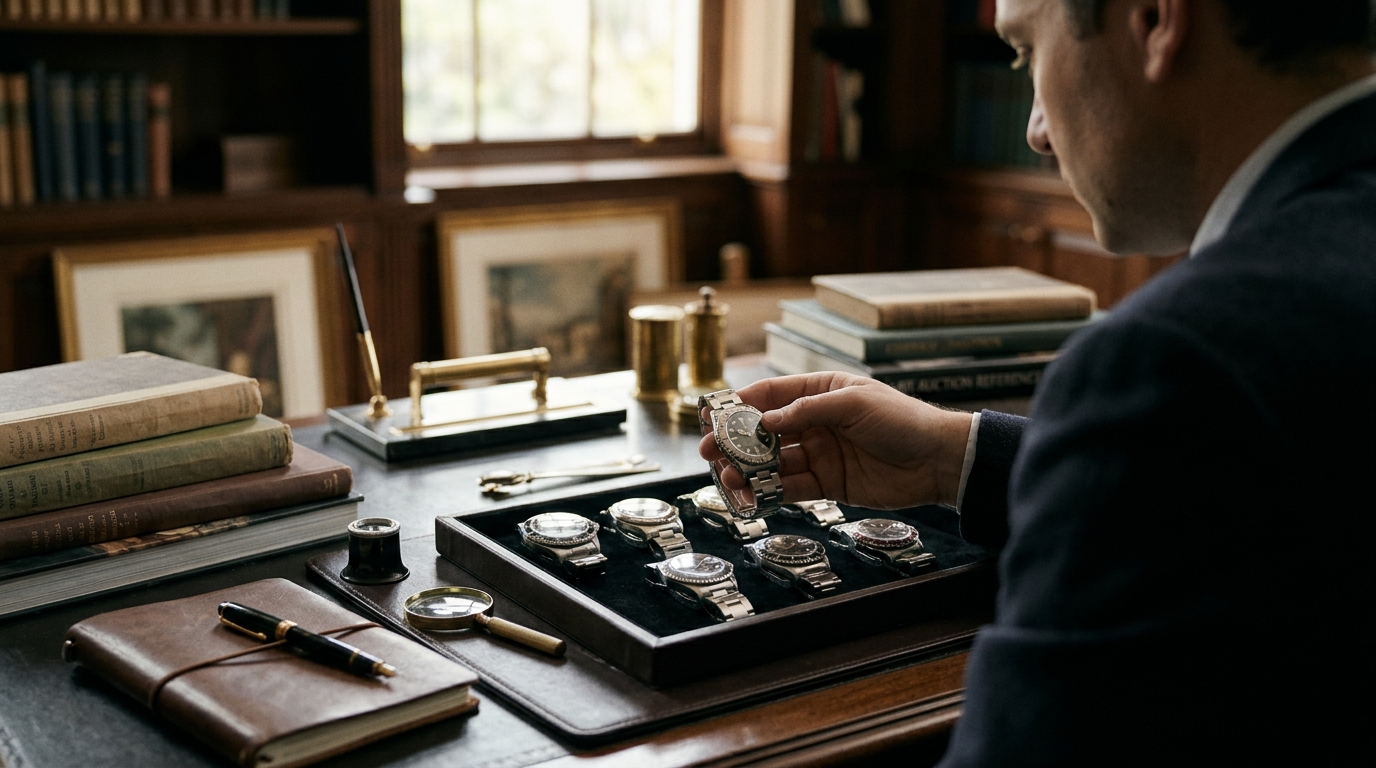
Provenance is the documented history of ownership and authenticity of an item. For luxury watches, provenance significantly affects valuation. A watch with original box, papers, and service records commands a premium. Hess Fine Art emphasizes the importance of complete documentation. A Submariner with full archives will outperform a bare watch. The same applies to the GMT-Master II. Investors must inspect the condition of the bezel, crystal, and case. Scratches or replaced parts can reduce value by 10 to 20 percent. Professional appraisal ensures you are paying for the correct grade of condition. This step is non-negotiable for serious investment.
Model Specifics and Production Cycles
Production cycles influence scarcity and future value. Rolex controls production tightly to maintain exclusivity. The Submariner has been in continuous production since 1953. Its longevity ensures a deep secondary market. The GMT-Master II has undergone several design iterations. Each new model can devalue the previous version. For example, the transition from aluminum to ceramic bezels shifted market preferences. Investors should buy models that are currently in production or recently discontinued. Avoid models that are about to be replaced. This strategy minimizes the risk of sudden devaluation. Staying informed on Rolex's release schedule is essential.

How Hess Fine Art Supports Your Investment
Key Takeaways
- The GMT-Master II provides higher upside potential but more volatility.
- Provenance and condition significantly impact resale value.
- Production cycles can cause sudden devaluation of older models.
- Professional appraisal is essential for accurate valuation.
Frequently Asked Questions
Which Rolex model holds value better?
Is it better to buy a new or used Rolex?
How does Hess Fine Art help with watch purchases?
Hess Fine Art provides expert appraisal and acquisition services. We verify authenticity and condition. We help you negotiate fair prices and ensure you are making a sound investment.
What is the role of provenance in watch valuation?
Provenance refers to the documented history of the watch. Original box, papers, and service records increase value. A watch with complete provenance is more desirable to collectors and investors. Learn more: hessfineart com.