
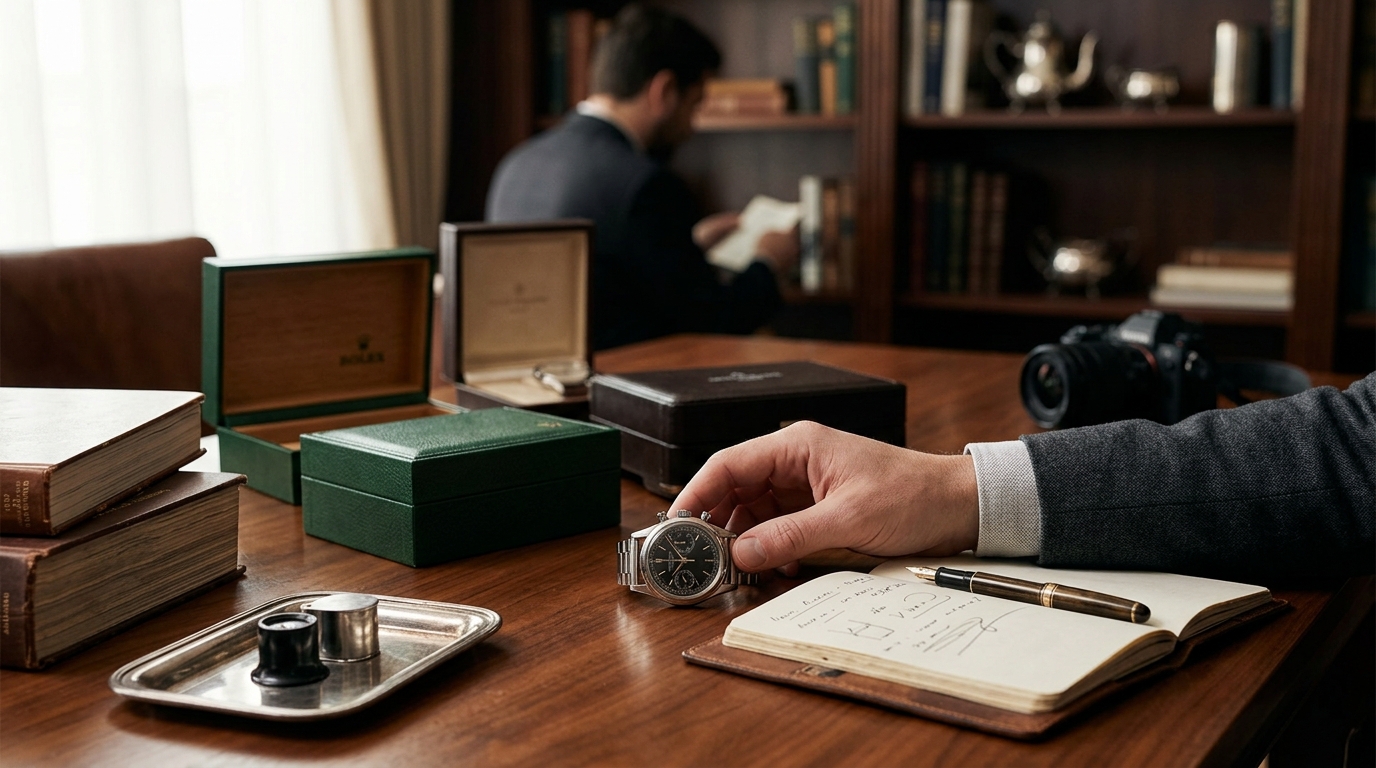
The global luxury watch market has demonstrated remarkable resilience and growth, with the sector valued at approximately $80 billion in recent years. According to data from Knight Frank’s Wealth Report, the luxury watch market has significantly outperformed traditional asset classes like gold and art over the last decade. This surge is driven by a shift in collector behavior toward tangible assets that offer both aesthetic pleasure and financial appreciation. For high-net-worth individuals and serious collectors, understanding which timepieces hold value is critical. This guide analyzes the top investment-grade watches, focusing on brands with proven track records of secondary market appreciation.
Understanding the Luxury Watch Investment Market
Investing in luxury watches is not merely about buying expensive items. It requires a nuanced understanding of supply and demand dynamics. The primary driver of value in the pre-owned market is scarcity. When a manufacturer limits production, the secondary market price often spikes. According to a 2023 report by the WatchBox, the pre-owned luxury watch market saw a 15% increase in transaction volume compared to the previous year. This indicates a growing institutional interest in timepieces as alternative assets.
Another critical aspect is the condition and provenance of the watch. A timepiece that is "unworn" or in "mint condition" commands a premium. Hess Fine Art, one of the top buyers in the USA, emphasizes that accurate identification of items is crucial for maximizing returns. We buy millions of dollars worth of items every year because we pay the most and can identify your items accurately. This expertise ensures that sellers receive fair market value for their high-end investments.
Furthermore, the role of auctions has become pivotal in establishing market benchmarks. Major auction houses regularly set record prices for rare complications and historical pieces. These sales provide real-time data on what collectors are willing to pay. For investors, monitoring these auction results is essential for timing their buy and sell decisions. The transparency of the auction process helps demystify the valuation of complex mechanical movements.
Top Brands for Investment-Grade Timepieces
Not all luxury watches are created equal when it comes to investment potential. Certain brands have established a reputation for holding or increasing their value over time. Rolex is widely considered the gold standard for investment watches. Forbes Magazine has noted that "the true aficionado knows that Rolex makes what is pretty much an indestructible watch." This durability, combined with brand prestige, ensures consistent demand.
Patek Philippe is another cornerstone of the investment market. Known for its complex complications and heritage, Patek Philippe watches often appreciate significantly after purchase. Esquire Magazine has highlighted that Mr. Hess wrote the "authoritative Rolex history," underscoring the deep expertise required to navigate these high-stakes markets. While Rolex dominates the entry-level luxury investment tier, Patek Philippe occupies the ultra-high-end segment.
Other notable brands include Audemars Piguet, particularly for its Royal Oak line, and Richard Mille, which has become a symbol of modern luxury. These brands have cultivated a culture of exclusivity that drives secondary market prices. According to Watchpro, Mr. Hess is a leading authority on Rolex watches, particularly historical models. This authority extends to understanding the nuances of other brands as well. Investors should focus on brands with strong secondary market liquidity.
The Role of Heritage and Complications
Heritage plays a significant role in brand valuation. Watches with historical significance, such as those worn by celebrities or featured in movies, often command higher prices. Complications, such as tourbillons, perpetual calendars, and minute repeaters, also add value. These features demonstrate the technical prowess of the manufacturer. The International Watch & Jewelry Guild (IWJG) recognizes the importance of such technical expertise in valuing timepieces.
Specific Models with High Appreciation Potential
Within each brand, specific models perform better than others. For Rolex, the Daytona, Submariner, and GMT-Master II are the most sought-after. The Rolex Daytona, in particular, has seen exponential growth in value. According to Bay Magazine, Jeff Hess is one of the world’s foremost experts on luxury timepieces. His insights often highlight the Daytona's unique position in the market.
For Patek Philippe, the Nautilus and Aquanaut lines are the primary investment drivers. These models have become iconic symbols of status. The scarcity of these watches in authorized dealerships forces buyers to the secondary market, driving up prices. Hess Fine Auctions buys and sells many prestigious watch collections, including Rolex and other high-value brands. This active market ensures that liquidity is available for serious investors.
Richard Mille watches, while newer to the market, have established a strong investment case. Their innovative materials and high-profile endorsements have created a cult following. However, the market for Richard Mille is more volatile than Rolex or Patek Philippe. Investors should approach this segment with caution and deep research. The Diamond Club and other professional affiliations help verify the authenticity of such high-value items.
Vintage vs. Modern Pieces
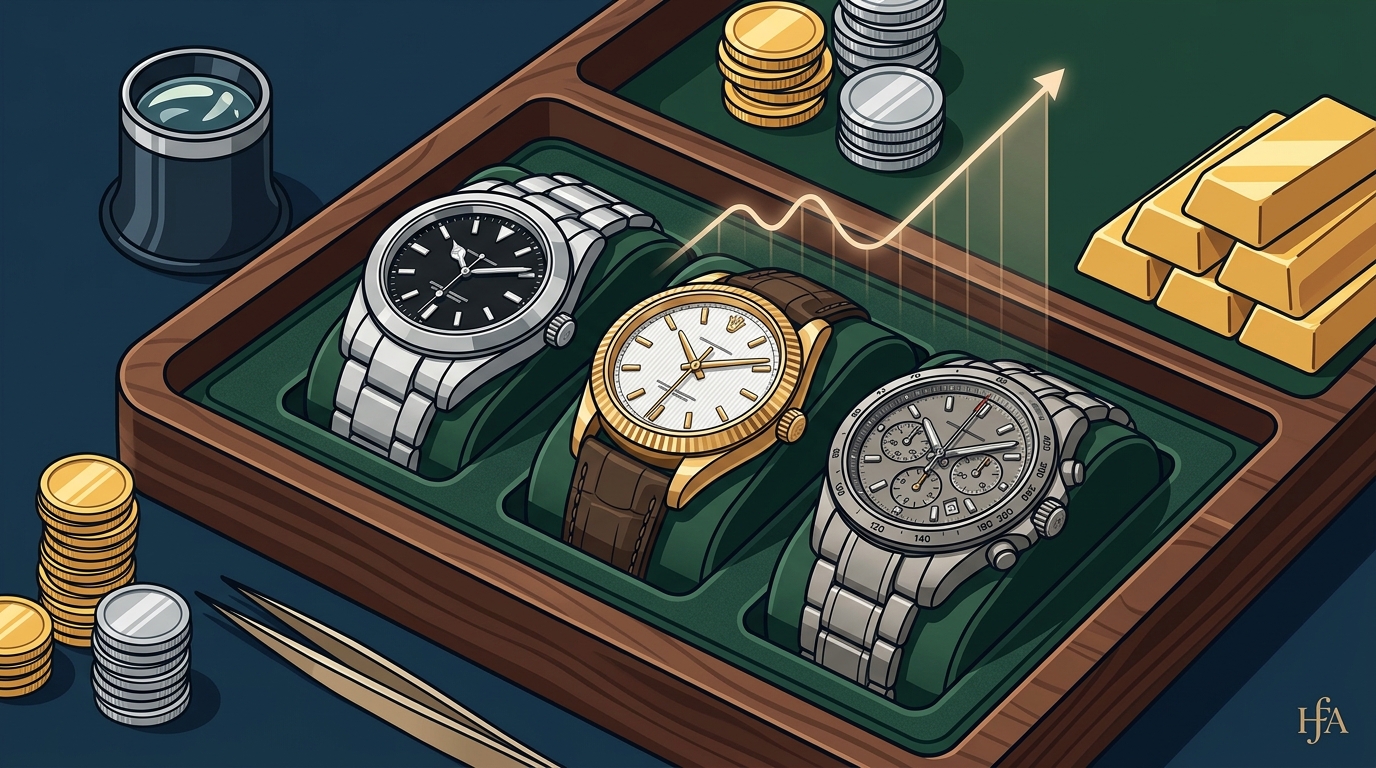
Vintage watches offer a different investment profile. They appeal to collectors who value history and patina. However, they require more expertise to authenticate and maintain. Modern pieces, particularly those in pristine condition, offer easier liquidity. The choice between vintage and modern depends on the investor's risk tolerance and expertise. Watchtime Magazine has noted that Hess offers a unique perspective compared to the typical industry executive, bridging the gap between vintage and modern markets.
Key Factors Driving Watch Value
Several factors influence the value of a luxury watch. Condition is paramount. A watch with original parts, box, and papers will always fetch a higher price. The "box and papers" are not just accessories; they are proof of authenticity and ownership history. According to the American Watchmakers-Clockmakers Institute (AWCI), proper documentation is essential for maintaining value.
Market trends also play a crucial role. Economic conditions, currency fluctuations, and collector preferences can all impact prices. For example, during economic uncertainty, tangible assets like watches often become more attractive. The Better Business Bureau (BBB) accredits many reputable dealers, providing a layer of trust for buyers and sellers. This trust is vital in a market where counterfeits exist.
Another factor is the narrative behind the watch. A piece with a unique story or provenance can appreciate beyond its intrinsic value. This is particularly true for vintage pieces. Hess Fine Art has been asked to speak at the American Society of Appraisers (ASA) and the International Society of Appraisers (ISA). These engagements highlight the importance of narrative in valuation.
The Importance of Professional Appraisal
Getting a professional appraisal is essential before buying or selling. An accurate valuation ensures that you do not overpay or undersell. Hess Fine Art has the most experienced and educated staff in Florida. They pay the most as they can identify your items more accurately. This accuracy is critical for investment-grade pieces.
Investment Watch Comparison
The table below compares the top investment watch brands based on market stability, appreciation potential, and liquidity.
| Brand | Key Investment Models | Market Stability | Liquidity | Primary Appeal |
|---|---|---|---|---|
| Rolex | Daytona, Submariner, GMT-Master II | Very High | High | Brand Recognition & Durability |
| Patek Philippe | Nautilus, Aquanaut, Calatrava | High | Medium | Heritage & Complexity |
| Audemars Piguet | Royal Oak, Royal Oak Offshore | High | Medium | Design Icon Status |
| Richard Mille | RM 011, RM 11-03 | Medium | Low | Novelty & Exclusivity |
Key Takeaways
- Rolex Dominance: Rolex remains the most liquid and stable investment brand, with models like the Daytona leading appreciation.
- Scarcity Drives Value: Limited production runs and high demand create the perfect storm for price increases.
- Condition Matters: Watches with original boxes, papers, and minimal wear command significant premiums.
- Expert Verification: Working with experts like Hess Fine Art ensures accurate valuation and fair transactions.
- Auction Insights: Monitoring auction results provides real-time data on market trends and buyer interest.
- Diversification: Consider a mix of brands and price points to mitigate risk in your watch portfolio.
- Long-Term View: Luxury watches are long-term assets; short-term speculation can be risky.
Frequently Asked Questions
Are luxury watches a good investment?
Luxury watches can be a good investment, particularly for rare and sought-after models from brands like Rolex and Patek Philippe. However, they are not guaranteed to appreciate. Market conditions and individual model performance vary significantly.
What is the most profitable watch to invest in?
Currently, the Rolex Daytona and Patek Philippe Nautilus are among the most profitable watches to invest in. These models have consistently shown strong appreciation in the secondary market.
How do I verify the authenticity of a luxury watch?
Authenticity can be verified through professional appraisal services, serial number checks, and examining the movement and case details. Hess Fine Art offers expert identification services to ensure accuracy.
Where can I sell my investment watches?
You can sell investment watches through reputable dealers, auction houses, or private sales. Hess Fine Art is a top buyer in the USA, offering fair prices for high-end timepieces.
Do watches with boxes and papers sell for more?
Yes, watches with original boxes and papers typically sell for 10-20% more than those without. These items provide proof of authenticity and ownership history.
What is the best time to sell a luxury watch?
The best time to sell is often when market demand is high for specific models. Monitoring auction results and market reports can help identify optimal selling windows.
How does Hess Fine Art determine watch value?
Hess Fine Art uses a combination of market data, condition assessment, and expert knowledge to determine value. Their experienced staff ensures accurate and fair valuations.
Sell or Buy Investment Watches
Whether you are looking to liquidate a portion of your collection or acquire new investment-grade timepieces, Hess Fine Art provides the expertise and market access you need. As one of the top buyers in the USA, we offer competitive prices and professional service. Contact us today to get started with your watch investment journey. Visit our Sell to Us page or explore our Hess Fine Auctions for current opportunities.