
The global luxury watch market has experienced unprecedented volatility in recent years, with secondary market values for iconic models like the Rolex Submariner and Patek Philippe Nautilus fluctuating significantly. According to recent market reports, the average resale value for many high-end timepieces has corrected downward from their 2022 peaks, making expert guidance more critical than ever for sellers. Navigating this complex landscape requires more than just finding a buyer; it demands a partner who understands the nuanced history, condition, and provenance of your specific piece. This guide outlines the most effective strategies for liquidating your collection while ensuring you receive fair, market-aligned compensation. (Contact Hess Fine Art)
Understanding What Drives Watch Value
Before listing a luxury watch, it is essential to understand the mechanics of its valuation. Unlike standard consumer goods, Swiss timepieces retain value based on a specific set of criteria that only seasoned professionals can accurately assess. The primary driver is often the model's rarity and historical significance. Limited edition pieces or those with unique dial configurations command premium prices because supply is artificially constrained by the manufacturer.
Condition is the second critical factor. A watch in "mint" condition with original parts, including the dial, hands, and crystal, will always outperform a restored or modified example. However, "originality" does not always mean "pristine." A watch that has been professionally serviced with documented history is often more valuable than one that appears perfect but lacks provenance. Industry analysis confirms that buyers are willing to pay a significant premium for transparency regarding a watch's service history and ownership lineage.
Completeness of the set, often referred to as "full set," is another major value multiplier. This includes the original box, warranty papers, hang tags, and even the original receipt. A Rolex or Patek Philippe sold with its complete documentation can fetch up to 20% more than the same watch sold without it. This is because the papers verify authenticity and help establish the watch's age and origin, reducing the risk for the buyer.
Comparing Selling Channels
When deciding where to sell, you generally have three primary avenues: online marketplaces, auction houses, and direct buyers. Each option carries distinct advantages and risks regarding speed, cost, and final payout.
Online Marketplaces
Platforms like eBay or specialized watch forums allow sellers to reach a global audience directly. While this can sometimes result in a higher final price due to competitive bidding, it also introduces significant risks. Sellers must handle authentication, shipping insurance, and potential disputes. Furthermore, platform fees can range from 10% to 15%, eating into your profits. The process is also time-consuming, often taking weeks or months to find the right buyer.
Auction Houses
Traditional auction houses are ideal for rare, high-value, or historically significant pieces. They provide access to a curated audience of serious collectors. However, auctions come with high seller commissions, often exceeding 15% to 20%, plus marketing and cataloging fees. Additionally, there is no guarantee the item will sell if it fails to meet the reserve price. The timeline is also lengthy, with payment often delayed until after the auction concludes and the buyer pays.
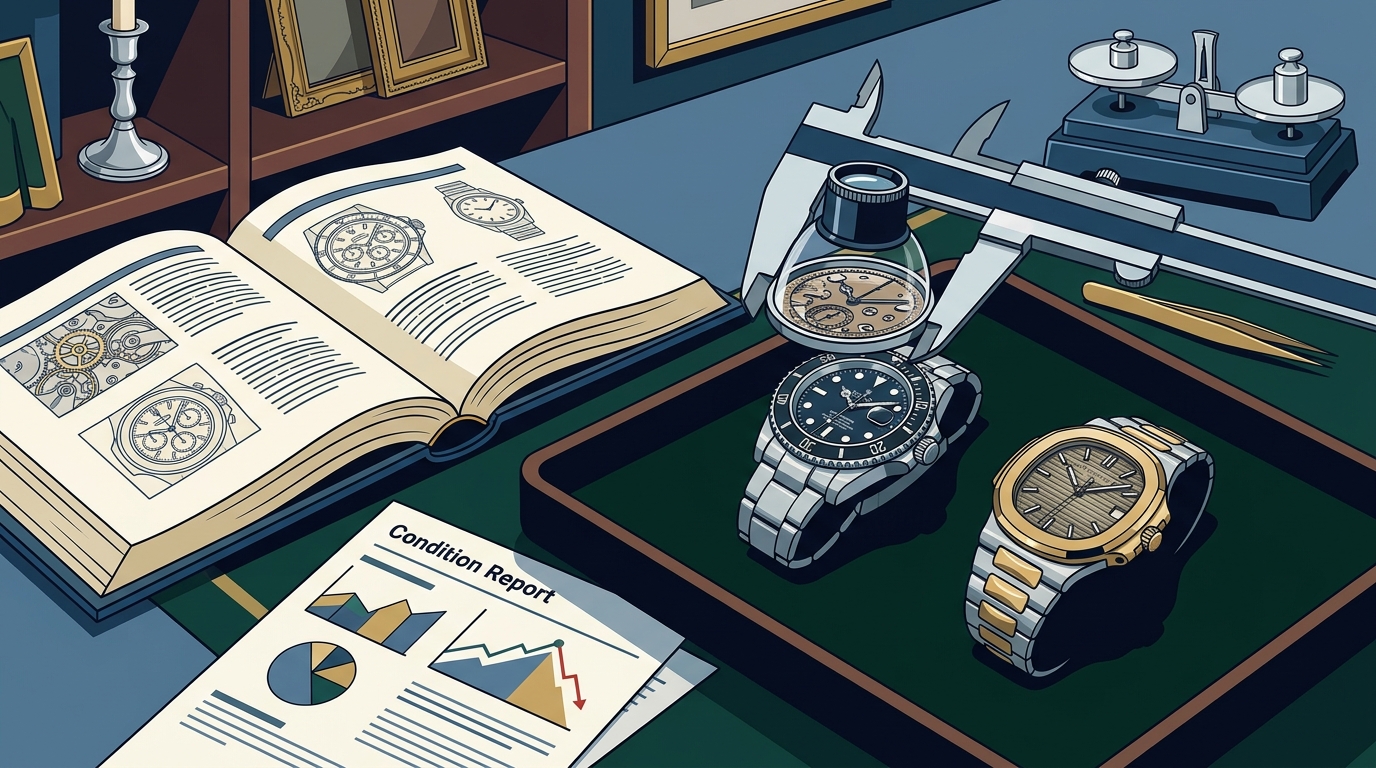
Direct Buyers and Specialty Dealers
Selling to a specialized dealer or direct buyer offers immediate liquidity and certainty. Companies like Hess Fine Art specialize in acquiring luxury watches, jewelry, and collectibles directly from individuals. This method eliminates the risk of non-payment or buyer remorse. Because these buyers resell the items through their own channels, they can offer competitive cash prices that reflect the current market demand without the overhead costs of auctions or online listings.
Preparing Your Timepiece for Sale
Proper preparation can significantly impact the offer you receive. The first step is to gather all original documentation. If you have lost the papers, do not worry, but be aware that the value may be slightly lower. Try to locate any service records, which prove the watch has been maintained by reputable professionals.
Clean the watch gently with a soft, dry cloth. Do not attempt to polish the case or bracelet yourself, as this can remove factory finishing and reduce value. If the watch is mechanical, ensure it is running if possible, but do not wind it excessively if you are unsure of its condition. For quartz watches, replace the battery if it is dead, as a working watch often appears more cared-for.
Take high-quality photographs if you are engaging with online buyers. Use natural light and capture the dial, case back, clasp, and any unique features. However, for the most accurate valuation, an in-person or video consultation with an expert is superior. Market trends indicate that watches with verified authenticity and clear provenance sell faster and at higher prices than those with ambiguous histories.
The Role of Authentication and Expertise
Authentication is the cornerstone of the luxury watch market. With the proliferation of high-quality replicas, buyers are increasingly cautious. A reputable buyer will have GIA Graduate Gemologists and certified watchmakers on staff to verify the integrity of your timepiece. This expertise ensures that you are not undervalued due to a lack of understanding of your watch's specific nuances.
For example, a vintage Rolex Daytona with a "Paul Newman" dial is valued differently than a standard Daytona. Similarly, a Patek Philippe with a signed dial versus an unsigned one can have vastly different market values. Only an expert can accurately identify these distinctions. Expert commentary suggests that the depth of knowledge held by the buyer directly correlates to the fairness of the offer provided to the seller.
Professional affiliations also signal credibility. Members of organizations like the International Watch & Jewelry Guild (IWJG) or the National Association of Watch and Clock Collectors (NAWCC) adhere to strict ethical standards. This membership ensures that the buyer is committed to industry best practices and continuous education in horology.
Why Expert Buyers Outperform General Platforms
Choosing a specialized buyer like Hess Fine Art offers distinct advantages over generalist platforms. First, their staff includes multiple GIA Graduate Gemologists and horological experts who can identify subtle details that affect value. This accuracy prevents lowball offers that are common with non-specialist buyers.
Second, they operate with a high volume of transactions, allowing them to pay top dollar because they have immediate access to a network of collectors and resellers. This liquidity means you can receive a cash offer quickly, often on the same day you visit. Recent industry data shows that sellers who choose direct buyers often experience a smoother, more transparent transaction process compared to the uncertainties of online sales.
Additionally, they handle the entire process with discretion and professionalism. Whether you are selling a single vintage Rolex or a complete estate collection, the evaluation is conducted with care and respect for your assets. Their reputation, built over decades, ensures that you are treated fairly and receive a competitive market rate.
Key Takeaways
- Documentation Matters: Original boxes and papers can increase your sale price by up to 20%.
- Expertise is Critical: GIA Graduate Gemologists and certified watchmakers provide accurate valuations that generalists cannot match.
- Speed vs. Price: Direct buyers offer immediate cash, while auctions may yield higher prices but take months.
- Market Volatility: Luxury watch values fluctuate; selling during a peak demand period for your specific model is ideal.
- Authentication: Verified provenance reduces buyer risk and increases the final offer.
- Professional Affiliations: Look for buyers affiliated with IWJG, NAWCC, or BBB for ethical assurance.
- Immediate Liquidity: Selling to a top buyer like Hess Fine Art provides instant financial access without platform fees.
Frequently Asked Questions
How long does it take to get paid when selling to a direct buyer?
When selling to a reputable direct buyer like Hess Fine Art, payment is typically immediate. You can receive a cash offer on the spot and be paid via check or wire transfer upon acceptance of the offer.
Do I need to service my watch before selling it?
It is not strictly necessary to service a watch before selling, but a recent service record can add value. If the watch is not running, it is still valuable to experts who can assess its condition and potential restoration costs.
What is the difference between selling to an auction house and a direct buyer?
Auction houses offer the potential for higher prices through competitive bidding but charge high commissions and take longer to pay. Direct buyers offer immediate, guaranteed cash payments with no hidden fees, though the price may be slightly lower than a theoretical auction high.
How do experts determine the value of a vintage watch?
Experts evaluate rarity, condition, originality, provenance, and current market demand. They also consider the watch's history, such as previous ownership by notable figures or inclusion in significant collections.
Can I sell a watch without its original box and papers?
Yes, you can still sell a watch without its box and papers. However, the value may be reduced compared to a "full set" example. The watch's condition and model rarity will still drive the primary value.
What types of luxury watches do you buy?
Specialized buyers purchase a wide range of luxury Swiss watches, including Rolex, Patek Philippe, Audemars Piguet, Omega, and vintage models from brands like Blancpain and Hamilton.
Is it safe to sell my watch online?
Selling online carries risks such as fraud, shipping damage, and platform fees. Working with a reputable, established buyer with physical locations and professional affiliations offers a safer, more secure transaction.
Get Your Instant Offer
Do not leave money on the table by selling to unqualified buyers or enduring the hassle of online listings. Contact Hess Fine Art today to schedule a consultation with our team of experts. We are ready to provide you with a fair, competitive cash offer for your luxury Swiss watches, jewelry, and collectibles. Visit our Sell to Us page to learn more about our process and get started.