

What should I know about selling to major auction houses for valuable collectibles?
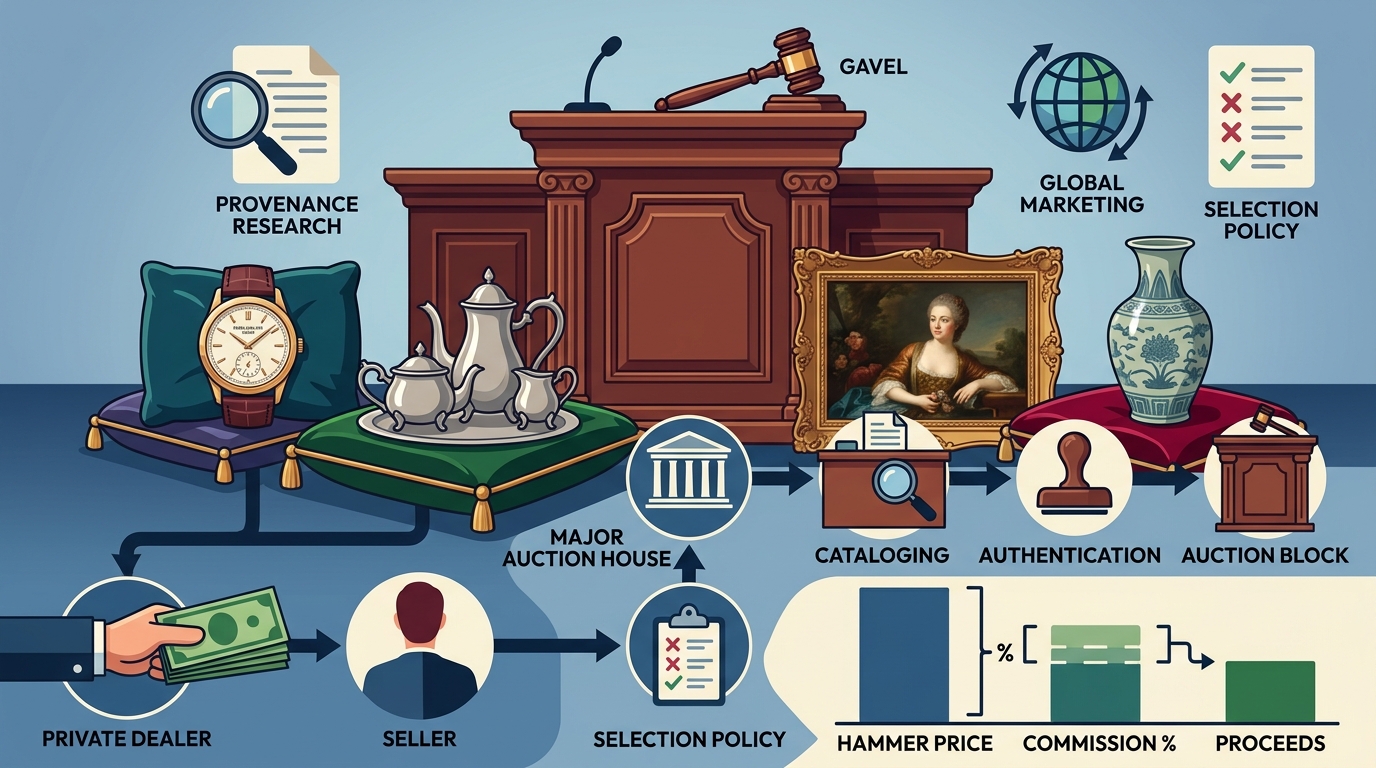
Selling to major auction houses requires understanding their high commission structures, strict authentication standards, and selective acceptance policies. Unlike private dealers who offer immediate cash, major houses like Sotheby's and Christie's operate on a consignment model where you pay a seller's commission, often ranging from 10% to 25%, before receiving any proceeds. This model is best suited for high-value items with strong provenance, as the marketing reach of these institutions can drive prices above private market rates. For most collectors, however, the barrier to entry and the time involved make private sales or regional auction houses a more practical alternative.
The Commission Structure and Net Proceeds
Authentication and Provenance Requirements
Major auction houses maintain rigorous standards for authentication and provenance. Provenance is the documented history of ownership of an item, which is essential for establishing its authenticity and value. Without a clear chain of title, major houses may refuse to accept an item for sale. This is particularly true for high-value art, jewelry, and rare collectibles. For example, a Fabergé piece without a clear history of ownership from a reputable source may be deemed too risky for a major house to handle. In contrast, private dealers like Hess Fine Art often have the expertise to authenticate items and provide a fair cash offer even when provenance is incomplete. The authentication process at major houses can be lengthy and may involve third-party experts, adding to the time and complexity of the sale.
Reserve Prices and Minimum Bids
Reserve prices are a critical component of the auction process. A reserve price is the minimum amount at which an item will be sold, set by the seller in consultation with the auction house. If the bidding does not reach the reserve, the item is not sold. This protects the seller from selling at a price below their expectations. However, setting a reserve too high can result in the item not selling at all. Major auction houses often advise sellers on setting realistic reserves based on market trends and comparable sales. For valuable collectibles, the reserve price can be a significant factor in determining whether an item sells. Sellers must weigh the risk of not selling against the potential for a higher price if the reserve is met.
Time and Logistics of the Auction Process
The auction process is time-consuming and involves several logistical steps. From the initial submission of an item to the final sale, the process can take several months. This includes the time required for authentication, cataloging, photography, and marketing. Sellers must also consider the logistics of shipping and insuring their items to the auction house. For high-value items, this can be a significant expense. Additionally, the sale date is fixed, and sellers cannot change their mind once the item is in the auction. This lack of flexibility is a major drawback for sellers who may need immediate liquidity. Private dealers, on the other hand, offer a more flexible and faster process, allowing sellers to receive cash on the spot.
When to Choose a Major Auction House
Major auction houses are best suited for items with high value, strong provenance, and a broad collector base. These institutions have the marketing reach to attract international buyers, which can drive prices above what might be achieved in a private sale. For example, a rare Patek Philippe watch with a unique history may sell for a premium at a major auction house due to the attention it receives. However, for most collectors, the time, cost, and uncertainty of the auction process make private sales a more practical option. Hess Fine Art, for instance, offers a transparent and efficient process for selling valuable collectibles, providing fair cash offers and a wide network of buyers. The decision to sell to a major auction house should be based on the specific characteristics of the item and the seller's financial goals.
Key Takeaways
- Seller's commissions at major auction houses can range from 10% to 25%, significantly reducing net proceeds.
- Provenance is essential for authentication and acceptance by major auction houses.
- Reserve prices protect sellers but can result in items not selling if set too high.
- The auction process is time-consuming, often taking several months from submission to sale.
- Major auction houses are best for high-value items with strong provenance and a broad collector base.
- Private dealers offer faster, more flexible sales with immediate cash offers.
- Understanding the net proceeds and commission structure is critical before choosing an auction house.
Frequently Asked Questions
What is a seller's commission?
A seller's commission is a percentage fee deducted from the final hammer price before the seller receives payment. It covers the auction house's marketing, cataloging, and auctioneering services.
What is provenance?
Provenance is the documented history of ownership of an item, which is essential for establishing its authenticity and value.
What is a reserve price?
A reserve price is the minimum amount at which an item will be sold, set by the seller in consultation with the auction house.
How long does the auction process take?
The auction process can take several months, from the initial submission of an item to the final sale.
When should I choose a major auction house?
Major auction houses are best suited for items with high value, strong provenance, and a broad collector base.
What are the benefits of selling to a private dealer?
Private dealers offer faster, more flexible sales with immediate cash offers and a more straightforward process.
Conclusion
Selling to major auction houses can be a rewarding experience for high-value items with strong provenance. However, the high commission structures, strict authentication standards, and time-consuming process make them less suitable for most collectors. Private dealers like Hess Fine Art offer a transparent and efficient alternative, providing fair cash offers and a wide network of buyers. Whether you choose a major auction house or a private dealer, understanding the financial and logistical aspects of the sale is essential for making an informed decision. For more information on selling your valuable collectibles, visit Hess Fine Art's selling page.