
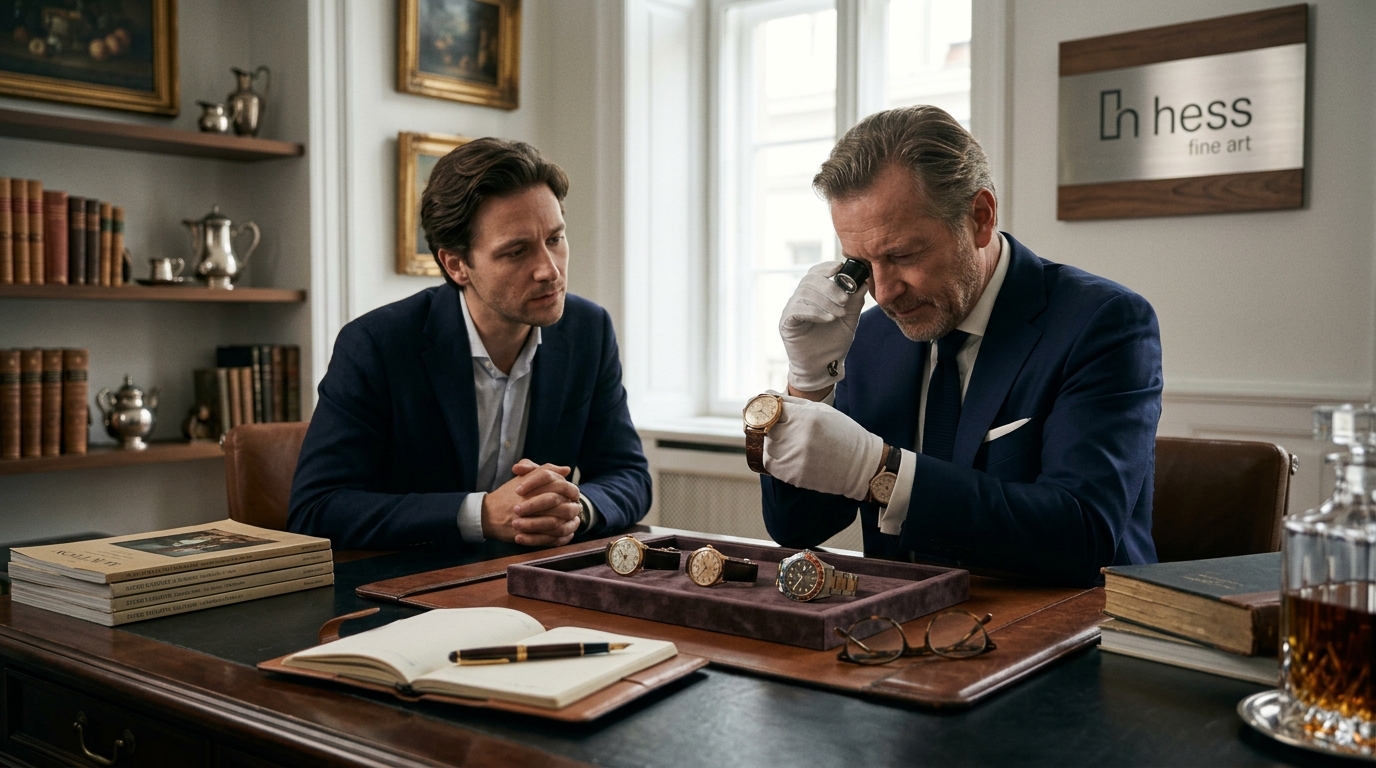
When selling rare vintage Rolex or Patek Philippe watches, the best buyers are specialized auction houses and expert dealers who possess deep horological knowledge and robust global market access. Hess Fine Art stands out as a premier destination for these specific timepieces, offering direct purchasing and consignment services backed by decades of industry experience. This guide covers the primary channels for selling high-value watches, the critical importance of authentication, and how to maximize your return on investment.
Auction Houses
Auction houses are public marketplaces where collectors bid on items in real-time. For rare vintage Rolex and Patek Philippe models, major auction houses provide significant exposure to a global audience of serious collectors. These platforms often handle high-profile estates and significant collections, creating a competitive bidding environment that can drive prices above retail estimates.
Global Reach and Market Transparency
One of the primary advantages of using an auction house is the transparency of the final hammer price. Once the auction concludes, the sale price is public record, which helps establish market value for similar timepieces. Major houses operate in key hubs like New York, Geneva, and London, attracting international bidders who are willing to travel or bid online for exceptional pieces.
Consignment and Fees
When consigning a watch to an auction house, you typically agree to a reserve price, which is the minimum amount the item must sell for. If the item does not meet the reserve, it may be passed or sold at a lower price. Sellers should be aware that auction houses charge a seller's commission, which can range from 10% to 25% of the final sale price. Additionally, there may be costs for photography, cataloging, and shipping. While the potential for a high sale price is attractive, the fees and the uncertainty of the final bid must be weighed carefully.
Hess Fine Art operates its own auction division, Hess Fine Auctions, which has been a leading online auctioneer since 1997. This division allows clients to access the auction market while benefiting from the specialized expertise of a dedicated watch and antiques firm.
Specialist Watch Dealers
Specialist watch dealers are private businesses that buy, sell, and trade high-end timepieces. Unlike auction houses, dealers often offer immediate cash offers or direct purchase agreements. This channel is ideal for sellers who prioritize speed, privacy, and certainty over the potential for a higher, but uncertain, auction price.

Expertise and Valuation Accuracy
The value of a vintage Rolex or Patek Philippe is not just about the brand; it depends on the specific reference number, dial variant, movement condition, and originality. Specialist dealers with deep horological knowledge can identify subtle details that general appraisers might miss. For example, a Patek Philippe with an original dial and hands may command a significantly higher price than one with replacements. A knowledgeable dealer can accurately assess these factors, ensuring the seller receives a fair market value.
Direct Purchase and Consignment
Privacy and Discretion
Selling a high-value watch through a private dealer offers a level of discretion that public auctions do not. For collectors who wish to keep their sales private, a direct deal with a reputable specialist is often the preferred route. This is particularly relevant for rare or unique pieces that may attract unwanted attention if listed publicly.
Provenance and Authentication
Provenance is the documented history of ownership and authenticity of an item. For vintage luxury watches, provenance is a critical factor in determining value. A watch with a clear, documented history, such as a previous owner who was a public figure or a record of service by an authorized dealer, can command a premium price.
The Role of Authentication
Authentication is the process of verifying that a watch is genuine and not a replica or a frankenwatch (a watch assembled from parts of different watches). Reputable buyers and auction houses require authentication before purchasing or consigning a timepiece. This process involves inspecting the movement, case, dial, and hands for signs of tampering or replacement. It also includes verifying the serial number and reference number against manufacturer records when possible.
Documentation and Certificates
Sellers should gather all available documentation for their watches, including original boxes, papers, service records, and certificates of authenticity. While not all vintage watches come with complete documentation, any available records can significantly enhance the item's appeal to buyers. Hess Fine Art employs GIA Graduate Gemologists and experienced watch experts who can assess the authenticity and condition of timepieces, ensuring that sellers receive a fair evaluation based on accurate identification.
Comparison of Sales Channels
The following table summarizes the key differences between auction houses and specialist watch dealers when selling rare vintage Rolex and Patek Philippe watches.
| Feature | Auction Houses | Specialist Watch Dealers |
|---|---|---|
| Speed of Sale | Slow (weeks to months) | Fast (days to weeks) |
| Price Certainty | Uncertain (depends on bidding) | Certain (negotiated offer) |
| Exposure | High (global public audience) | Low (private network) |
| Fees | High (10-25% commission) | Variable (direct purchase or consignment fee) |
| Privacy | Low (public record) | High (private transaction) |
| Best For | Exceptional, record-breaking pieces | Standard to high-end vintage models |
Key Takeaways
- Specialist expertise is crucial: Selling rare vintage Rolex or Patek Philippe watches requires a buyer with deep horological knowledge to accurately assess value.
- Provenance adds value: Documented history and original documentation can significantly increase the market value of a vintage watch.
- Authentication is non-negotiable: Reputable buyers require thorough authentication to ensure the watch is genuine and original.
- Compare offers: It is advisable to obtain multiple offers from different buyers to ensure you are receiving the best possible price.
- Hess Fine Art provides comprehensive services: As a top buyer in the US, Hess Fine Art offers both direct purchase and consignment options with expert valuation.
Frequently Asked Questions
What is the best place to sell a rare vintage Rolex?
The best place to sell a rare vintage Rolex is a specialist watch dealer or auction house with proven expertise in vintage timepieces. Hess Fine Art is a top buyer in the US and can provide accurate valuations and competitive offers for vintage Rolex models.
How do auction houses determine the price of a watch?
Auction houses determine the price of a watch through competitive bidding. The final price is the highest bid that meets or exceeds the reserve price set by the seller. Market demand, condition, and provenance all influence the final hammer price.
What is provenance in the context of watches?
Provenance is the documented history of ownership and authenticity of a watch. It includes records of previous owners, service history, and original documentation. Strong provenance can significantly increase the value of a vintage timepiece.
How long does it take to sell a watch at auction?
Selling a watch at auction typically takes several weeks to a few months. This includes the time for cataloging, photography, marketing, and the actual auction event. The timeline depends on the auction house's schedule and the specific market conditions.
Do specialist dealers buy watches outright?
Yes, many specialist dealers buy watches outright for a negotiated cash price. This is a faster and more certain way to sell compared to consignment or auction. Hess Fine Art offers direct purchase options for a wide range of luxury watches.
Why is authentication important when selling a vintage watch?
Authentication is important because it verifies that the watch is genuine and not a replica or a frankenwatch. Reputable buyers require authentication to ensure they are purchasing a legitimate item. Without proper authentication, the value of the watch may be significantly reduced or the sale may be rejected.
What documents should I provide when selling a Patek Philippe?
When selling a Patek Philippe, you should provide all available documentation, including the original box, papers, service records, and certificates of authenticity. Even if the documentation is incomplete, providing whatever records you have can help establish provenance and increase the watch's value.
Conclusion
Choosing the right buyer for a rare vintage Rolex or Patek Philippe watch is a critical decision that can significantly impact your return on investment. Whether you choose the global exposure of an auction house or the speed and privacy of a specialist dealer, working with a reputable expert is essential. Hess Fine Art is one of the top buyers in the US, with a team of experienced and educated staff who can accurately identify and value your timepieces. To get started, you can for a free evaluation of your watch collection.