

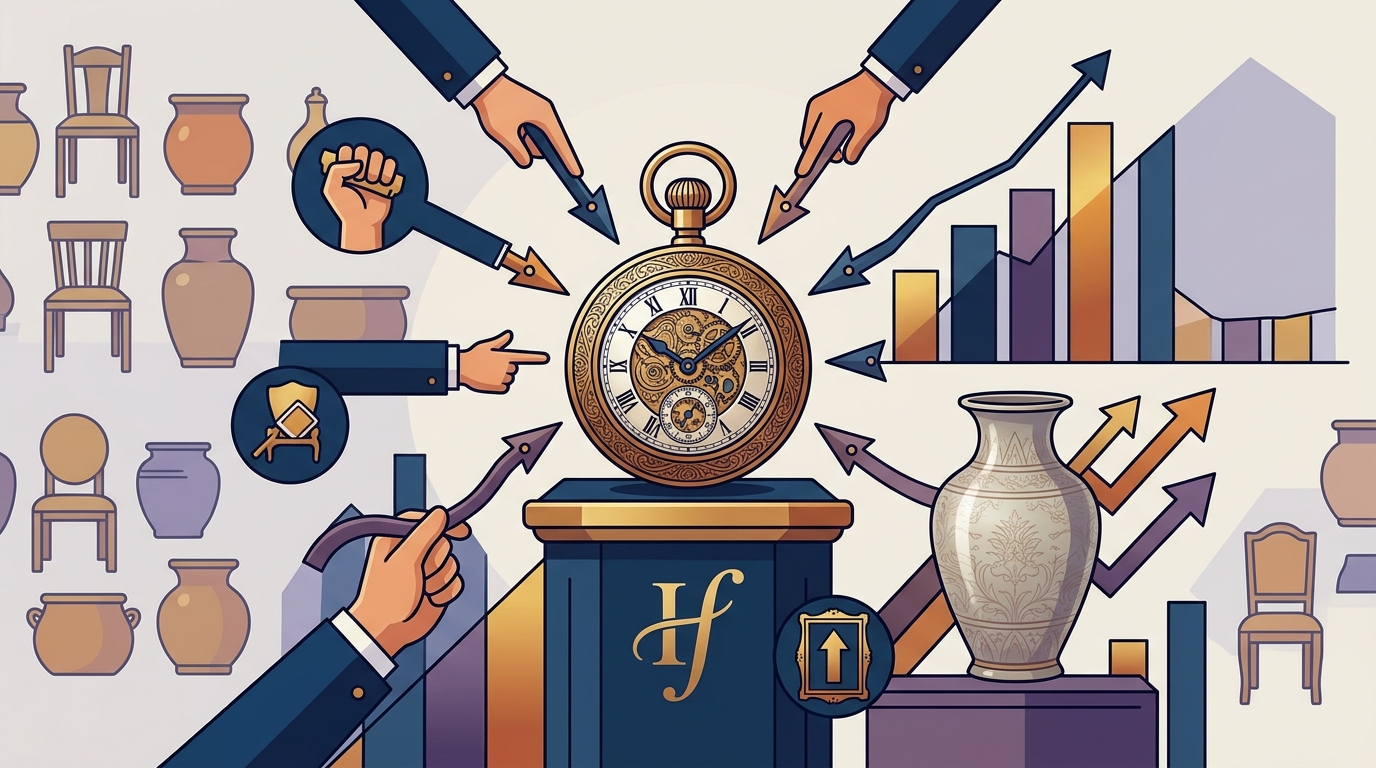
Scarcity matters because limited supply creates competitive demand, which directly inflates the resale price of unique items. When an object is one-of-a-kind or part of a small production run, buyers bid against each other to secure it. Hess Fine Art leverages this economic principle to help sellers maximize the return on their rare collections.
The Economic Principle of Limited Supply
Scarcity is the economic condition where the supply of a specific good is limited relative to the demand for it. In the luxury market, this dynamic is amplified because most high-value items are unique or produced in very small numbers. Unlike mass-produced goods, a rare antique cannot be restocked if it sells. This creates a sense of urgency among collectors who know they may never see another piece of that specific quality or era.
When supply is fixed and demand grows, prices rise. For sellers, this means that holding onto a rare item can sometimes yield higher returns later, but selling into a market with high current demand is also critical. The key is matching the item to the right buyer pool at the right time.
Provenance as a Scarcity Multiplier
Provenance is the documented history of ownership and origin of an item. A strong provenance story often makes an item feel even rarer because it connects the object to a specific historical narrative or famous owner. For example, a watch with a documented history of being owned by a notable figure is effectively a one-of-a-kind artifact, not just a timepiece.
At Hess Fine Art, our team evaluates how provenance impacts perceived scarcity. We look for documentation that elevates the item from a generic category to a unique historical record. This narrative often justifies a premium price that standard condition reports might miss.
Condition and Survivability
Survivability is the likelihood that an item from a specific era has remained intact and in good condition. Many antiques were produced in large quantities, but very few survive in excellent condition. Therefore, a piece in pristine condition is effectively rarer than the original production numbers suggest.
For instance, a vintage camera from the 1950s might have had 10,000 units made, but only 50 might remain in working order with original parts. This 0.5% survival rate creates a new layer of scarcity. Sellers should document the condition meticulously, as this data point is crucial for accurate valuation.
Market Demand and Collector Trends
Scarcity only drives value if there is active demand. Market trends can shift which rare items are in high demand. A category that was overlooked for decades can suddenly become a hotspot for collectors. This dynamic means that the value of a rare item is not static; it fluctuates with collector interest.
Our team at Hess Fine Auctions monitors these trends to advise sellers on the best timing for a sale. We use our network of global buyers to ensure that rare items are presented to an audience that values their scarcity.
How to Maximize Your Return
To benefit from scarcity, sellers must present their items with clarity and confidence. This includes providing high-quality images, detailed condition reports, and any available provenance documents. The more transparent the presentation, the easier it is for buyers to recognize the item's rarity and value.
We recommend that sellers obtain multiple offers to gauge the current market appetite for their specific item. By comparing bids, you can ensure you are receiving a price that reflects the true scarcity of your piece.
Key Takeaways
- Scarcity is the primary driver of price in the rare art and antique market.
- Provenance can make an item feel rarer by adding a unique historical narrative.
- Condition affects survivability, making well-preserved items effectively rarer than production numbers suggest.
- Market demand fluctuates, so timing your sale is crucial for maximizing value.
- Transparent presentation of condition and history helps buyers recognize true value.
- Obtaining multiple offers ensures you capture the full market value of your rare item.
Frequently Asked Questions
Does scarcity always mean a higher price?
Not necessarily. Scarcity must be paired with demand. If an item is rare but no one wants it, the price will remain low. However, in the luxury market, most rare items have a dedicated collector base.
How does condition affect the rarity of an item?
Condition affects the number of surviving examples. A piece in excellent condition is rarer than the total number produced because many others have deteriorated or been lost.
What is the role of provenance in valuation?
Provenance adds a layer of uniqueness. A documented history can make an item a one-of-a-kind artifact, which often commands a premium over similar items without history.
Should I sell my rare item now or wait?
It depends on current market trends. If demand for your category is high, selling now may yield a better price. Waiting can be risky if trends shift.
How can I verify the authenticity of a rare item?
Consulting with a specialist who has expertise in the specific category is the best way to verify authenticity. They can identify markers of authenticity and potential forgeries.
Conclusion
Scarcity is the engine that drives value in the rare art and antique market. By understanding how supply, condition, and provenance interact, you can make informed decisions about when and how to sell. Hess Fine Art is ready to help you navigate this complex landscape and ensure you receive the best possible price for your rare items.