
How to Evaluate the Condition of Antique Furniture for Sale
Antique furniture represents a significant intersection of historical value and tangible asset potential. According to recent market analyses, the global antique and collectibles market has seen consistent growth, with high-quality furniture often appreciating in value when properly authenticated and preserved. Evaluating the condition of these pieces is not merely an aesthetic exercise but a critical financial assessment. Whether you are looking to sell to a specialist or purchase a new heirloom, understanding the nuances of wear, repair, and structural integrity is essential. This guide provides a rigorous framework for assessing antique furniture, drawing on industry standards and expert methodologies to help you make informed decisions.
1. Assessing Structural Integrity and Joinery
The foundation of any antique furniture evaluation lies in its structural integrity. Unlike modern mass-produced items, antique pieces were constructed using techniques that have stood the test of time. The primary indicator of quality is the joinery. Mortise and tenon joints, dovetail joints, and finger joints are hallmarks of pre-19th-century craftsmanship. These mechanical connections rely on precision rather than adhesives, which degrade over decades.
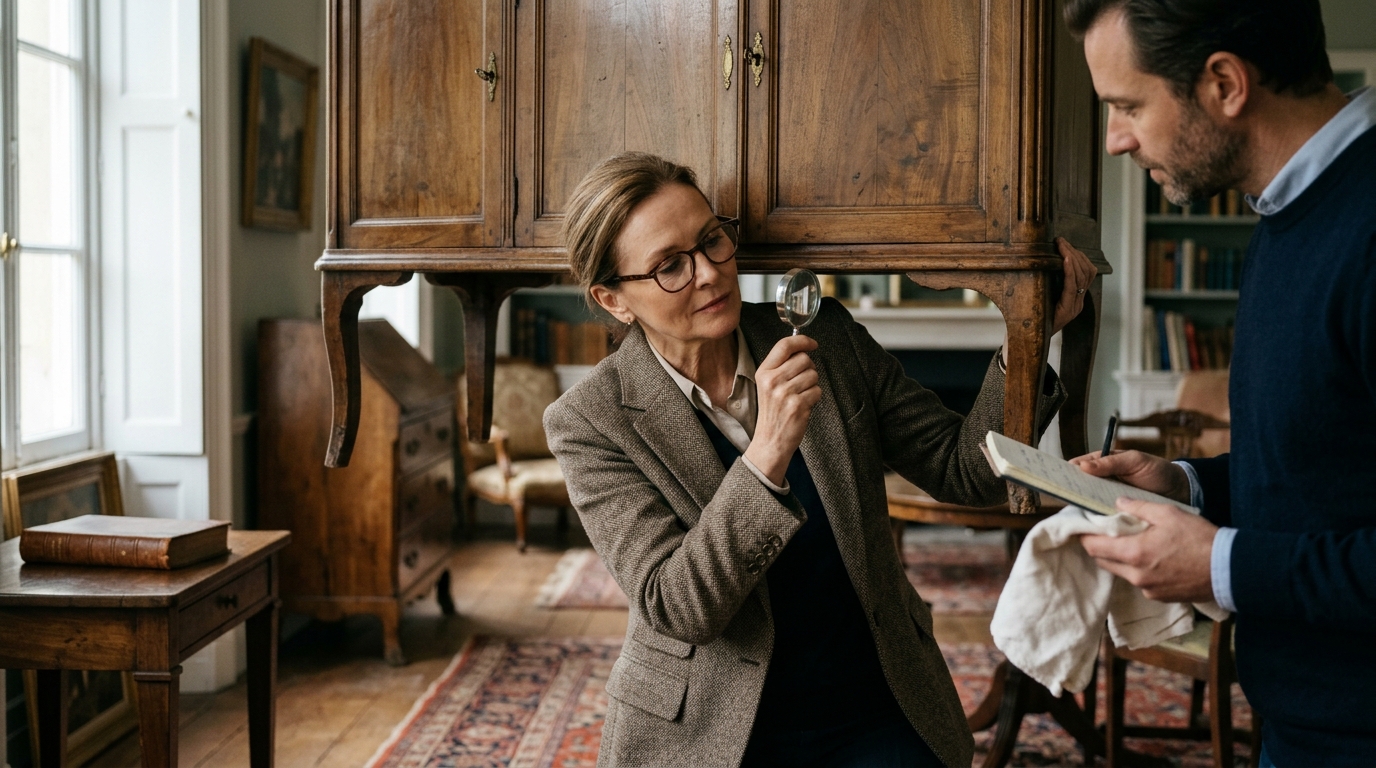
When inspecting a piece, gently apply pressure to the frame. A well-constructed antique should feel solid and rigid. If you hear creaking or feel movement, the joints may be loose or the wood may have shrunk due to humidity changes. Loose joints are repairable, but they significantly impact the value. Hess Fine Art often encounters pieces where structural stability is the first concern during appraisal.
Check the legs and stretchers for signs of stress. Original legs should be integral to the frame or securely mortised. Repairs involving metal brackets or screws are often signs of later interventions. While these repairs do not necessarily devalue a piece, they indicate that the original structural integrity has been compromised. Understanding these mechanical details is crucial for accurate valuation.
2. Identifying Surface Authenticity and Patina
Patina is the subtle sheen and color change that develops on wood surfaces over time due to oxidation, handling, and exposure to light. It is one of the most difficult features to replicate artificially. A genuine patina adds depth and character to a piece, whereas a heavy polish or refinishing can strip away this historical evidence.
Examine the surface under natural light. Look for variations in color that suggest age rather than uniformity. Uneven wear on edges, corners, and handles is expected and often desirable. However, be wary of "fake aging" techniques, such as sanding edges to look worn or using chemicals to darken the wood. These methods create a superficial look that lacks the depth of true age.
Finish condition is also critical. Original finishes, such as shellac, wax, or oil, will have a specific texture and response to touch. Modern polyurethane finishes feel plastic-like and sit on top of the wood. If a piece has been refinished, it loses a significant portion of its value. According to industry standards, original finish can increase a piece's value by 20 to 50 percent compared to a refinished equivalent. For expert advice on finish preservation, consult resources like Hess Fine Art Articles.
3. Analyzing Wood Types and Construction Methods
Identifying the wood species is a fundamental step in authentication. Different periods and regions favored specific woods. For example, mahogany was popular in the 18th century, while walnut was prevalent in the 17th century. Oak was commonly used in colonial American furniture. The grain pattern, color, and density of the wood provide clues to its origin and age.
Examine the back, sides, and drawers of the piece. Antique furniture often uses secondary woods, which are less expensive and easier to work with, for internal components. If a piece claims to be all mahogany but has pine drawers, this is normal and expected. However, if the secondary wood is a modern species, it may indicate a reproduction.
Construction methods also reveal age. Hand-cut dovetails are irregular and slightly uneven, while machine-cut dovetails are uniform and precise. The presence of saw marks from a circular saw (post-1840s) versus a pit saw (pre-1840s) can help date a piece. Understanding these technical details is essential for accurate identification. For more insights on wood analysis, visit the About Us page to learn about our team's expertise.
4. Evaluating the Impact of Repairs and Restorations
Repairs are inevitable in antique furniture, but their quality and extent significantly affect value. Minor repairs, such as regluing a loose joint or replacing a missing finial, are generally acceptable. However, extensive restorations can diminish the piece's historical integrity.
Look for signs of previous repairs. Mismatched wood, visible glue lines, and modern hardware are red flags. A skilled restorer will use period-appropriate materials and techniques to blend repairs seamlessly. However, even the best restorations are detectable to an expert eye. The goal is to preserve the original material as much as possible.
Structural repairs are more critical than cosmetic ones. A piece with a solid frame but a worn surface is often more valuable than one with a beautiful finish but a compromised structure. When evaluating repairs, consider the cost and difficulty of future maintenance. For professional repair assessments, contact Hess Fine Art for a detailed appraisal.
5. The Role of Provenance and Documentation
Provenance refers to the history of ownership and origin of a piece. Documentation such as bills of sale, estate records, or photographs can significantly enhance value. A piece with a known history, such as belonging to a notable figure or originating from a specific region, commands a premium.
Even without formal documentation, oral history can add value. Stories about a piece's origin can provide context and interest. However, provenance must be verifiable. Exaggerated claims or fabricated histories can damage credibility. Always seek expert verification for high-value items. For more information on our appraisal services, see our Contact Us page.
6. Comparison of Furniture Conditions
Understanding the different condition grades helps in setting realistic expectations and prices. The table below outlines the key characteristics of each grade.
| Condition Grade | Structural Integrity | Surface & Finish | Value Impact |
|---|---|---|---|
| Museum Quality | Perfect, no repairs | Original finish, minimal wear | Maximum value, rare |
| Excellent | Strong, minor repairs | Original finish, some wear | High value, desirable |
| Good | Stable, some loose joints | Refinished or worn original | Moderate value, common |
| Fair | Weak, requires repair | Heavy refinishing or damage | Lower value, investment piece |
| Poor | Unstable, major damage | Severe damage, missing parts | Low value, restoration project |
Key Takeaways
- Joinery is Key: Mortise and tenon or dovetail joints indicate authentic antique construction.
- Patina Adds Value: Original finish and natural wear patterns are highly desirable.
- Wood Analysis: Identify primary and secondary woods to verify age and origin.
- Repairs Matter: Extensive restorations can significantly reduce market value.
- Provenance Helps: Documented history increases credibility and price.
- Expert Appraisal: Professional evaluation ensures accurate valuation and authentication.
- Market Trends: Stay informed on current demand for specific styles and periods.
Frequently Asked Questions
How do I know if an antique furniture piece is authentic?
Authenticity is determined by examining construction methods, wood types, joinery, and signs of age such as patina and wear patterns. Expert appraisal is recommended for high-value items.
What is the most important factor in antique furniture valuation?
Condition is the most critical factor. Original finish, structural integrity, and rarity significantly influence value. Provenance also plays a major role.
Can refinishing an antique furniture piece increase its value?
Generally, no. Refinishing often removes the original patina and can diminish historical value. It is usually better to preserve the original finish.
How do I check for structural damage in antique furniture?
Inspect joints for looseness, check for cracks in the wood, and ensure legs and stretchers are secure. Gentle pressure tests can reveal hidden weaknesses.
What is the difference between antique and vintage furniture?
Antique furniture is typically over 100 years old, while vintage furniture is between 20 and 100 years old. Both can hold value, but antiques often command higher prices due to rarity.
Where can I sell my antique furniture for the best price?
Selling to specialized buyers or auction houses that focus on antiques often yields better results than general marketplaces. Expert appraisal ensures fair pricing.
How do I care for antique furniture to maintain its value?
Avoid direct sunlight, maintain stable humidity levels, and clean with appropriate products. Regular professional maintenance can preserve condition and value.
Contact Hess Fine Art for Expert Appraisal
Evaluating antique furniture requires a keen eye and deep knowledge of historical craftsmanship. At Hess Fine Art, we provide expert appraisal services to help you understand the true value of your pieces. Whether you are looking to sell, insure, or simply learn more about your collection, our team of specialists is here to assist. Contact us today to schedule a consultation and discover the full potential of your antique furniture.