
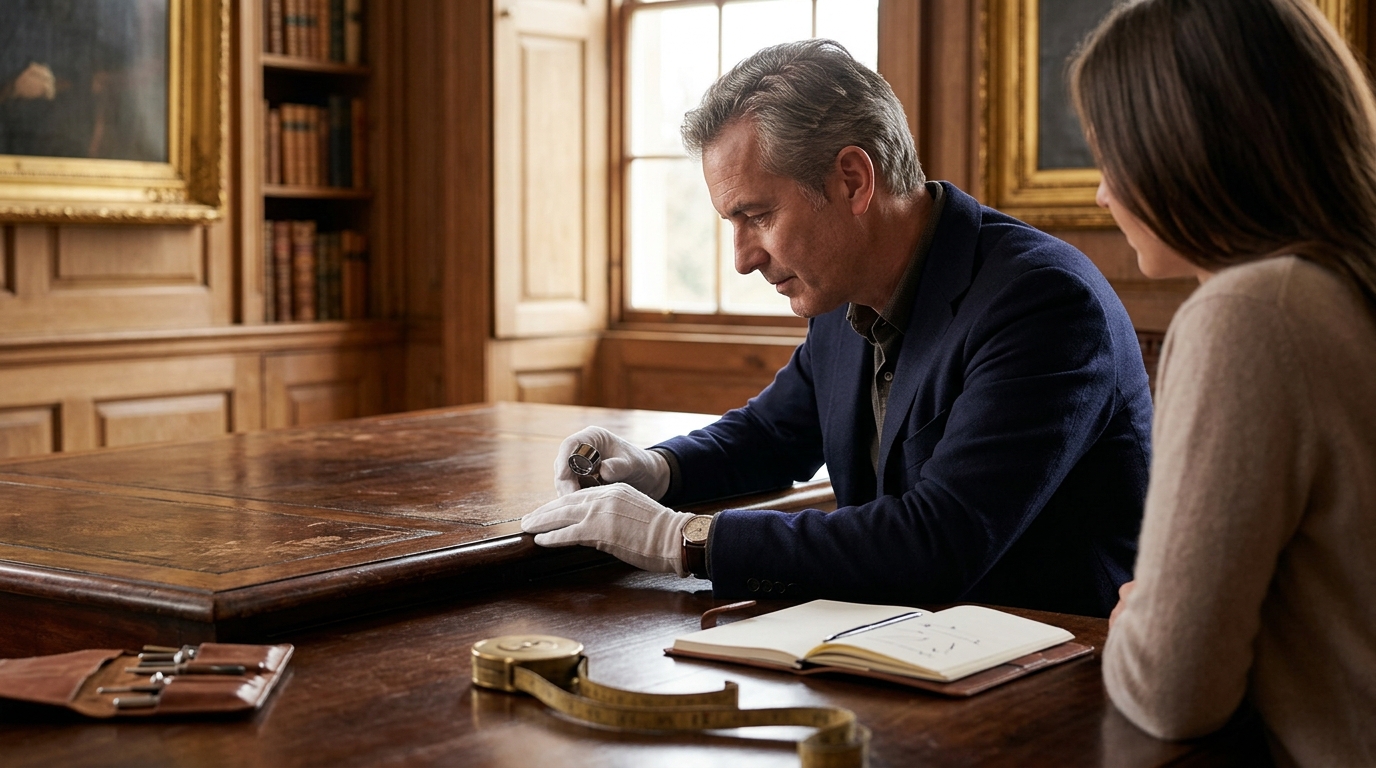
How to Evaluate the Condition of Antique Furniture for Sale
Evaluating the condition of antique furniture is a critical skill that separates informed collectors from casual buyers. According to industry data, well-preserved antique pieces often appreciate by 5 to 10 percent annually, significantly outperforming standard market indices. This financial reality underscores the importance of accurate condition assessment before any transaction occurs. At Hess Fine Art, we buy millions of dollars worth of items every year, and accurate identification of condition is the primary driver of valuation. This guide provides a rigorous framework for assessing structural integrity, material authenticity, and aesthetic preservation.
Assessing Structural Integrity and Joinery
The foundation of any antique furniture piece lies in its joinery. Unlike modern mass-produced items that rely heavily on staples, nails, or glue, authentic antiques utilize complex mechanical fastening systems. Mortise and tenon joints are the gold standard for durability in pieces dating before the mid-19th century. When evaluating a piece, gently apply pressure to the frame. If the structure shifts or creaks, the original joinery may be compromised.
Look for signs of previous repairs. Original glue lines, often visible as dark seams between wood pieces, indicate age-appropriate maintenance. However, excessive use of modern wood fillers or epoxy suggests significant structural failure. At Hess Fine Art, our staff is trained to identify these subtle cues. We have the most experienced and educated staff in Florida to determine if a piece is structurally sound or requires professional conservation.
Check the legs and aprons for wobble. A stable base is non-negotiable for high-value antiques. If the piece rocks, inspect the corner blocks. Original corner blocks are typically made of the same wood as the piece and are hand-nailed. Replacement blocks made of pine or plywood are red flags for modern intervention.
Identifying Surface Authenticity and Patina
Patina is the cumulative effect of age, handling, and environmental exposure on a surface. It is not dirt, nor is it damage. Patina is a desirable, authentic finish that adds depth and character to antique furniture. Evaluating patina requires a keen eye for consistency. Genuine patina develops unevenly in areas of high contact, such as chair seats or table edges, creating a natural wear pattern.
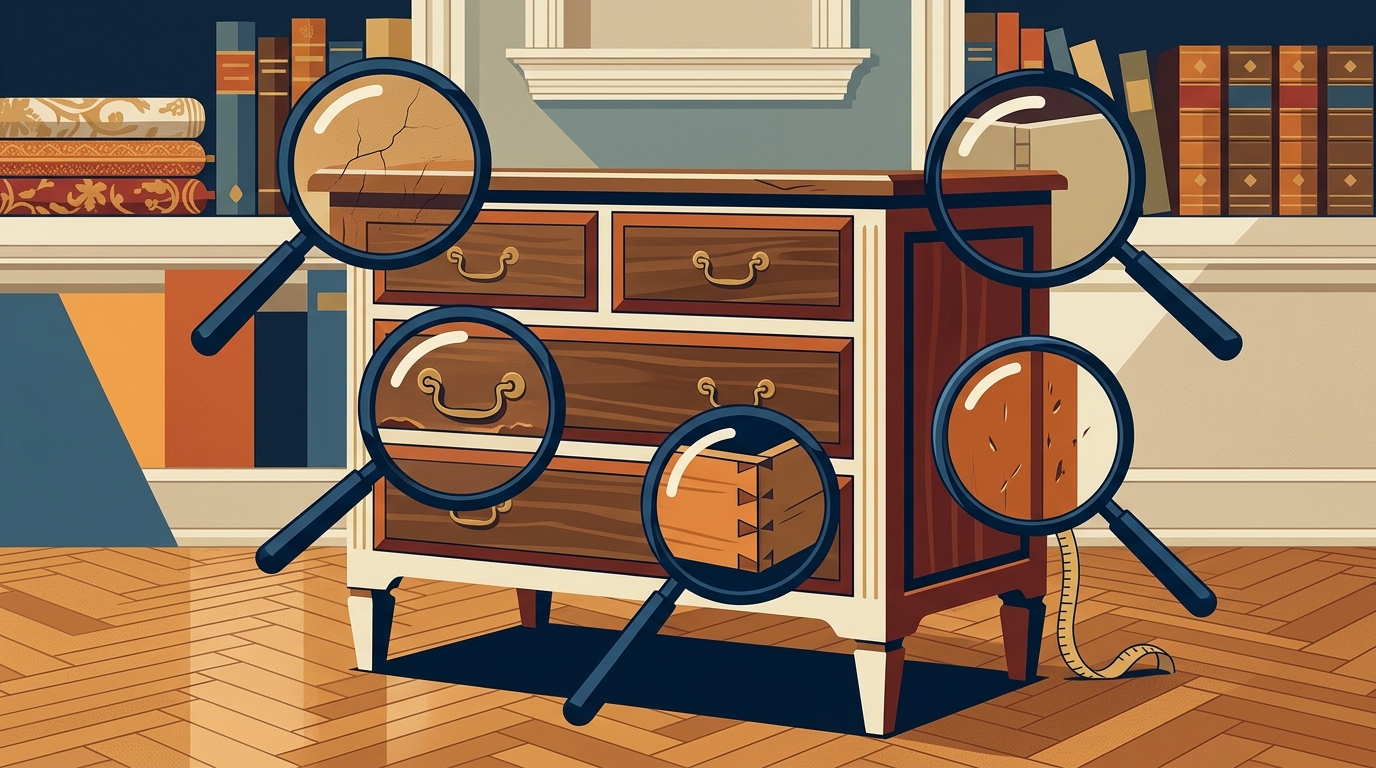
Be wary of artificial aging. Some sellers apply chemicals or sand edges to mimic wear. This often results in a uniform, harsh appearance that lacks the softness of genuine age. Use a magnifying glass to inspect the finish. Original varnishes and lacquers crack in fine, web-like patterns known as craquelure. Modern finishes tend to peel in larger flakes or show no cracking at all.
Lighting plays a crucial role in this assessment. View the piece in natural light if possible. Artificial lighting can hide scratches, dents, and previous repairs. Look for color variations between the top surface and the sides. The top of a table or desk often shows more wear due to use, while the sides remain protected. A uniform color across all surfaces may indicate a recent refinishing.
Analyzing Wood Grain and Material Consistency
Understanding the wood species is essential for accurate valuation. Mahogany, walnut, oak, and cherry are common in American and European antiques. Each wood has a distinct grain pattern and density. For example, mahogany has a fine, even grain that takes polish well, while oak features prominent medullary rays that appear as silver flecks.
Inspect the wood grain continuity. On solid wood pieces, the grain should flow naturally from one surface to another. If the grain pattern stops abruptly at an edge, the piece may be veneered. Veneers are not inherently bad, but they must be evaluated for quality. High-quality veneers are thin and carefully matched. Poor quality veneers may show peeling edges or visible substrate layers.
Check for insect damage. Look for small, round holes known as exit holes. These indicate past infestations by wood-boring beetles. While active infestations are rare in well-maintained antiques, old damage can weaken the structure. If you see fresh sawdust near the holes, the infestation is active. In such cases, professional treatment is required before the piece can be safely integrated into a collection.
Understanding the Impact of Restoration
Restoration can significantly alter the value of antique furniture. Minor conservation, such as tightening joints or cleaning, is generally acceptable and often increases value. Major restoration, such as replacing legs, aprons, or entire panels, drastically reduces value. The key is transparency. Sellers must disclose all repairs and replacements.
Identify replacement parts by comparing the wood color and grain. Newer wood often appears lighter and lacks the oxidation of older wood. Additionally, tool marks can reveal the era of manufacture. Hand-cut dovetails are irregular and precise, while machine-cut dovetails are uniform and spaced evenly. Modern reproductions often feature machine-cut joints that lack the craftsmanship of original pieces.
At Hess Fine Art, we specialize in identifying these nuances. We buy and sell millions of dollars worth of items every year, and our ability to accurately identify items ensures fair compensation for our clients. If you are unsure about the extent of restoration on a piece, professional appraisal is recommended. Our team can provide an honest assessment of value based on current market conditions.
Evaluating Provenance and Historical Context
Provenance refers to the history of ownership of a piece. A documented history can significantly increase value, especially if the piece was owned by a notable figure or originated from a famous estate. Look for labels, stamps, or inscriptions inside drawers, on the back, or under seats.
Research the maker. Many antique furniture makers kept detailed records. If you can identify the maker, consult reference books or online databases for similar pieces. This research can confirm authenticity and provide context for the design. For example, a piece attributed to a known American cabinetmaker from the Federal period will command a premium.
Consider the style and period. Furniture styles evolved over time, reflecting changes in taste and technology. Understanding these changes helps verify the age of the piece. For instance, the transition from Queen Anne to Chippendale style involved distinct changes in leg design and ornamentation. Misattributed pieces are common in the market, so cross-referencing with authoritative sources is essential.
Condition Grading Comparison
To help you understand how condition affects value, here is a comparison of common grading standards used by experts like those at Hess Fine Art.
| Condition Grade | Description | Impact on Value | Typical Market Availability |
|---|---|---|---|
| Mint / Pristine | No visible wear, original finish intact, structurally perfect. | 100% to 120% of catalog value. | Rare, highly sought after. |
| Excellent | Minor wear consistent with age, minor repairs, structurally sound. | 80% to 100% of catalog value. | Common in high-end auctions. |
| Very Good | Noticeable wear, some restoration, stable structure. | 60% to 80% of catalog value. | Widely available. |
| Good / Fair | Significant wear, major repairs, possible structural issues. | 40% to 60% of catalog value. | Common in estate sales. |
| Poor / Project | Severe damage, missing parts, active infestation, or heavy restoration. | 10% to 30% of catalog value. | Often sold for parts or restoration. |
Key Takeaways
- Joinery is Key: Mortise and tenon joints indicate age and durability. Loose joints suggest structural failure.
- Patina is Precious: Authentic wear patterns add value. Artificial aging detracts from it.
- Wood Consistency: Match grain and color to verify solid wood versus veneer.
- Restoration Disclosure: Major repairs significantly reduce value. Transparency is crucial.
- Provenance Matters: Documented history can increase value by 20 to 50 percent.
- Professional Appraisal: Hess Fine Art offers expert evaluation for accurate valuation.
- Market Awareness: Condition grades directly correlate with auction results and resale potential.
Frequently Asked Questions
How do I tell if antique furniture is real or a reproduction?
Examine the joinery, wood grain, and tool marks. Original pieces feature hand-cut joints and natural wear patterns. Reproductions often have machine-cut joints and uniform finishes. Consulting with experts at Hess Fine Art can provide definitive answers.
What is the most important factor in antique furniture valuation?
Condition is the primary driver of value. A piece in mint condition can be worth double that of a similar piece in fair condition. Provenance and rarity are secondary but significant factors.
Can I restore antique furniture myself?
Minor cleaning and tightening are safe. Major restoration should be left to professionals. Improper restoration can drastically reduce value. Our staff at Hess Fine Art can advise on appropriate conservation methods.
How does wood type affect the value of antique furniture?
Rare woods like rosewood or ebony command higher prices. Common woods like pine or poplar are less valuable unless the piece is exceptionally rare or historically significant. Understanding wood species is part of our expertise at Hess Fine Art.
What should I look for when inspecting the finish?
Look for craquelure, consistent patina, and natural wear. Avoid pieces with peeling finish or uniform artificial aging. The finish should feel smooth and aged, not sticky or overly glossy.
Is it better to buy restored or unrestored antique furniture?
Unrestored pieces in good condition are generally more valuable. However, a professionally restored piece in excellent condition can be a better investment than an unrestored piece in poor condition. Evaluate each piece individually.
How can I sell my antique furniture for the best price?
Get a professional appraisal to understand its true value. Hess Fine Art is one of the top buyers in the USA and pays the most by accurately identifying items. Visit Sell Your Items to get started.
Contact Hess Fine Art for Appraisal
Evaluating antique furniture requires expertise, experience, and a deep understanding of market dynamics. At Hess Fine Art, we buy millions of dollars worth of items every year because we pay the most and can identify your items accurately. Whether you are looking to sell, appraise, or simply learn more, our team is here to help. Contact us today to discuss your collection and discover its true value.