

Deciding how to liquidate a high-value collection is rarely a simple choice. The difference between a private sale and a public auction can determine whether you receive a guaranteed fair market value or a speculative bid that falls short of expectations. According to recent industry data, the average premium paid at major auction houses often exceeds 20 percent, yet private buyers frequently offer higher net proceeds for unique, non-standard items. This divergence creates a critical decision point for collectors, heirs, and investors alike. (Art Auctions Watches amp)
Understanding the Mechanisms
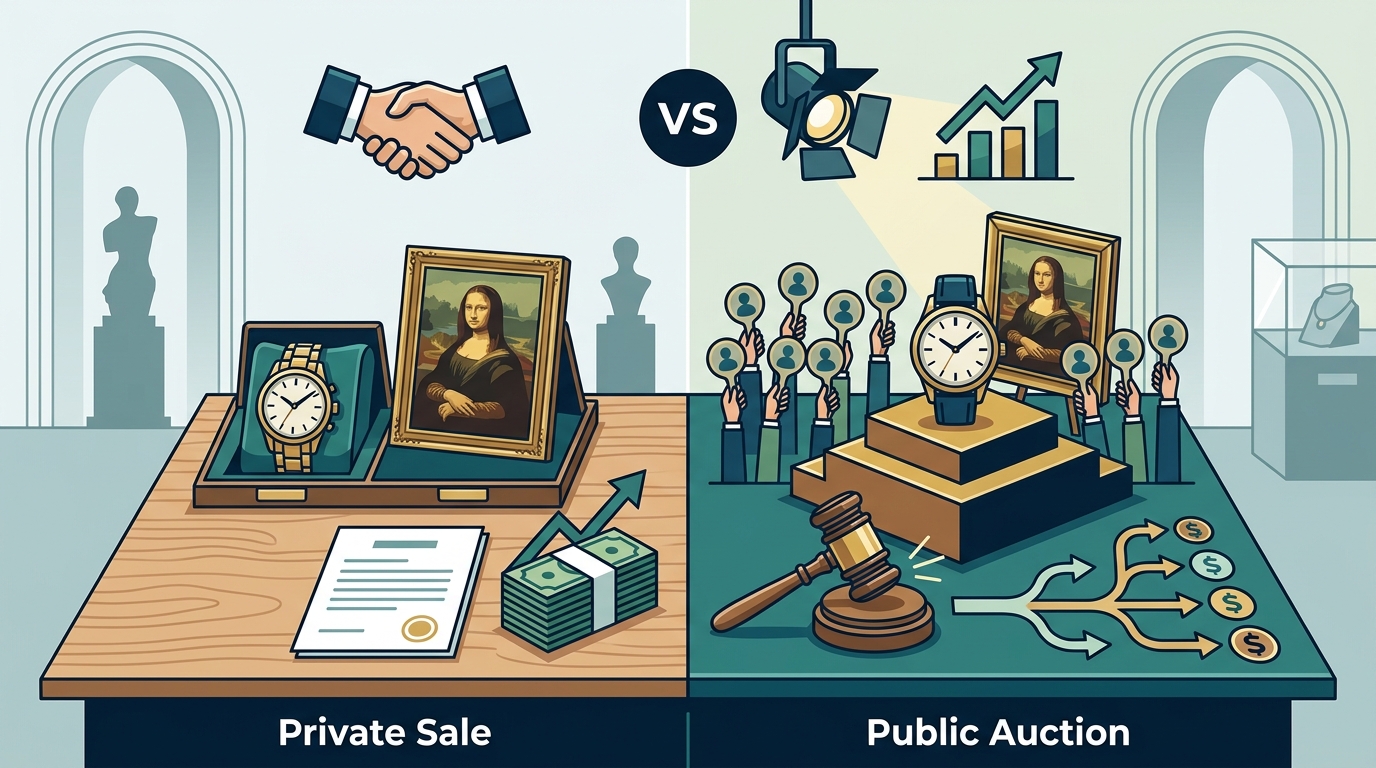
To make an informed decision, you must first understand the fundamental mechanics of each channel. A private sale involves a direct transaction between a seller and a qualified buyer. This method relies heavily on the buyer's immediate liquidity and the seller's ability to present the item accurately. In contrast, an auction is a public bidding process where the final price is determined by competitive demand at a specific moment in time.
Private sales offer certainty. When you sell directly to a reputable dealer, the price is negotiated and agreed upon before the transaction closes. This eliminates the anxiety of the hammer falling below your expectations. Auctions, however, introduce the thrill of competition. For rare items with a dedicated global following, this competition can drive prices significantly higher than any private offer.
The choice often depends on the nature of the asset. Standard luxury watches, such as common Rolex models, often have established market values that private dealers can match quickly. Unique art pieces or one-of-a-kind antiques may require the broader exposure of an auction to find the specific collector willing to pay a premium.
Pricing Dynamics and Transparency
Pricing transparency is a major differentiator between these two methods. In a private sale, the valuation is based on current market comparables and the dealer's inventory needs. While this can sometimes result in lower offers due to the dealer's margin requirements, it provides a clear, upfront number. You know exactly what you will receive, minus any agreed-upon fees.
Auction pricing is inherently unpredictable. The final hammer price is influenced by the number of bidders, the quality of the marketing, and the specific day of the sale. According to market analysis, auction results can vary wildly for the same item depending on these external factors. However, for items with high scarcity, auctions can reveal the true ceiling of market value, which private buyers might not be willing to risk offering.
Transparency in fees is also crucial. Private dealers typically charge no commission to the seller, making the net proceeds equal to the agreed price. Auction houses, however, charge both a seller's commission and a buyer's premium. These fees can total 20 to 30 percent of the final hammer price. Therefore, an auction result must be significantly higher than a private offer to justify the additional costs.
Timeline and Speed of Sale
Speed is often the deciding factor for sellers dealing with estate liquidation or urgent financial needs. Private sales are the fastest option. Once an item is appraised and an offer is accepted, payment can be processed within days. This immediacy is invaluable for heirs who need to settle estates quickly or collectors who want to free up capital for new acquisitions.
Auctions operate on a fixed schedule. From the time you submit an item for cataloging to the actual sale date, the process can take several weeks or even months. This includes photography, description writing, marketing campaigns, and the waiting period for the auction event itself. While the sale is guaranteed once the hammer falls, the timeline is rigid and outside your control.
For time-sensitive situations, the delay inherent in the auction process can be a significant drawback. If you need cash immediately, a private sale to a trusted buyer like Hess Fine Art provides the liquidity you need without the wait. Conversely, if you have the luxury of time and believe the item will appreciate in value during the marketing period, an auction may be worth the delay.
Audience Reach and Competition
The primary advantage of auctions is their ability to generate competition. By marketing an item to a global audience of collectors, auction houses can create a bidding war that drives the price up. This is particularly effective for items with a strong brand name, such as vintage Rolex watches or works by famous artists.
Private sales rely on the buyer's existing network and inventory needs. While a reputable dealer may have a large client base, they are not actively marketing your specific item to thousands of potential buyers. The price is determined by what the dealer is willing to pay, not what the market might bid.
However, broader reach does not always mean a higher price. If the item is niche or lacks broad appeal, an auction may result in a low bid or no sale at all. In such cases, a private dealer who specializes in that specific category can provide a more reliable outcome. The expertise of the buyer matters as much as the size of the audience.
Risk and Fee Structures
Risk management is a critical component of any liquidation strategy. Private sales carry minimal risk. Once the deal is done, the seller receives the agreed-upon amount. There is no risk of the item failing to sell or the price dropping unexpectedly. This certainty is a major benefit for sellers who want to avoid the volatility of the auction market.
Auctions carry the risk of the item not selling. If the bidding does not reach the reserve price, the item is withdrawn, and the seller may still be responsible for cataloging and marketing fees. Additionally, the pressure of the auction environment can lead to emotional decision-making, such as lowering the reserve price at the last minute to ensure a sale.
Fee structures also play a significant role in net proceeds. Private dealers often offer competitive prices with no hidden costs. Auction houses charge substantial commissions that can eat into your profits. It is essential to calculate the net proceeds after all fees before deciding on an auction. For high-value items, the difference can be tens of thousands of dollars.
Comparison Summary
The following table summarizes the key differences between selling privately and auctioning your items.
| Factor | Private Sale | Auction |
|---|---|---|
| Speed | Immediate to a few days | Weeks to months |
| Price Certainty | Guaranteed fixed price | Unpredictable hammer price |
| Commissions | Typically none | 20-30% total fees |
| Competition | Single buyer offer | Multiple bidders |
| Risk | Low | Medium to High |
Key Takeaways
- Private sales offer immediate liquidity and guaranteed prices, making them ideal for urgent needs.
- Auctions can generate higher prices for rare items through competitive bidding but come with significant fees.
- The average auction premium often exceeds 20 percent, which must be factored into net proceeds.
- Private dealers like Hess Fine Art provide expert appraisals with no commission costs.
- Auction timelines are rigid and can take months from submission to sale.
- Unique or niche items may not perform well in auctions due to limited buyer interest.
- Transparency in fees is crucial; private sales often result in higher net proceeds for standard items.
Frequently Asked Questions
Is it better to sell my watch privately or at auction?
It depends on the rarity of the watch. Standard models often sell for more net proceeds privately due to lower fees. Rare, limited-edition pieces may achieve higher prices at auction due to competition.
How long does it take to sell an item through Hess Fine Art?
Private sales are typically processed within days of appraisal. Auctions can take several weeks or months to schedule and complete.
What fees do auction houses charge?
Auction houses usually charge a seller's commission and a buyer's premium, totaling 20 to 30 percent of the final hammer price.
Can I get a guaranteed price for my art?
Yes, private sales offer guaranteed prices agreed upon before the transaction. Auctions do not guarantee a final price unless a reserve is met.
Do I need to pay for an appraisal?
Reputable dealers like Hess Fine Art offer free appraisals to help you understand the value of your items before selling.
What happens if my item doesn't sell at auction?
If the reserve is not met, the item is withdrawn. You may still be responsible for cataloging and marketing fees depending on the auction house's policy.
How does Hess Fine Art determine value?
Our team of experts uses current market data, historical sales records, and item condition to provide accurate valuations.
Next Steps
Choosing the right liquidation method requires careful consideration of your financial goals and timeline. If you value speed, certainty, and higher net proceeds, a private sale is often the superior choice. For unique items with broad collector appeal, an auction may offer the potential for higher returns.
Contact Hess Fine Art today to schedule a consultation. Our experts are ready to provide a no-obligation appraisal and help you make the best decision for your collection.