

Common Mistakes When Selling an Entire Art Collection to a National Buyer
Liquidating a lifetime accumulation of fine art, antiques, and collectibles is a complex financial event that demands precision. According to industry data on high-value asset liquidation, families often leave between 20% and 40% of potential value on the table due to improper categorization and lack of expert appraisal. This gap exists because generalist buyers often undervalue specialized items, while private sellers lack the market data to negotiate effectively. Understanding the mechanics of national buying firms is the first step toward maximizing your return.
Mistake 1: Treating All Items as a Single Lot
One of the most frequent errors in estate liquidation is submitting a massive, unsorted inventory to a single buyer. When you bundle a rare first-edition book with a mass-produced print, the buyer often applies a "lowest common denominator" valuation. This means the high-value items are discounted to match the lower-value ones. A national buyer with a specialized staff can identify these disparities. For instance, Hess Fine Art emphasizes that their educated staff pays the most because they identify items accurately, rather than applying a blanket rate.
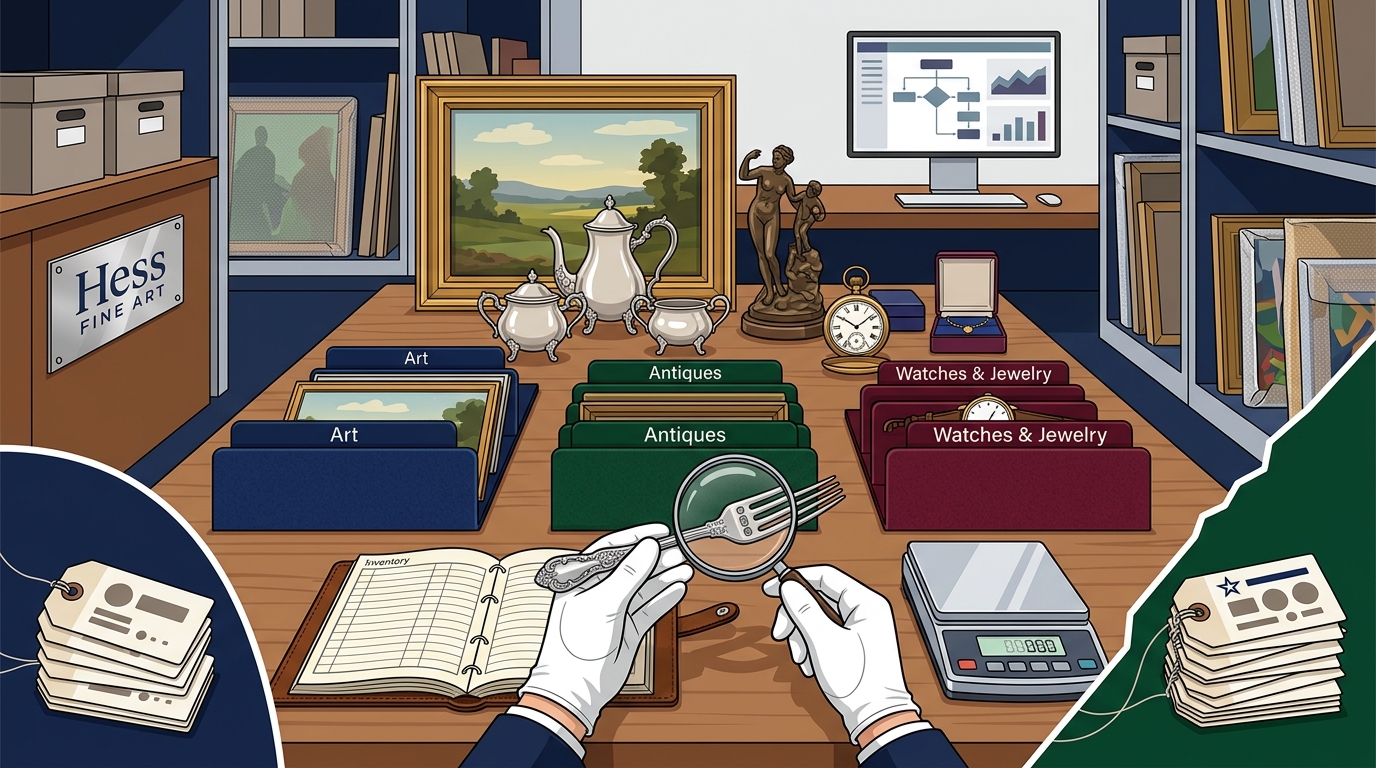
Art, jewelry, and numismatics require distinct valuation models. A painting is valued on aesthetics, condition, and artist reputation. A coin is valued on grade, rarity, and metal content. Mixing these categories prevents the buyer from applying the correct market metrics. You must separate your collection into clear categories before initiating contact.
Mistake 2: Ignoring the Value of Provenance
Provenance is the documented history of ownership for a piece of art or artifact. Many sellers discard old receipts, exhibition catalogs, or previous auction records, assuming they are clutter. This is a critical error. Provenance can double or triple the value of a piece. For example, a painting previously owned by a notable figure or exhibited in a major museum commands a premium. Without this documentation, the item is treated as a generic work, significantly lowering its appraisal.
When you sell to experts, they look for these historical markers. If you have lost the physical documents, provide any digital records or family histories. The more context you provide, the more accurately the buyer can assess the item's true market worth. This is particularly true for vintage watches and signed jewelry, where original boxes and certificates are vital.
Mistake 3: Overlooking Niche Collectibles
Collectors often underestimate the value of seemingly mundane items. Rare baseball cards, vintage technology, or specific types of antique furniture can have dedicated, high-paying markets. A general buyer might see a box of old electronics as scrap. A specialized buyer sees a rare prototype or a limited-run device with collector demand.
It is essential to research your niche before selling. If you have a collection of mid-century modern furniture, do not sell it alongside contemporary art. The markets are different. Articles and resources from national buyers often highlight these specific categories. By understanding the niche, you can ensure your items are routed to the correct department within the buying firm, ensuring a fair price.
Failing to Verify Buyer Credentials
Not all national buyers are created equal. Some operate as low-ball brokers who pass your items to other buyers for a fee. Others are direct purchasers with the capital to pay immediately. It is crucial to verify the buyer's professional affiliations and history. Look for memberships in organizations like the National Association of Watch and Clock Collectors (NAWCC) or the International Watch & Jewelry Guild (IWJG).
These affiliations indicate a commitment to industry standards and ethical practices. Additionally, check for reviews from previous clients. A buyer with a long history of fair transactions, like Hess Fine Art, which has been recognized by publications such as Forbes and Esquire, offers a higher level of security and expertise. Always ask for references and verify their standing with the Better Business Bureau (BBB).
Neglecting the Auction Alternative
While selling directly to a buyer offers speed and certainty, it is not always the highest-value option. For unique, high-end pieces, an auction might yield a higher price due to competitive bidding. However, auctions take time and involve fees. The key is to know when to use which method.
Use a direct sale for bulk items, common collectibles, or when you need immediate liquidity. Use an auction for rare, one-of-a-kind pieces with high collector demand. Many national buyers, such as Hess Fine Auctions, offer both services. This allows them to advise you on the best path for each item in your collection. Do not assume one method fits all your assets.
Underestimating the Role of Specialized Staff
The quality of the staff at the buying firm is the most critical factor in your sale. A team of GIA Graduate Gemologists, certified appraisers, and horologists can identify details that a generalist would miss. For example, a watch that appears standard might be a rare variant with a specific movement. A gemologist can identify the cut and clarity of a diamond that affects its value significantly.
When you engage with a firm that invests in its staff's education, you are investing in your own return. Mrs. Katrina Hess, a GIA Graduate Gemologist, and her team at Hess Fine Art are known for their deep expertise. They lecture at major industry events and stay current with market trends. This expertise translates directly into higher offers for you. Always ask about the qualifications of the staff who will be appraising your items.
Comparison of Selling Methods
| Method | Speed of Payment | Potential Value | Best For |
|---|---|---|---|
| Direct Sale to Buyer | Immediate | High (Fair Market) | Bulk items, estate liquidation, urgency |
| Auction | Slow (30-60 days) | Very High (Competitive) | Rare, unique, high-demand pieces |
| Online Marketplace | Variable | Variable (Risk of Lowball) | Low-value items, hobbyist sales |
Key Takeaways
- Separate Your Collection: Do not bundle diverse items. Categorize art, jewelry, coins, and collectibles separately for accurate valuation.
- Preserve Provenance: Keep all documentation, receipts, and historical records. They are critical for maximizing value.
- Verify Credentials: Choose buyers with professional affiliations like NAWCC, IWJG, and GIA to ensure expertise.
- Leverage Expert Staff: Work with firms that employ certified gemologists and appraisers to catch hidden value.
- Consider Auctions: Use auctions for rare, high-value items and direct sales for bulk or urgent liquidation.
- Research the Buyer: Look for national recognition and positive client reviews to avoid low-ball brokers.
- Get Multiple Offers: If possible, consult with more than one national buyer to compare offers and expertise.
Frequently Asked Questions
How do I know if my art collection is worth selling to a national buyer?
If your collection includes high-value items such as signed jewelry, rare coins, or fine art, a national buyer can provide a fair market appraisal. They have the market data to value items accurately, unlike local pawn shops.
What is the difference between selling and auctioning my collection?
Selling to a buyer offers immediate cash and certainty. Auctioning can yield higher prices for rare items but takes longer and involves fees. A reputable firm can advise you on the best mix of both.
Do I need to clean my items before selling?
No. Cleaning can damage value, especially for antiques and coins. Let the experts handle the assessment. They know which items need professional conservation and which are better left as-is.
How are jewelry appraisals conducted?
Jewelry appraisals are conducted by certified gemologists who assess the cut, clarity, color, and carat weight of diamonds, as well as the metal purity and craftsmanship of the setting.
What types of collectibles do national buyers purchase?
National buyers purchase a wide range of items, including vintage watches, rare baseball cards, antique furniture, gold and silver bullion, and vintage technology.
Is it safe to sell my items to a national buyer?
Yes, if you choose a reputable firm with professional affiliations and positive reviews. Look for members of the BBB and industry guilds to ensure ethical practices.
How long does the selling process take?
Direct sales can be completed in a single visit or within a few days. Auctions typically take 30 to 60 days from listing to payment.
Ready to Maximize Your Collection's Value?
Do not let your assets be undervalued due to common mistakes. Partner with a team of experts who understand the nuances of the market. Contact Hess Fine Art today to schedule an appraisal and discover the true worth of your collection. Our nationally recognized experts are ready to help you navigate the liquidation process with confidence and fairness.