
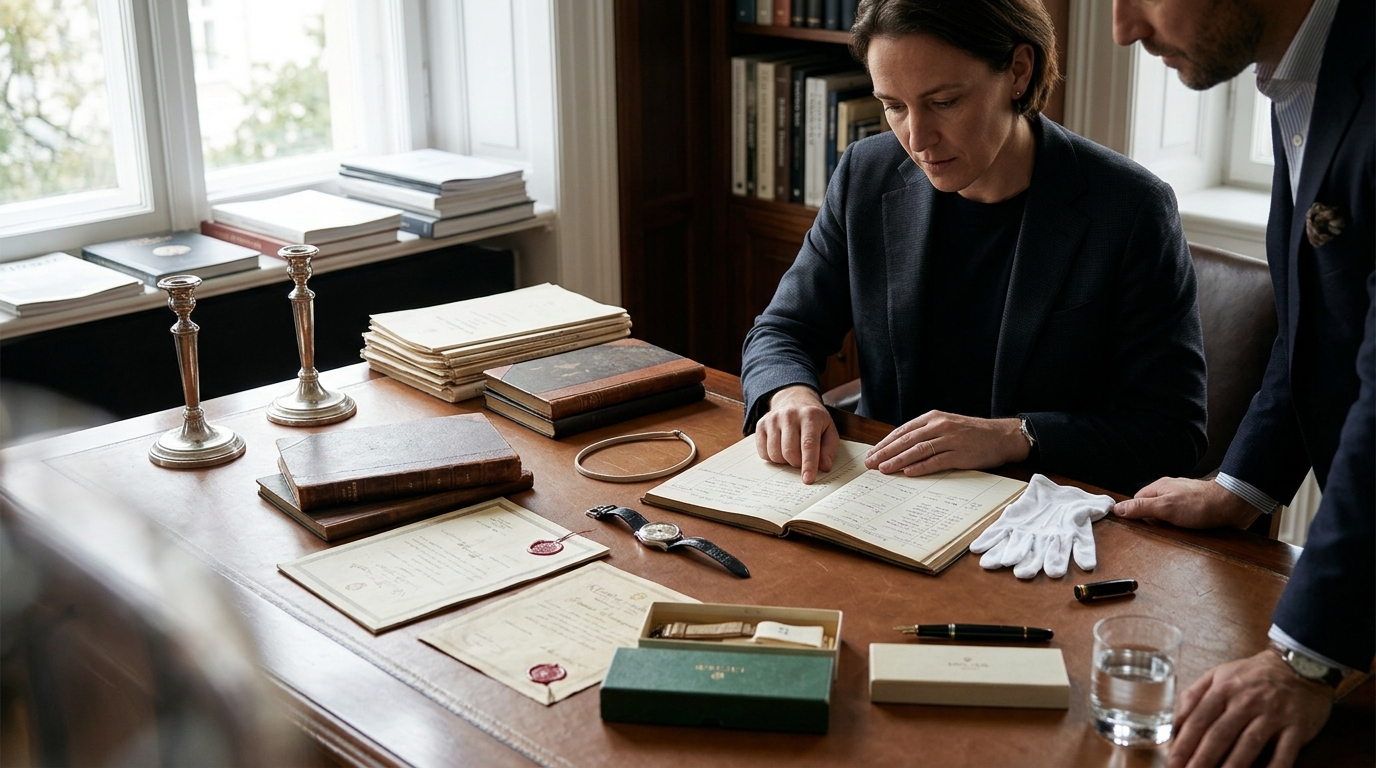
Authentication, Provenance, and Documentation Standards for Luxury Item Resale
Proper documentation is the single most critical factor in determining the resale value of high-end collectibles. According to industry data from the National Association of Watch and Clock Collectors, items with complete original packaging and verified service history can command up to 30% more than their undocumented counterparts. This statistic highlights why provenance is not merely a formality but a core component of asset valuation in the secondary market.
Why Provenance Dictates Market Value
Provenance is the documented history of ownership, custody, or location of a tangible item. In the luxury resale market, this history serves as the primary proof of authenticity. Without a clear chain of custody, even genuine items face significant skepticism from buyers and auction houses.
For collectors, provenance answers the question of origin. It transforms an object from a mere commodity into a piece of history. When an item has been owned by notable figures, exhibited in museums, or sold through prestigious auction houses, its value increases dramatically. This is particularly true for vintage watches and fine art, where forgery is rampant.
Hess Fine Art operates as one of the top buyers in the USA because we prioritize accurate identification and fair valuation. Our staff is trained to recognize the subtle indicators of genuine provenance. We understand that a well-documented item is not just easier to sell but sells for a significantly higher price. This is why we encourage clients to gather every piece of documentation before approaching a buyer.
The financial implications of poor documentation are severe. Items lacking papers often require extensive third-party authentication, which can delay sales and reduce net proceeds. In contrast, items with complete documentation move faster in the market. This speed and premium are why professional appraisal is essential for high-value transactions.
Watches: The Role of Papers and Service Records
Watches are among the most scrutinized items in the luxury resale market. The presence of original papers, including the warranty card, instruction manual, and outer box, is crucial for establishing authenticity. These documents are not just accessories; they are the primary evidence of the watch's lineage.
Service records are equally important. A watch that has been maintained by authorized service centers or reputable independent watchmakers carries a higher value. These records prove that the movement has been cared for and that the watch is in working order. They also provide a timeline of ownership, which adds to the provenance.
Jeffrey Hess, a leading authority on Rolex watches, has noted that the "true aficionado knows that it makes what is pretty much an indestructible watch." However, even indestructible watches require documentation to prove their authenticity. Without papers, a vintage Rolex is difficult to authenticate and thus harder to sell at a premium.
Our team at Hess Fine Art specializes in luxury Swiss and vintage watches. We buy millions of dollars worth of timepieces every year. We look for specific details in the documentation, such as the date of purchase, the model number, and the serial number. These details must match the physical watch exactly. Any discrepancy can raise red flags and lower the offer.
For collectors, keeping these documents safe is an investment in their future liquidity. Losing papers can reduce the value of a watch by thousands of dollars. This is why we advise clients to store their documentation in a secure, fireproof location. If papers are lost, we can often help reconstruct the history through other means, but the process is more complex.
Jewelry: Gemological Institute of America Standards
Jewelry authentication relies heavily on gemological certification. The Gemological Institute of America (GIA) is the global standard for diamond and colored stone grading. A GIA report provides an unbiased assessment of a gem's quality, including its cut, color, clarity, and carat weight.
For high-value jewelry, a GIA certificate is often required by buyers and auction houses. It serves as a passport for the stone, verifying its identity and quality. Without this certificate, buyers may hesitate to pay full market value due to the risk of misrepresentation.
Mrs. Katrina Hess, a GIA Graduate Gemologist and Chief of Operations for Hess Fine Auctions, brings years of expertise in gemstones to the company. She understands the nuances of diamond grading and the importance of accurate certification. Her staff has lectured audiences at the American and International Society of Appraisers, emphasizing the need for proper documentation.
We also specialize in numismatics, rare coins, gold, silver, and metal bullions. For precious metals, purity certificates and assay marks are critical. These documents prove the content of the metal and protect against fraud. We buy all types of numismatics and precious metals, but we always verify the documentation first.
Proper documentation for jewelry includes original receipts, appraisal reports, and any previous sale records. These documents create a chain of custody that supports the item's value. When selling to Hess Fine Art, we review these documents carefully to ensure accuracy and fairness.
Art and Antiques: Establishing Authenticity
Art and antiques present unique challenges in authentication. Unlike watches and jewelry, art often lacks standardized documentation. Provenance in art history is built through exhibition records, publication history, and previous ownership.
For fine art, provenance can include gallery receipts, auction catalogues, and letters of authenticity from the artist or their estate. These documents help establish the work's origin and legitimacy. In the absence of such documents, expert opinion becomes the primary source of authentication.
Hess Fine Art has a broad scope in art, furnishings, and collectibles. We handle everything from complete art collections to antique furniture. Our team is experienced in identifying authentic pieces and distinguishing them from reproductions. We use a combination of visual inspection, historical research, and expert consultation to verify authenticity.
Antiques require a different approach. For items like furniture or glass sculptures, the maker's mark, style, and material are key indicators. Documentation such as original invoices or restoration reports can add value. We have helped clients liquidate inherited collections and have always prioritized honest valuation based on the item's condition and provenance.
Our reputation as a top buyer is built on our ability to identify items accurately. We pay the most because we can verify the authenticity and value of each piece. This requires a deep understanding of the market and the items we handle. We are members of the National Association of Watch and Clock Collectors and the International Watch & Jewelry Guild, which keeps us at the forefront of industry standards.
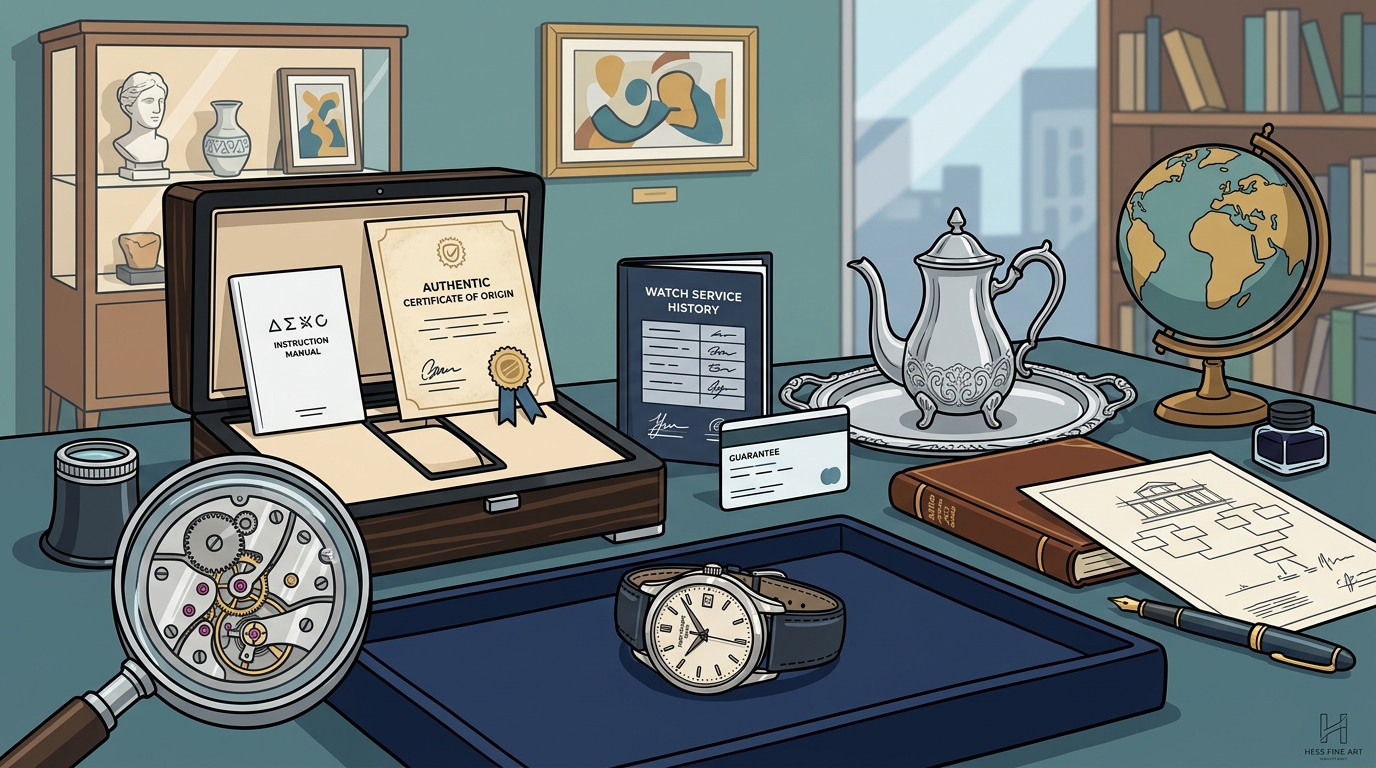
Essential Documentation Checklist
To maximize the value of your luxury items, ensure you have the following documentation ready for appraisal:
| Item Category | Required Documentation | Impact on Value |
|---|---|---|
| Luxury Watches | Original warranty card, service records, box, and manuals | High: Can increase value by 20-30% |
| Diamond Jewelry | GIA or AGS certification, original receipt | High: Essential for accurate grading |
| Fine Art | Provenance history, exhibition records, artist certificates | Medium to High: Varies by artist |
| Rare Coins | Grading service labels (PCGS/NGC), original packaging | High: Critical for numismatic value |
| Antiques | Appraisal reports, restoration history, maker's marks | Medium: Supports authenticity claims |
Key Takeaways
- Provenance is Proof: Documented history is the primary driver of value in the luxury resale market.
- Watches Need Papers: Original warranty cards and service records are essential for vintage timepieces.
- GIA Standards Apply: Diamond certification from the Gemological Institute of America is the global benchmark.
- Expert Verification: Professional appraisal by certified gemologists and watch experts ensures accurate valuation.
- Hess Fine Art Expertise: Our staff includes GIA Graduate Gemologists and leading watch authorities.
- Documentation Saves Money: Proper records prevent devaluation and speed up the selling process.
- Comprehensive Services: We buy watches, jewelry, art, coins, and antiques with a focus on accuracy.
Frequently Asked Questions
What is the most important document for selling a luxury watch?
The most important document is the original warranty card or certificate of authenticity. This document verifies the watch's model, serial number, and date of purchase. Without it, authentication becomes more difficult and may reduce the offer price.
Do I need a GIA certificate for diamond jewelry?
While not always mandatory, a GIA certificate is highly recommended for high-value diamonds. It provides an unbiased grading of the stone's quality. Items without certification may require third-party appraisal, which can delay the sale.
How does provenance affect the value of art?
Provenance establishes the history of ownership and authenticity. Art with a documented history of exhibition or notable previous owners commands a higher price. It reduces the risk of forgery for buyers.
Can I sell items without original documentation?
Yes, but the value may be lower. Professional appraisers can often authenticate items through visual inspection and expert consultation. However, having documentation makes the process faster and more profitable for the seller.
What types of coins does Hess Fine Art buy?
We buy all types of numismatics, including rare coins, gold, silver, and metal bullions. We verify the authenticity and grade of each coin to ensure fair valuation.
How do I contact Hess Fine Art for an appraisal?
You can contact us by calling 1-800-922-4377 or visiting our contact page. We offer both online and in-person appraisals for your convenience.
Is Hess Fine Art a reputable buyer?
Yes, we are one of the top buyers in the USA with the most experienced and educated staff in Florida. We are members of the National Association of Watch and Clock Collectors and the International Watch & Jewelry Guild.
Contact Hess Fine Art for Appraisal
Ready to sell your luxury items? Hess Fine Art offers fair, accurate valuations for watches, jewelry, art, and antiques. Our team of experts is ready to assist you with a professional appraisal. Contact us today to get started.