
Common Mistakes When Selling Luxury Swiss Watches and How to Avoid Them
Selling a high-value timepiece is a significant financial event that requires precision and strategic planning. According to industry data, the global luxury watch market continues to expand, with collectors increasingly seeking verified provenance and original condition for their investments. However, many sellers undermine their potential returns by making avoidable errors during the appraisal and transaction process. Understanding these pitfalls is essential for maximizing the value of your collection.
Neglecting Original Documentation and Provenance
One of the most critical errors sellers make is losing or discarding the original paperwork that accompanies their timepiece. In the world of horology, the box and papers are not merely accessories. They are the primary evidence of authenticity and ownership history. Without these documents, a watch is often classified as "unverified," which can significantly depress its market value.
Original warranty cards, service records, and even the original receipt create a complete chain of custody. Collectors pay a premium for this transparency. If you are unsure about the value of your documentation, it is wise to consult with experts who specialize in selling luxury watches to understand how these items impact your final offer.
Provenance is defined as the chronological documentation of the pedigree of a piece of art or collectible. This definition highlights why keeping every piece of paper is vital. A watch with a known history, such as one previously owned by a notable figure or with a clear lineage, commands higher interest and better pricing.
Attempting DIY Cleaning and Restoration
It is tempting to polish a watch to make it look shiny and new before selling it. This is a disastrous mistake. Over-polishing removes metal from the case, altering the original geometry and sharpness of the edges. This process is irreversible and permanently damages the watch's value.
Similarly, attempting to clean the dial or hands yourself can lead to irreversible damage. The chemicals used in household cleaners can strip the lacquer or damage the delicate hands. If your watch needs service, it is best to leave it in its current state or have it serviced by an authorized dealer who can maintain its originality.
Restoration is defined as the act of returning something to its original or a former condition. In the context of luxury watches, this term is often viewed with suspicion by collectors who prefer untouched, original surfaces. Authenticity is valued over perfection. For advice on how to handle your timepiece before an appraisal, you can explore resources on horological insights to better understand market expectations.
Choosing the Wrong Sales Platform
Not all sales channels are created equal. Selling a high-end Rolex or Patek Philippe on a general classifieds site exposes you to fraud, low-ball offers, and a lack of security. These platforms often lack the verification processes necessary for high-value transactions.
Specialized auction houses and reputable buyers offer a secure environment for transactions. They have the infrastructure to verify authenticity and provide fair market value based on current demand. For instance, Hess Fine Auctions provides a platform for selling prestigious watch collections to a targeted audience of serious collectors.
Platform liquidity refers to the ease with which an asset can be bought or sold without affecting its price. High-liquidity platforms ensure that your watch reaches the right buyers quickly. Choosing a platform with a global reach can also increase competition among buyers, driving up the final price.
Ignoring Market Trends and Brand Specifics
The luxury watch market is dynamic. Certain models appreciate in value while others depreciate. Sellers often fail to research the current market trends for their specific brand and model. For example, vintage Rolex models often have different valuation metrics compared to modern sports watches.
Understanding the specific demand for your watch is crucial. Some brands, like Patek Philippe or Audemars Piguet, have strong secondary markets. Others may have more niche appeal. Ignoring these nuances can lead to unrealistic pricing expectations and a prolonged time on the market.
Market volatility is defined as the degree of variation in the trading price of an asset over time. In the watch industry, this can be influenced by economic factors, celebrity endorsements, and brand reputation. Staying informed about these trends helps you time your sale for maximum profit. You can find more information on expert watch analysis to stay updated on these shifts.
Failing to Verify Buyer Credentials
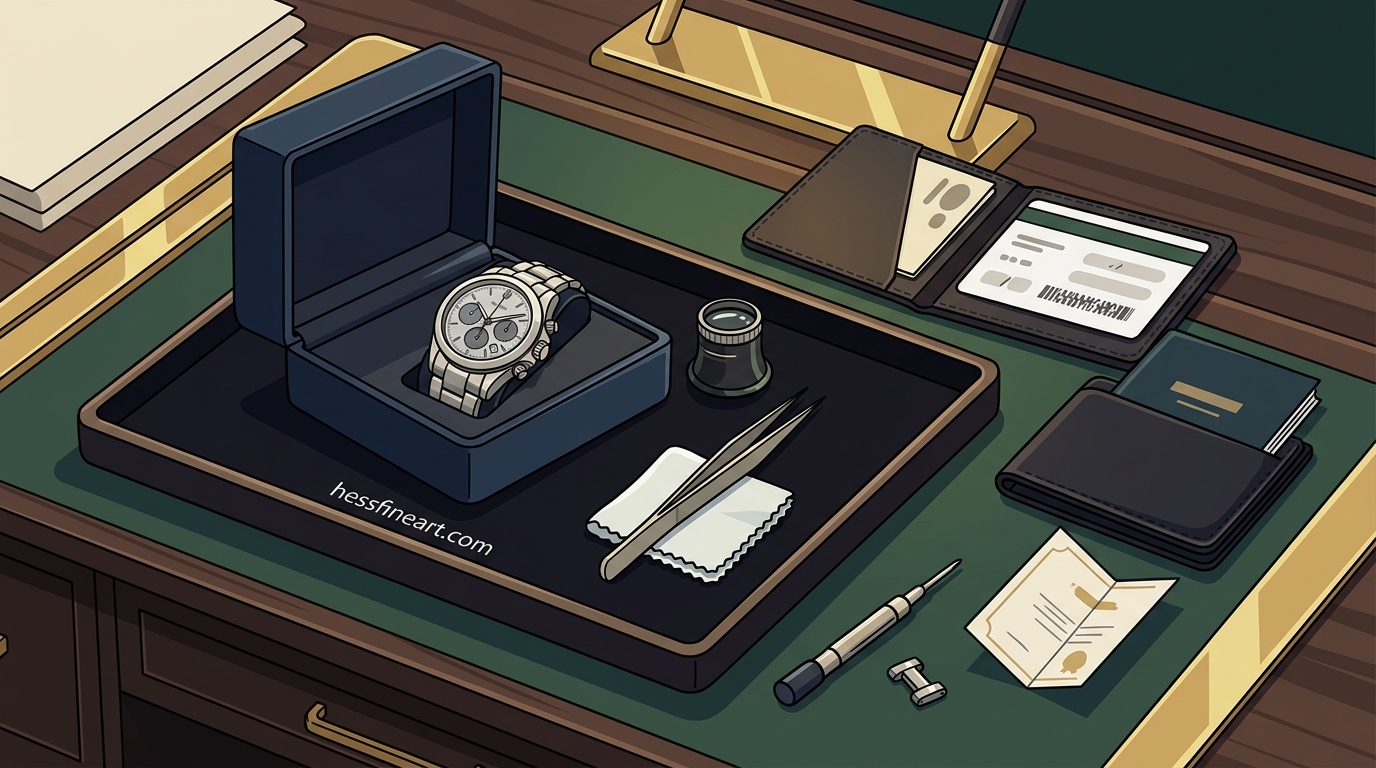
Before engaging with a buyer, it is essential to verify their reputation and credentials. The watch industry has seen its share of fraudulent operators who promise high prices but fail to deliver. Checking for professional affiliations and customer reviews is a necessary step.
Reputable buyers are often members of professional organizations such as the International Watch & Jewelry Guild (IWJG) or the National Association of Watch and Clock Collectors (NAWCC). These affiliations indicate a commitment to ethical business practices and industry standards.
Due diligence is defined as the investigation or exercise of care that a reasonable person or business is expected to take before entering into an agreement. In the context of selling watches, this means researching the buyer's history and reputation. Hess Fine Art is recognized for its experienced staff and transparent valuation processes, ensuring sellers are treated fairly.
Key Takeaways
- Always keep original boxes and papers to maximize value and prove authenticity.
- Avoid DIY cleaning or polishing to preserve the watch's original condition and integrity.
- Choose specialized auction houses or reputable buyers over general classifieds for security.
- Research current market trends for your specific brand and model to set realistic expectations.
- Verify buyer credentials through professional affiliations like IWJG or NAWCC.
- Understand that provenance and documentation are critical components of a watch's value.
- Consider the liquidity of the sales platform to ensure a timely and profitable transaction.
Frequently Asked Questions
How does original documentation affect the value of a luxury watch?
Original documentation, including warranty cards and service records, significantly increases a watch's value by providing proof of authenticity and ownership history. Collectors pay a premium for this verified provenance.
Can I polish my watch before selling it?
No, you should not polish your watch before selling it. Over-polishing removes metal and alters the case geometry, which is irreversible and reduces the watch's value. It is best to leave the watch in its original condition.
What is the best way to sell a luxury Swiss watch?
The best way to sell a luxury Swiss watch is through a reputable auction house or a specialized buyer with a global network of collectors. This ensures fair market value and security for the transaction.
Why is provenance important in watch collecting?
Provenance is important because it establishes the history and authenticity of the watch. A clear lineage can increase interest and value, especially if the watch has been owned by notable figures or has a documented service history.
How do I verify a buyer's reputation?
You can verify a buyer's reputation by checking for professional affiliations such as IWJG or NAWCC, reading customer reviews, and researching their history in the industry. Reputable buyers are transparent about their processes and valuations.
What are the most common mistakes sellers make?
Common mistakes include losing documentation, attempting DIY restoration, choosing the wrong sales platform, ignoring market trends, and failing to verify buyer credentials. Avoiding these errors can help maximize your sale price.
Ready to Sell Your Timepiece?
If you are considering selling your luxury Swiss watch, it is important to work with experts who understand the nuances of the market. Hess Fine Art offers professional appraisal and buying services for high-value timepieces. We provide fair valuations and secure transactions for your collection.
Visit our Sell to Us page to learn more about our process and get started with your sale today. Contact us to schedule a consultation and discover the true value of your investment.