
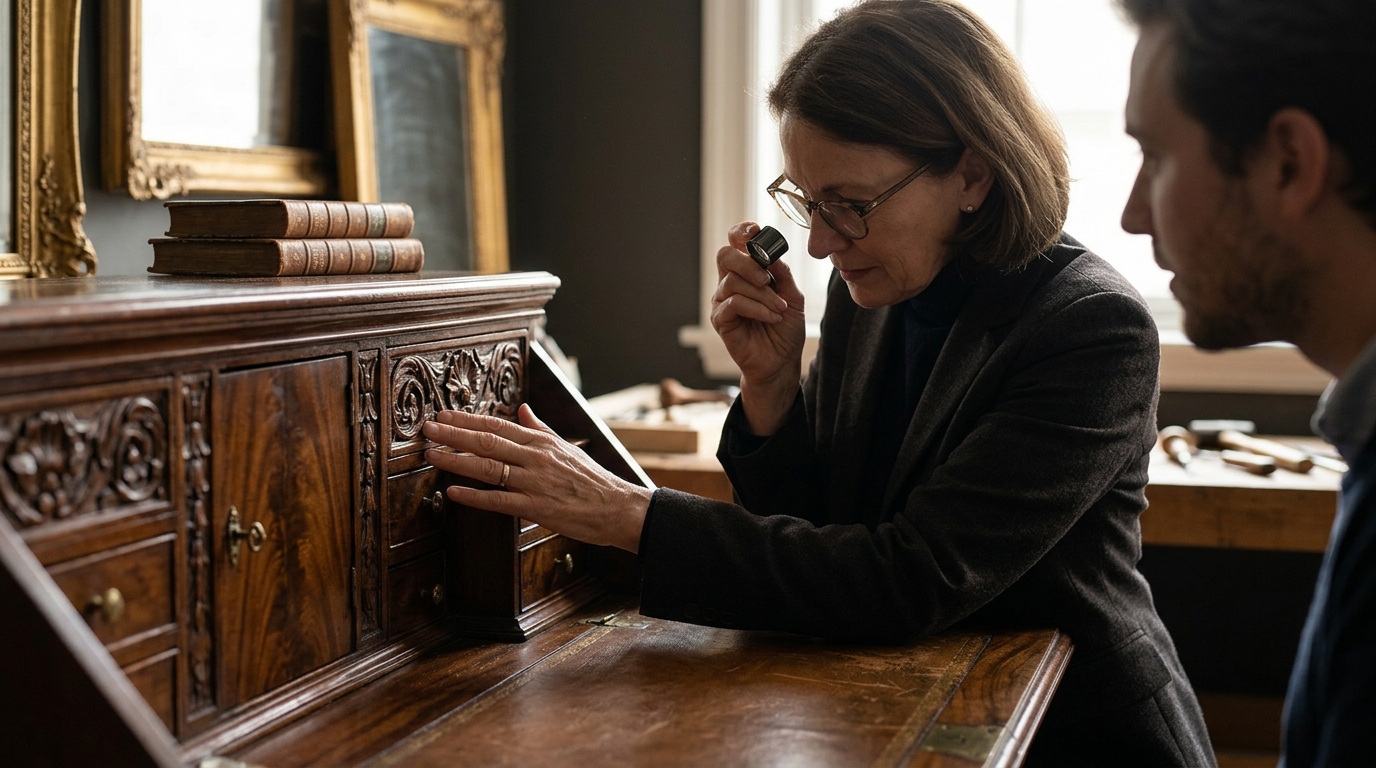
Antique furniture valuation is rarely a simple matter of age alone. While the year of manufacture provides the historical context, the actual market value is dictated by the physical state of the piece. According to industry data, condition can account for up to 70% of an antique's final appraisal value. This means that a piece from 1850 in pristine condition can be worth ten times more than an identical piece from 1880 that has suffered significant wear. Understanding these criteria is essential for collectors, estate liquidators, and anyone looking to sell high-value items. At Hess Fine Art, we evaluate thousands of pieces annually, and the difference between a low-ball offer and a premium price often lies in the specific details of the construction and preservation.
The Golden Rule: Originality vs. Restoration
Originality is the single most critical factor in antique furniture valuation. Collectors and museums prioritize pieces that retain their original components, including wood, finish, hardware, and upholstery. Any deviation from the factory state can significantly reduce value. This is not to say that restoration is always bad, but the type and extent of restoration matter immensely.
What is Originality?
Originality is the state of an antique object retaining its initial materials and construction methods as produced by the maker. It implies that the wood, joinery, and finish have not been replaced or heavily altered by subsequent owners.
When evaluating a piece, look for signs of original finish. A "patina" is the result of natural aging, oxidation, and handling over decades or centuries. This subtle sheen cannot be replicated by modern varnishes or waxes. If a piece has been stripped and refinished, it loses this historical narrative. According to historical appraisal standards, a refinished piece may retain only 40% to 60% of its original market value compared to a piece with its original surface intact.
Restoration vs. Conservation
It is important to distinguish between restoration and conservation. Restoration often aims to make a piece look new, which can erase its history. Conservation, however, focuses on stabilizing the piece and preserving its existing condition. Minor repairs, such as tightening joints or replacing a single missing screw with a period-correct equivalent, are generally acceptable. However, replacing entire legs, seats, or backs with modern wood is a major detractor. At Hess Fine Art, we advise clients to avoid aggressive refinishing before an appraisal.
Structural Integrity and Joinery
Beyond the surface, the internal structure of the furniture determines its longevity and value. Antique furniture was built using joinery techniques that have largely been abandoned in modern manufacturing. These techniques are not just functional; they are indicators of quality and age.
Joinery Techniques
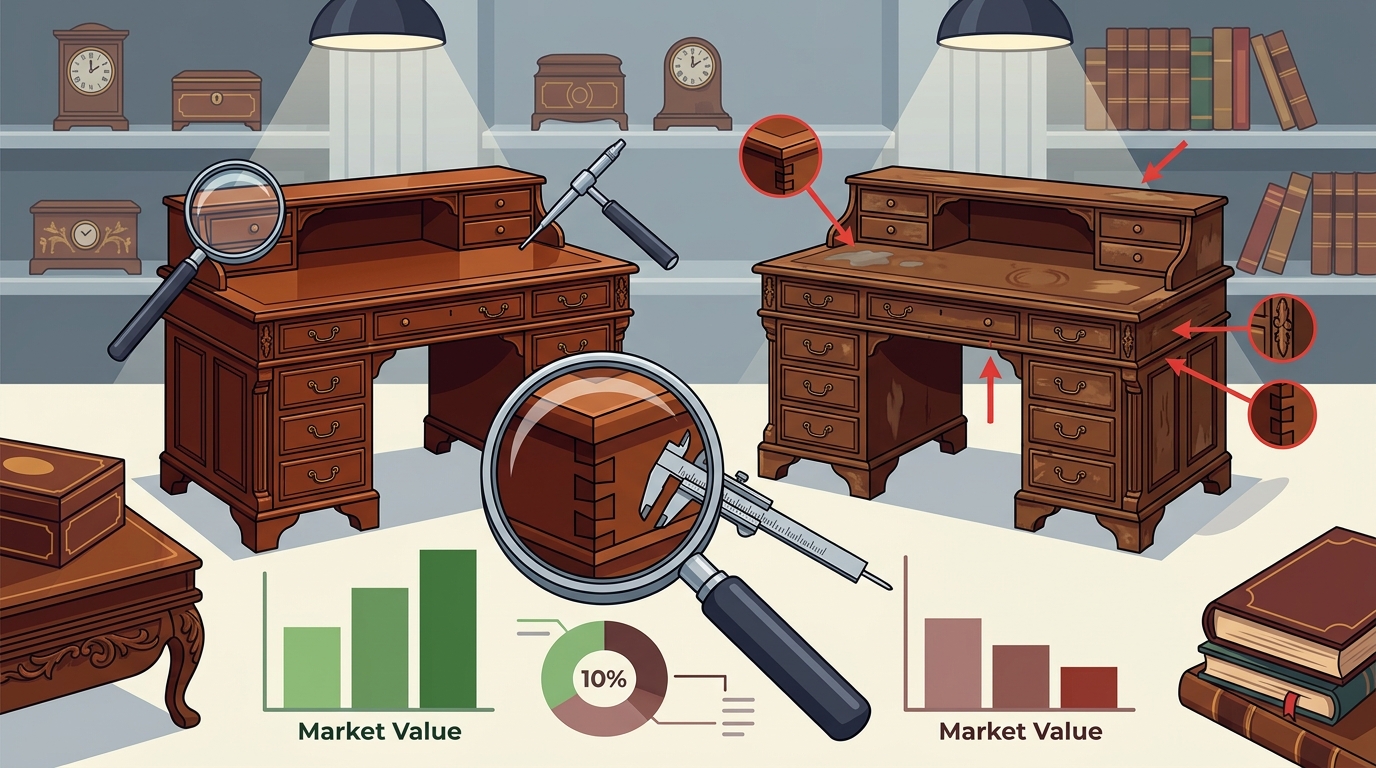
Look for dovetail joints, mortise and tenon joints, and pegged construction. Dovetail joints, where interlocking teeth fit together, are a hallmark of high-quality craftsmanship. In antique pieces, these joints are often hand-cut and may show slight irregularities, which is a sign of authenticity. Machine-cut dovetails, which are perfectly uniform, often indicate a later reproduction or a 20th-century piece. According to expert analysis on timepieces and antiques, the precision of joinery is a key diagnostic tool for dating furniture.
Stability and Wobble
A piece that wobbles or has loose joints is in poor condition. While some wobble can be tightened, it indicates that the original glue has failed or the wood has shrunk. Significant structural repairs, such as replacing the entire frame or re-gluing multiple joints, reduce value. A piece that is "tight" and solid is highly desirable. If a piece has been reinforced with modern screws or metal brackets, it is considered compromised. We recommend professional consultation for any structural concerns before selling.
Surface Patina and Finish
The surface of antique furniture tells the story of its life. Patina is the result of years of exposure to light, air, and human touch. It creates a depth and warmth that modern finishes cannot mimic. Preserving this patina is crucial for maintaining value.
Identifying Original Finish
Original finishes, such as shellac, wax, or oil, age differently than modern polyurethane. Shellac, for example, can become cloudy or develop "blush" over time. This is often seen as character rather than damage. However, if the finish is alligatored (cracked like a reptile skin) or heavily scratched, it may require professional care. According to industry guidelines, a piece with its original finish intact can command a premium of 20% to 30% over a refinished equivalent.
Damage to Surface
Water rings, burn marks, and deep scratches are common issues. Minor surface scratches can often be blended with wax sticks or touch-up markers. However, deep gouges that penetrate the wood grain require filling and staining, which is visible upon close inspection. Large areas of missing finish, especially on high-visibility surfaces like tabletops or drawer fronts, significantly lower value. If you suspect your piece has original finish, handle it with care and avoid cleaning it with harsh chemicals.
Hardware, Provenance, and Maker's Marks
Hardware includes handles, hinges, locks, and escutcheons. These small components are often made of brass, iron, or bronze and can be replaced over time. Original hardware is a significant value adder. Replacements, even if they look similar, are considered alterations.
Maker's Marks and Labels
Maker's marks are stamps, labels, or carvings that identify the craftsman or manufacturer. These marks can dramatically increase value by providing provenance. For example, a piece with a known maker's mark from a renowned cabinetmaker like Thomas Chippendale or Samuel McIntire is worth far more than an unmarked piece of similar style. According to historical records, provenance can double or triple the value of an antique.
Provenance Documentation
Provenance is the documented history of ownership. If you have receipts, photographs, or letters associated with the piece, keep them. This documentation adds credibility and value. At Hess Fine Art, we value pieces with clear provenance because they offer a complete narrative to potential buyers.
Common Damage Types and Their Impact
Understanding specific types of damage helps in assessing the overall condition. Not all damage is equal. Some issues are cosmetic, while others are structural or indicative of pest infestation.
Woodworm and Insect Damage
Small holes in the wood indicate past or present insect activity. Active infestation is a major red flag and can render a piece unsellable until treated. Historical damage that has been stabilized is less concerning but still noted. According to conservation standards, any sign of active pest damage must be addressed immediately to prevent further loss.
Upholstery and Fabric
For upholstered pieces, the condition of the fabric and padding is critical. Original upholstery is rare and highly valued if in good condition. However, most antique pieces have been reupholstered. A high-quality reupholstery using period-appropriate fabrics can maintain value. Poor quality fabric or visible padding can detract significantly. We recommend professional evaluation for upholstered antiques.
Condition Impact Summary
The table below summarizes how different condition factors impact the valuation of antique furniture. These percentages are general estimates based on market trends and appraisal data.
| Condition Factor | Impact on Value | Notes |
|---|---|---|
| Original Finish | +20% to +30% | Preserves historical integrity and patina. |
| Original Hardware | +10% to +15% | Includes hinges, locks, and handles. |
| Maker's Mark | +50% to +100% | Depends on the fame of the maker. |
| Refinished Surface | -40% to -60% | Loss of patina and original finish. |
| Structural Repairs | -20% to -40% | Loose joints or replaced components. |
| Insect Damage | -50% to -100% | Active infestation can render unsellable. |
Key Takeaways
- Originality is Paramount: Pieces with original finish, hardware, and construction command the highest prices.
- Patina Matters: The natural aging of the surface is a key indicator of authenticity and value.
- Structural Integrity: Tight joints and solid construction are essential for long-term value.
- Maker's Marks: Documented provenance and maker's marks can double or triple value.
- Avoid Aggressive Refinishing: Stripping a piece can destroy its value and historical context.
- Professional Appraisal: Get a professional opinion before selling or insuring high-value antiques.
- Documentation: Keep all receipts, photos, and history related to the piece.
Frequently Asked Questions
How does original finish affect the value of antique furniture?
Original finish can increase the value of an antique by 20% to 30% because it preserves the historical patina and integrity of the piece. Refinished pieces often lose significant value due to the loss of this original character.
What is the most important factor in antique furniture valuation?
Originality is the most important factor. This includes original wood, finish, hardware, and construction methods. Pieces that retain their original components are highly sought after by collectors and museums.
Can a refinished antique still be valuable?
Yes, but its value is typically lower than an original piece. The extent of the value loss depends on the quality of the refinishing and the rarity of the piece. High-quality refinishings can maintain some value, but the original patina is lost.
How do I know if my antique furniture has a maker's mark?
Maker's marks are often found on the back, bottom, or inside drawers. They can be stamps, labels, or carvings. Use a magnifying glass to inspect these areas. If you find a mark, it is worth researching or having it appraised professionally.
What should I do if I suspect insect damage in my antique?
If you suspect active insect damage, such as fresh holes or frass (sawdust-like residue), contact a professional immediately. Active infestation can render a piece unsellable until it is treated. Do not attempt to treat it yourself as it may damage the piece further.
Is it better to sell antique furniture online or through an auction house?
The best method depends on the value and rarity of the piece. High-value or rare items often sell better at auction or through specialized dealers like Hess Fine Art. Common items may sell well online, but the market is more competitive.
How often should antique furniture be appraised?
It is recommended to appraise valuable antiques every 5 to 10 years, or after any significant events such as inheritance, divorce, or insurance policy updates. This ensures that the value reflects current market conditions.
Get Your Professional Appraisal
Understanding the condition criteria for antique furniture valuation is the first step in protecting your investment. Whether you are looking to sell, insure, or simply appreciate your collection, expert guidance is essential. At Hess Fine Art, we offer professional appraisal services for antiques, art, and collectibles. Our team of experts can help you determine the true value of your pieces and connect you with the right buyers. Contact us today to schedule your consultation and ensure your antiques are valued correctly.