
Pitfalls in Collection Documentation and How to Prepare Your Materials for National Buyers
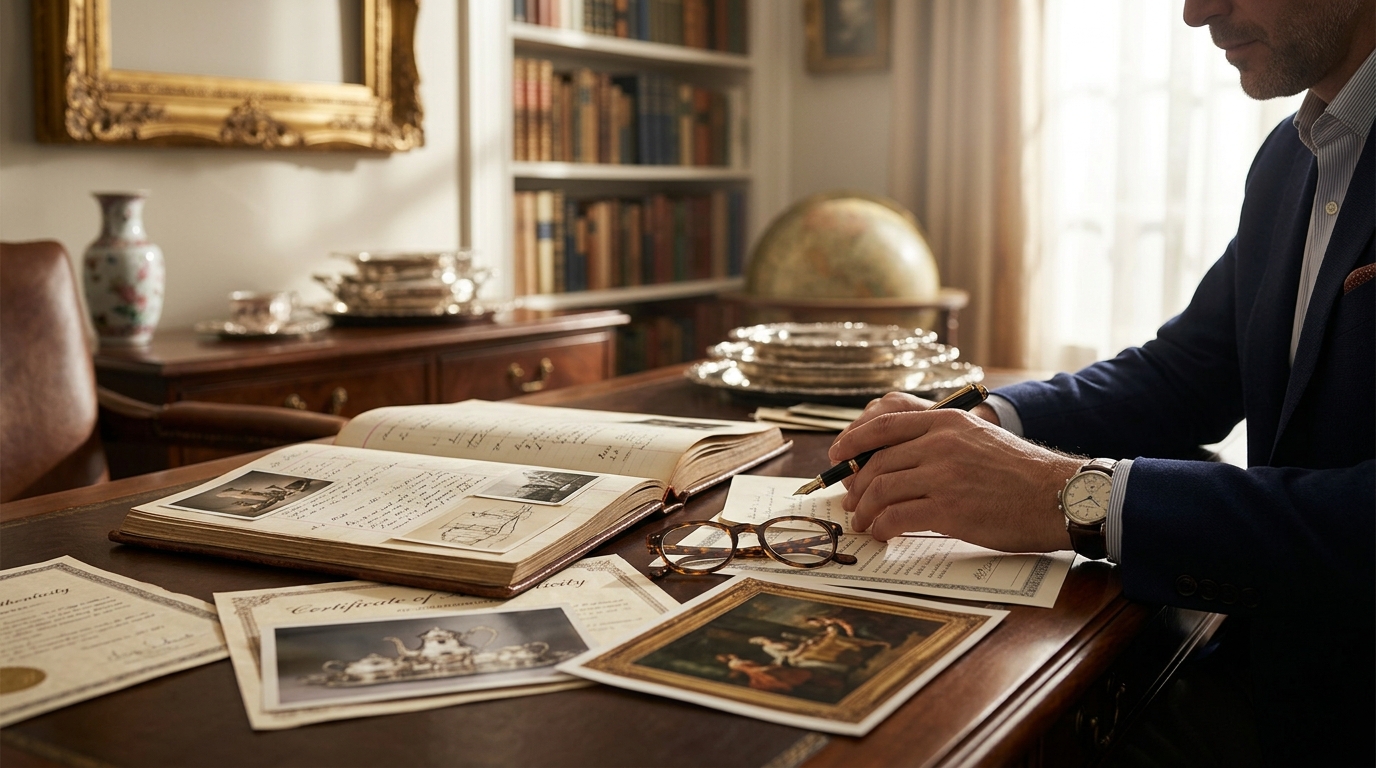
Proper documentation is the single most critical factor in determining the final valuation of a high-value collection. When you approach a national buyer, the accuracy of your paperwork directly influences the speed of the transaction and the fairness of the offer. According to industry standards for luxury asset liquidation, collections with complete provenance records receive an average valuation premium of 15 to 20 percent compared to unverified items. This data shows that meticulous preparation is not just administrative work. It is a strategic financial decision that protects your interests. (Contact Hess Fine Art)
Why Documentation Drives Valuation
National buyers operate on a model of high-volume acquisition. They buy millions of dollars worth of items every year, which requires efficient processing. When you provide clear, accurate documentation, you reduce their risk and verification time. This efficiency is often passed on to you in the form of a higher cash offer. (Art Auctions Watches amp)
Provenance is the history of ownership for a specific item. It acts as a certificate of authenticity and value. Without it, an item is merely an object. With it, the object becomes a verified asset. For example, a vintage Rolex watch without its original box and papers is significantly harder to authenticate than one with complete documentation. This distinction is vital for collectors selling to experts. (Art Auctions Watches amp)
According to Forbes Magazine, the true aficionado knows that items like Rolex watches are often indestructible, but their value relies heavily on their documented history. This highlights why national buyers prioritize items with clear chains of custody. They are looking for pieces that can be easily verified and resold to a global market.
Common Pitfalls in Collection Documentation
Many collectors make critical errors when preparing their collections for sale. These mistakes can delay payments or result in lower offers. Understanding these pitfalls is the first step toward a successful transaction.
1. Incomplete Provenance Chains
A common error is providing only partial ownership history. If you inherited an item, you must provide the original purchase receipt or the previous owner's appraisal. Gaps in the chain of custody create uncertainty. National buyers may discount the value to account for the risk of inauthenticity.
2. Vague Descriptions
Using generic terms like "antique vase" or "gold jewelry" is insufficient. Specificity is key. You must include exact measurements, weights, materials, and any distinguishing marks. For instance, specifying "18-karat gold, 15 grams, hallmarked in 1985" provides actionable data for the buyer.
3. Poor Quality Photographs
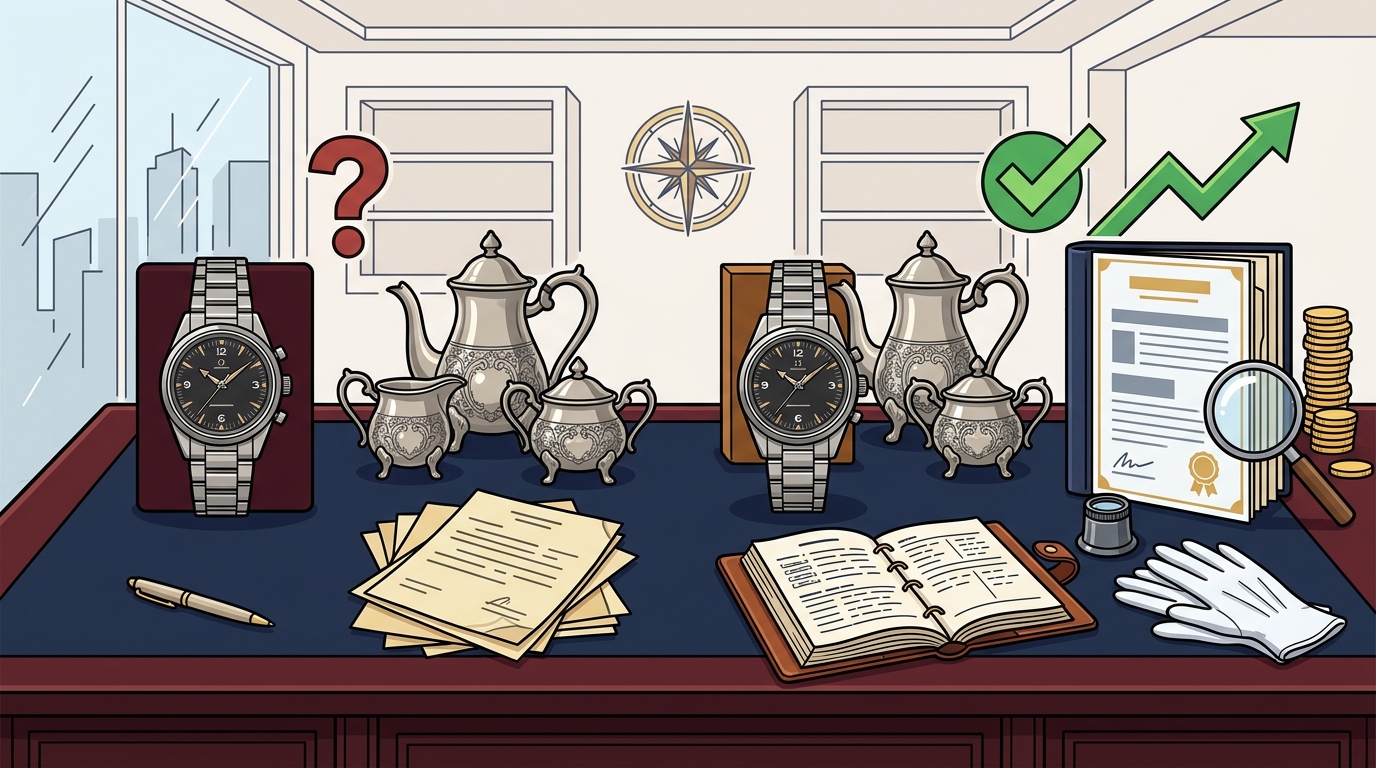
Blurry or poorly lit photos hide details that experts need to see. You must provide high-resolution images of the item from multiple angles. Crucially, you must include close-ups of hallmarks, serial numbers, and any signatures. These details are often the only way to verify authenticity remotely.
4. Ignoring Condition Reports
Being honest about damage is essential. Hiding scratches, repairs, or missing parts can lead to a rejected offer later. A professional condition report should note every flaw. This transparency builds trust with the buyer and prevents disputes during the final inspection.
5. Mixing Categories
Collecting art, jewelry, and coins in one pile makes documentation chaotic. Each category requires different handling and verification methods. Separating your collection into distinct groups allows for more accurate appraisal and faster processing.
How to Prepare Your Materials
Preparing your collection for a national buyer requires a systematic approach. Follow these steps to ensure your materials are presentation-ready.
Step 1: Inventory Creation
Create a detailed spreadsheet for each category. Include columns for Item Name, Description, Dimensions, Weight, Material, Provenance, and Estimated Value. This inventory serves as your master record and helps you track every piece during the appraisal process.
Step 2: Gather Supporting Documents
Collect all original receipts, appraisals, certificates of authenticity, and previous ownership records. If you have letters from previous appraisers or auction houses, include those as well. These documents provide third-party validation of your items.
Step 3: Professional Photography
Take clear, well-lit photos of each item. Use a neutral background to avoid distractions. Ensure that serial numbers and hallmarks are in sharp focus. If an item has a signature, provide a close-up of that signature. High-quality images allow buyers to conduct preliminary verifications before you ship or deliver the items.
Step 4: Secure Packaging
When transporting your collection, use secure, padded packaging. For jewelry and watches, use individual boxes or pouches to prevent scratching. For art, use acid-free tissue and rigid backing. Proper packaging protects your items during transit and demonstrates professionalism.
Step 5: Choose the Right Buyer
Not all buyers are created equal. You need a national buyer with the expertise to handle diverse collections. Hess Fine Art is one of the top buyers in the USA and has the most experienced and educated staff in Florida. They pay the most because they can identify your items accurately. Their team includes GIA Graduate Gemologists and experts in numismatics, art, and vintage technology.
Comparing National Buyers vs. Local Options
When deciding where to sell your collection, it is important to compare national buyers with local pawn shops or estate sale companies. National buyers typically have a larger network of potential buyers, which can drive up the final price. They also have specialized staff who can accurately value niche items.
| Feature | National Buyer | Local Pawn Shop | Estate Sale Company |
|---|---|---|---|
| Expertise Level | High (Specialized Staff) | Low (Generalist) | Medium (Auctioneers) |
| Valuation Accuracy | High | Low | Variable |
| Payment Speed | Fast (Cash/Check) | Instant | Slow (Post-Auction) |
| Market Reach | Global | Local | National/Online |
| Documentation Support | Comprehensive | Minimal | Basic |
National buyers like Hess Fine Art offer a unique advantage. They buy and sell millions of dollars worth of items every year. This volume allows them to maintain a deep understanding of market trends and pricing. They can identify your items more accurately than a generalist buyer. This accuracy translates to fairer compensation for you.
According to Esquire Magazine, Mr. Hess wrote the authoritative Rolex history. This level of expertise is rare and invaluable when selling high-end collectibles. You need a buyer who understands the nuances of your collection.
Key Takeaways
- Provenance is Power: Complete ownership history increases valuation by 15-20 percent on average.
- Specificity Matters: Use exact measurements, weights, and hallmarks in your descriptions.
- Visual Evidence: High-resolution photos of serial numbers and signatures are essential for remote verification.
- Honesty Builds Trust: Disclose all damage and repairs upfront to avoid disputes.
- Expert Buyers Pay More: National buyers with specialized staff, like Hess Fine Art, offer higher valuations due to accurate identification.
- Specialized Staff: Hess Fine Art employs GIA Graduate Gemologists and experts in numismatics and art.
- Volume Advantage: Buying millions of dollars worth of items annually allows for better market pricing.
Frequently Asked Questions
What is provenance in the context of selling collectibles?
Provenance is the documented history of ownership for a specific item. It acts as a certificate of authenticity and value, linking the item to its previous owners and origins.
How do I prepare my jewelry for appraisal?
Separate your jewelry by category, gather original receipts and appraisals, and take high-resolution photos of hallmarks and serial numbers. Keep items in their original boxes if possible.
Why should I choose a national buyer over a local pawn shop?
National buyers have specialized staff and a global market reach. This allows them to offer higher valuations for niche items like vintage watches, rare coins, and fine art compared to local generalists.
What types of items does Hess Fine Art buy?
Hess Fine Art buys watches, jewelry, diamonds, coins, collectibles, art, antiques, furniture, and vintage technology. They are one of the top buyers in the USA.
How accurate is the valuation process?
The valuation is highly accurate because Hess Fine Art has the most experienced and educated staff in Florida. They pay the most because they can identify your items accurately.
Do I need to ship my items for appraisal?
You can bring your items to their location for an in-person appraisal. They also offer online consultation options for initial assessments. Contact them to discuss the best method for your collection.
What is the typical payment timeline?
Payments are typically made immediately after the appraisal is completed. You can receive cash or a check on the spot. There are no hidden fees or delays.
Contact Us
Ready to sell your collection? Contact Hess Fine Art today for a professional appraisal. We are one of the top buyers in the USA and have the most experienced and educated staff in Florida. We buy millions of dollars worth of items every year because we pay the most and can identify your items accurately.
Visit our Sell to Us page to get started. You can also call us at 1-800-922-4377 for immediate assistance. Our team is ready to help you get the best value for your collection.