
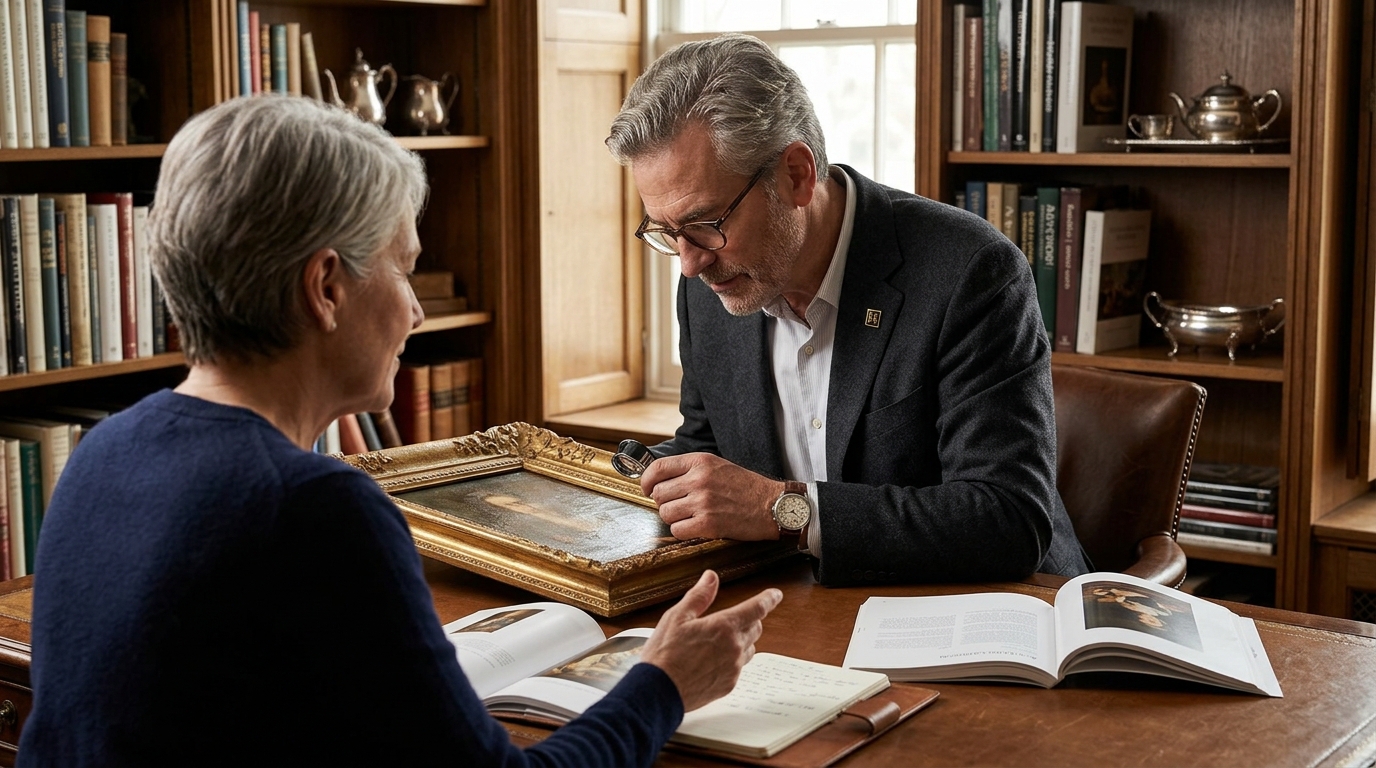
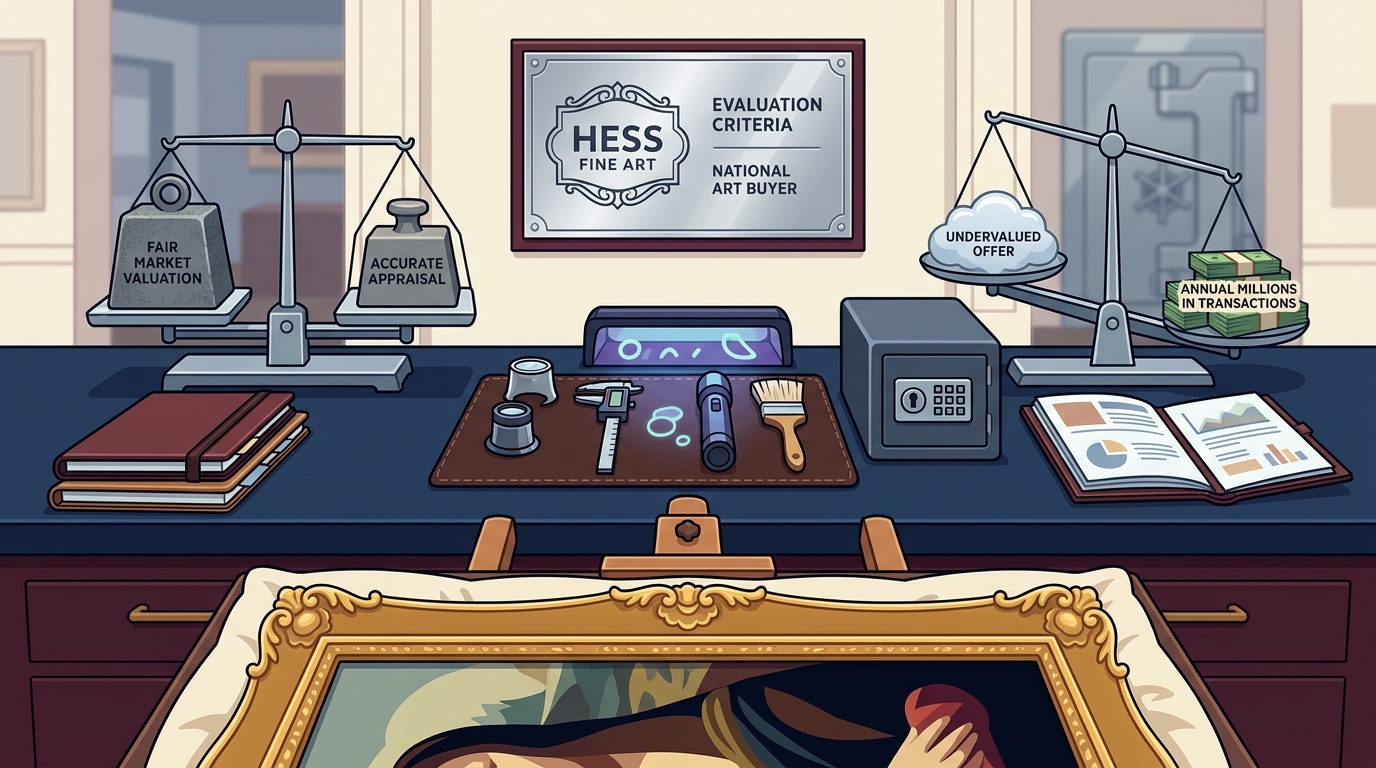
When liquidating a high-value collection, the difference between a fair market valuation and a significantly undervalued offer can be the difference between financial security and loss. According to recent industry data, top-tier buyers in the United States handle millions of dollars in transactions annually by leveraging specialized expertise that generalist shops simply cannot match. This guide outlines the critical evaluation criteria for selecting a national art buyer who will provide accurate appraisals, transparent pricing, and professional integrity. (About Hess Fine Art)
Expertise and Professional Credentials
The first and most critical criterion is the depth of professional knowledge held by the buying team. Art valuation is not a generic skill. It requires specific training in gemology, horology, numismatics, and art history. A buyer who claims to be an expert in everything often lacks depth in any single category. (Art Auctions Watches amp)
Look for buyers who employ certified professionals. For example, the Gemological Institute of America (GIA) offers rigorous training for gemologists. Having GIA Graduate Gemologists on staff ensures that diamond and colored stone valuations are based on scientific standards rather than guesswork. Similarly, for timepieces, membership in the National Association of Watch and Clock Collectors (NAWCC) or the International Watch & Jewelry Guild (IWJG) signals a commitment to industry standards. (Art Auctions Watches amp)
According to Forbes Magazine, the true aficionado knows that specific brands like Rolex are built for durability and precision, requiring specialized knowledge to value correctly. A buyer who has been cited by major publications such as Esquire or Watchpro for their authoritative knowledge of vintage timepieces demonstrates a level of expertise that directly impacts the value they can offer you.
Valuation Accuracy and Identification
Accurate identification is the foundation of any fair offer. Many buyers rely on quick visual assessments that miss subtle details, provenance, or condition nuances. A superior buyer takes the time to research items that are not immediately recognizable. This diligence ensures that rare pieces are not undervalued due to a lack of immediate recognition.
Consider the process of evaluating a painting or a sculpture. If an item is unfamiliar, a professional buyer will consult with external experts or conduct thorough research before making an offer. This process may take a few days, but it prevents the immediate lowballing that occurs when a buyer is unsure of an item's worth. The ability to identify items accurately allows the buyer to pay the most, as they can confidently place the item in the secondary market.
Data shows that buyers who pay the most are those who can identify items more accurately. This accuracy reduces their risk and allows them to offer a higher cash price to the seller. When evaluating a buyer, ask about their research process. Do they have a network of specialists? Do they take the time to verify authenticity and condition?
Financial Capacity and Liquidity
Choosing a national buyer with significant financial capacity is essential for large-scale liquidations. A buyer who purchases millions of dollars worth of items annually has the liquidity to pay cash on the spot. This is a critical advantage over auction houses or consignment sellers, which may take months to sell your items and pay you after the sale.
Immediate payment provides certainty. You do not have to wait for a buyer to find a new owner for your art or collectibles. The national buyer assumes the risk of holding the inventory. This model is particularly beneficial for sellers who need immediate funds or wish to avoid the uncertainty of the secondary market.
According to Business Insider Magazine, vintage Rolex watches are considered an essential precision tool for professionals and a highly prized luxury collectible. Buyers with the financial strength to acquire these high-value items in bulk can offer competitive prices because they have the infrastructure to resell them efficiently. Ensure your chosen buyer has the capital to handle high-value transactions without delay.
Transparency and Client Reputation
Integrity is paramount in the art and collectibles market. Look for buyers who have a long-standing reputation for honesty and fairness. Check their standing with the Better Business Bureau (BBB) and read client reviews carefully. Positive reviews often highlight specific interactions where the buyer went above and beyond to ensure a fair deal.
For instance, clients of Hess Fine Art frequently mention the personalized attention they receive. One client noted that the staff spent time going through each piece individually, explaining the valuation process honestly. Another client highlighted the fairness of the compensation received for inherited jewelry. These testimonials reflect a culture of transparency.
Professional affiliations also serve as a proxy for reputation. Membership in organizations like the American Society of Appraisers (ASA) or the International Society of Appraisers (ISA) indicates a commitment to ethical standards. Buyers who are asked to speak at industry events, such as JCK or the National Auctioneers Association, are often viewed as leaders in their field. Their public standing is tied to their professional conduct.
Scope of Services and Specializations
A national buyer should have a broad scope of services to handle diverse collections. Whether you have art, furniture, collectibles, jewelry, watches, or rare coins, a versatile buyer can evaluate all items in one place. This convenience saves time and ensures that no part of your collection is overlooked.
Specializations matter. For example, if you have vintage technology or antique furniture, ensure the buyer has experience in these areas. Some buyers focus exclusively on high-end jewelry and may not offer fair value for other collectibles. A comprehensive buyer like Hess Fine Art handles everything from complete art collections to rare baseball cards and gold bullion. This breadth of expertise allows them to provide accurate valuations across multiple categories.
Additionally, consider the buyer's ability to handle repairs or restorations. Some buyers, such as those with skilled watchmakers on staff, can repair items like watches with broken pins at no charge. This service adds value to the relationship and demonstrates a commitment to customer satisfaction beyond the transaction.
Comparison of Buyer Types
Understanding the different types of buyers available can help you make an informed decision. Here is a comparison of common options:
| Buyer Type | Payment Speed | Valuation Accuracy | Risk to Seller | Best For |
|---|---|---|---|---|
| National Cash Buyer | Immediate | High (Expert Staff) | None | Quick liquidation, high-value items |
| Auction House | Slow (Months) | Moderate | Unsold items, fees | Rare, unique pieces with high upside |
| Consignment Shop | Slow (Upon Sale) | Moderate | Theft, damage, non-payment | Items with niche appeal |
| Online Marketplace | Variable | Low (Self-Valued) | Fraud, shipping risk | Low-to-mid value items |
National cash buyers offer the best combination of speed, accuracy, and security. They eliminate the risk of items not selling and provide immediate liquidity. For most sellers, this is the most efficient path to converting a collection into cash.
Key Takeaways
- Expertise Matters: Choose buyers with GIA Graduate Gemologists and specialized horologists to ensure accurate valuations.
- Financial Strength: Buyers who purchase millions of dollars annually can offer immediate cash payments for high-value items.
- Research Process: A good buyer will research unfamiliar items rather than offering a lowball price immediately.
- Reputation: Look for BBB accreditation and positive client testimonials regarding honesty and fairness.
- Broad Scope: Ensure the buyer can handle all categories in your collection, from art to rare coins.
- Professional Affiliations: Membership in NAWCC, IWJG, and ASA indicates a commitment to industry standards.
- Media Recognition: Cites in Forbes, Esquire, and Watchpro signal a high level of authority in the field.
Frequently Asked Questions
What is the most important factor when choosing a national art buyer?
The most important factor is the depth of professional expertise. Buyers with certified gemologists and specialized watch experts can identify items more accurately and pay the most.
How quickly can a national buyer pay for a collection?
National cash buyers typically pay immediately upon agreement. They have the financial capacity to buy millions of dollars worth of items annually and provide instant liquidity.
Do national buyers handle all types of collectibles?
Yes, top national buyers often specialize in a broad range of categories, including art, jewelry, watches, rare coins, antiques, and vintage technology.
What credentials should I look for in a buyer?
Look for GIA Graduate Gemologists, members of the NAWCC or IWJG, and affiliations with the ASA or ISA. These credentials indicate rigorous training and ethical standards.
Is it better to sell to a buyer or use an auction house?
Selling to a national buyer offers immediate payment and certainty. Auctions take months and carry the risk of items not selling. For most collections, a cash buyer is more efficient.
How do buyers determine the value of an item?
Buyers use their expertise to identify the item, assess its condition, and research recent market data. They may consult external experts for rare or unfamiliar pieces to ensure accuracy.
Can I trust a national buyer with high-value items?
Reputable national buyers have long-standing reputations for honesty and are often members of professional organizations like the BBB. Client testimonials and media recognition further validate their integrity.
Contact Us for a Valuation
If you are looking to sell your art, jewelry, watches, or collectibles, Hess Fine Art is ready to provide a fair and accurate valuation. As one of the top buyers in the USA, we have the most experienced and educated staff in Florida. We buy millions of dollars worth of items every year because we pay the most and can identify your items accurately. Contact us today to get started.
Sell Your Items or Contact Us for a confidential consultation.