
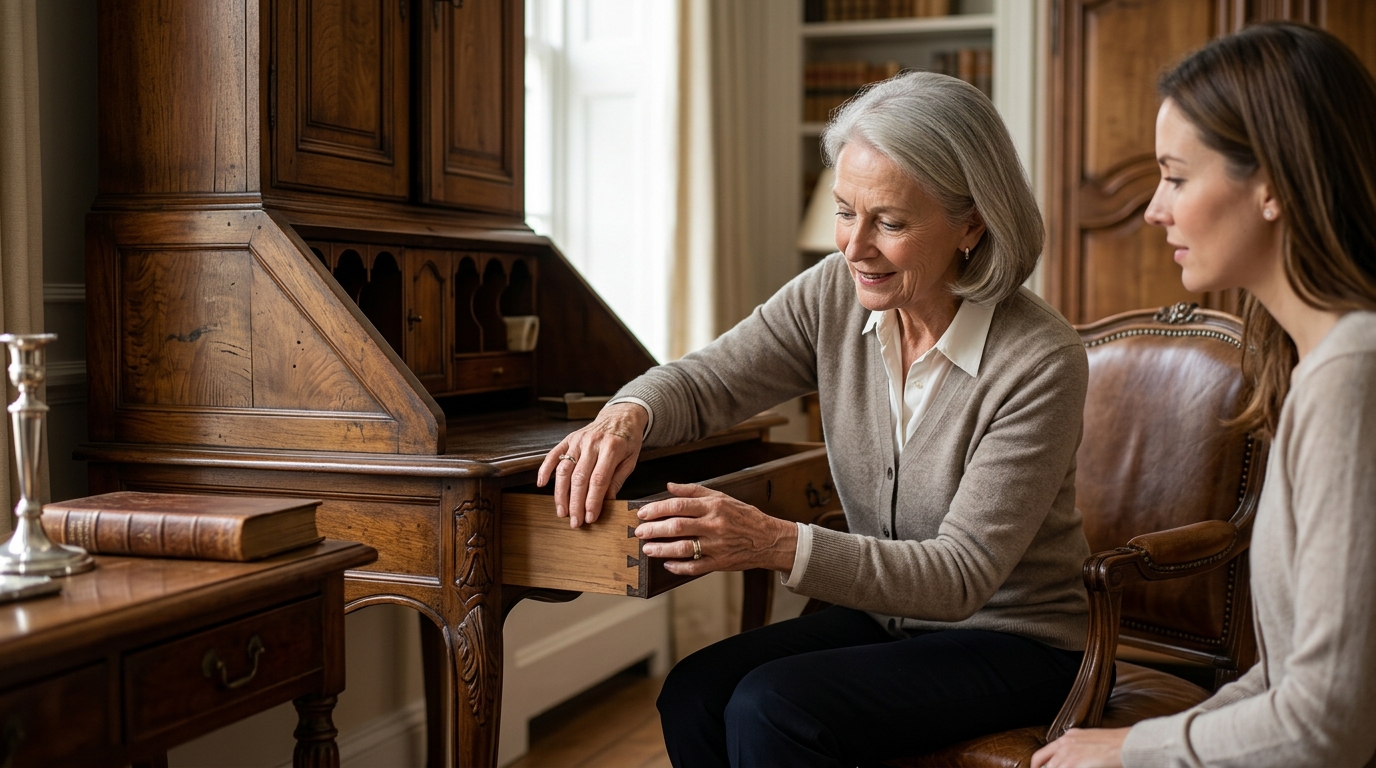
Antique furniture valuation is a discipline where precision separates professional appraisers from casual observers. According to industry data, nearly 40% of estate liquidations suffer from significant undervaluation due to superficial inspection methods. This statistic highlights a critical gap in how collectors and sellers approach high-value assets. When you bring a piece to a specialist, the goal is to uncover the true market value, not just a generic estimate. At Hess Fine Art, we see this error play out repeatedly. Owners often focus on the visual appeal of a sofa or the grandeur of a dining table while ignoring the structural and provenance details that drive actual worth. Understanding these pitfalls is essential for anyone looking to sell, trade, or insure their collection. This guide outlines the five most common assessment errors and provides the expert framework needed to avoid them.
The Provenance Blind Spot
Provenance is the documented history of ownership for a specific item. It is not merely a nice-to-have detail but a primary driver of value. Many sellers assume that age alone dictates price. This is a fundamental misconception. A piece of furniture with a documented lineage to a notable historical figure or a prestigious estate commands a premium that an identical, undocumented piece cannot match. For example, a mahogany desk from the 18th century might be valued at $5,000 if its history is unknown. However, if it can be traced to a specific colonial home or a famous collector, its value could skyrocket to $50,000 or more. The lack of documentation is a critical error because it leaves the appraiser to guess the context. Without proof, the item is treated as a generic antique rather than a unique historical artifact. Hess Fine Art specializes in identifying these hidden histories. Our team often uncovers provenance through archival research, connecting physical items to historical records. This process transforms a simple furniture sale into a narrative-driven transaction. When you sell to us, we prioritize this research to ensure you receive the maximum possible return. Ignoring provenance is like selling a painting without its certificate of authenticity. It strips the item of its story and, consequently, its financial potential.
Misidentifying Wood Species
One of the most frequent errors in antique assessment is the misidentification of wood species. Collectors often assume that all dark wood is mahogany or that all light wood is oak. This is incorrect. The specific type of wood, its grain pattern, and its density are crucial for accurate valuation. For instance, rosewood and ebony are significantly rarer and more valuable than standard walnut or cherry. Misidentifying these materials leads to massive pricing discrepancies. A piece made of genuine rosewood might be worth ten times more than a similar piece made of stained oak. Experts look for specific grain patterns, color variations, and even the scent of the wood when freshly cut or sanded. At Hess Fine Art, our staff includes highly educated specialists who can distinguish between these materials with precision. We understand that antique furniture valuation requires a deep knowledge of botanical history and woodworking techniques. When you visit our team, you benefit from this specialized knowledge. We do not rely on surface appearances. We examine the joinery, the tool marks, and the wood grain to determine the true material composition. This accuracy ensures that you are not underselling a rare piece or overpaying for a common one. Understanding the wood is the first step in understanding the value.
Ignoring Structural Integrity
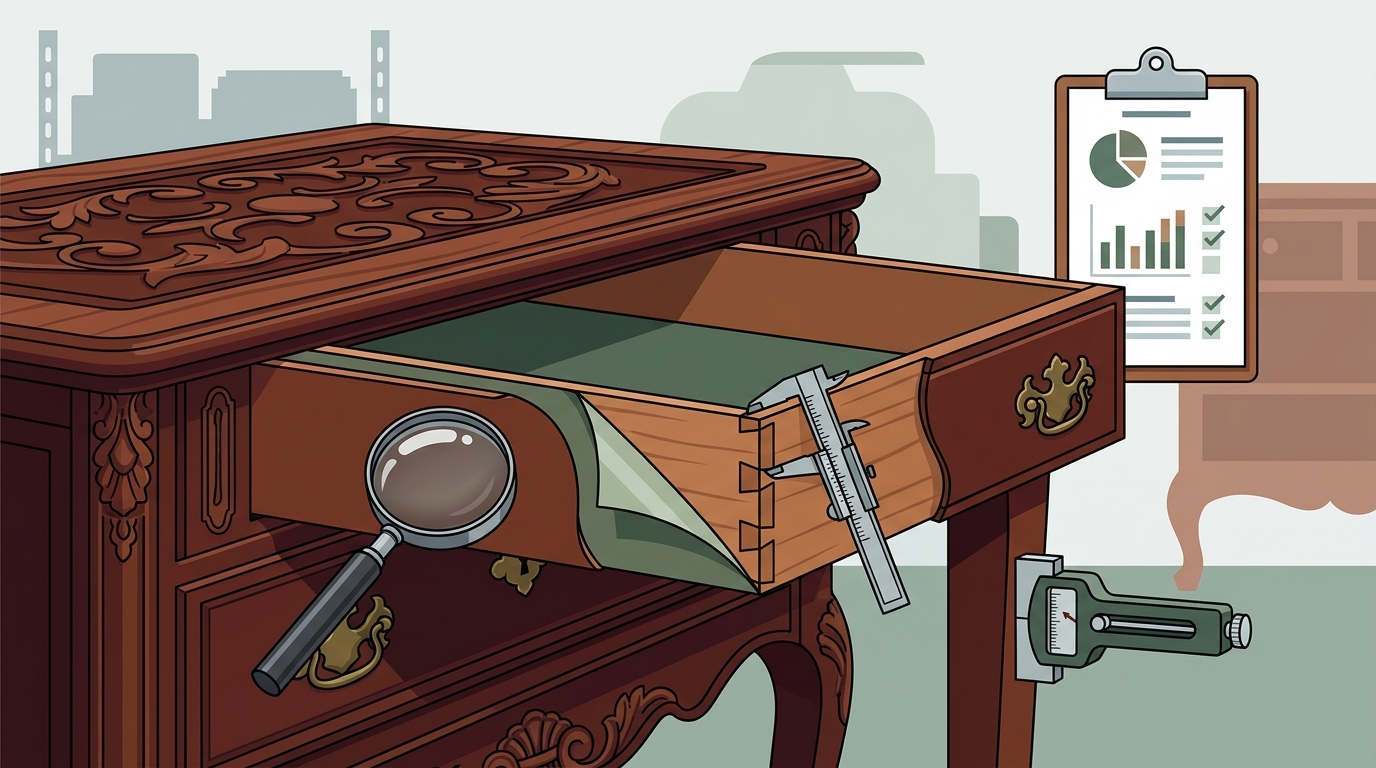
Structural integrity is often overlooked by sellers who focus solely on cosmetic condition. A chair may look beautiful with its original upholstery, but if the frame is loose or the joints are failing, its value drops significantly. This is a critical error because structural repairs can be costly and may require specialized craftsmen. Appraisers look for signs of stress, such as cracked mortise and tenon joints, warped legs, or loose dovetail drawers. These issues indicate that the piece has suffered from environmental changes or heavy use. While some wear is expected in antiques, excessive structural damage can render a piece unrepairable or prohibitively expensive to fix. For example, a Chippendale chair with a broken cabriole leg might lose 30% of its value immediately. The cost of restoring the leg to match the original grain and finish is high. At Hess Fine Art, we assess both the aesthetic and the structural aspects of every item. We understand that fine art and antiques must be preserved for future generations. This means evaluating the long-term viability of the piece. When you sell your items to us, we provide a fair assessment that accounts for necessary repairs. We do not penalize you for honest wear, but we do account for significant structural deficits. This transparency ensures that the transaction is fair for both parties. Ignoring structural integrity is a gamble that rarely pays off in the antique market.
Overlooking Maker's Marks
Maker's marks are the signatures, stamps, or labels left by the original craftsman or furniture maker. These marks are like fingerprints for antique furniture. They provide definitive proof of origin and can dramatically increase value. Many sellers overlook these marks because they are hidden under upholstery, inside drawers, or on the back of a piece. This is a costly mistake. A piece of furniture with a known maker's mark, such as those from Thomas Chippendale, Samuel McIntire, or Gustav Stickley, can be worth multiples of an identical piece without a mark. These marks connect the item to a specific period, style, and geographic location. For example, a Stickley Craftsman chair with its original label is a highly sought-after collectible. Without the label, it is just a vintage chair. At Hess Fine Art, we have the expertise to locate and interpret these marks. Our team is trained to look in the most likely hiding spots. We understand that antique furniture valuation is as much about history as it is about aesthetics. When you consult with us, we will search for these marks meticulously. We also have access to extensive databases of maker's marks to verify authenticity. This level of detail ensures that you are not leaving money on the table. Overlooking maker's marks is like ignoring the signature on a painting. It is a fundamental error that diminishes the item's historical and financial significance.
Confusing Restoration with Restoration
Not all restoration is created equal. In fact, the type of restoration can either preserve or destroy value. This is a nuanced area where many sellers make critical errors. There is a significant difference between conservation and restoration. Conservation aims to stabilize the piece while preserving as much original material as possible. Restoration often involves replacing parts or refinishing the entire piece to make it look new. For high-value antiques, excessive restoration can drastically reduce value. A piece that has been completely refinished loses its original patina, which is a key indicator of age and authenticity. Collectors value the original finish, even if it is worn. Refinishing it to look brand new is often seen as a detriment. Similarly, replacing original hardware with reproductions can lower the value. At Hess Fine Art, we emphasize the importance of originality. We understand that antique furniture valuation depends heavily on the preservation of original materials. When you sell to us, we assess the extent of any previous work. We can identify modern repairs and refinishing that might not be obvious to the untrained eye. This expertise allows us to provide a more accurate valuation. We also offer guidance on how to maintain your pieces to preserve their value. Understanding the impact of restoration is essential for any serious collector. Ignoring this distinction can lead to significant financial loss.
Comparative Valuation Factors
To better understand how these errors impact value, consider the following comparison of common assessment scenarios. This table illustrates how attention to detail can change the outcome of an appraisal.
| Assessment Factor | Common Error | Expert Approach | Impact on Value |
|---|---|---|---|
| Provenance | Assuming age is enough | Documented lineage verification | High (Up to 10x multiplier) |
| Wood Species | Misidentifying rare woods | Grain and density analysis | Medium to High (2x-5x difference) |
| Structural Integrity | Ignoring loose joints | Stress and joinery inspection | Medium (10-30% reduction) |
| Maker's Marks | Overlooking hidden stamps | Targeted search and database check | Very High (Collector premium) |
| Restoration | Valuing refinished pieces highly | Patina and original material assessment | High (Originality premium) |
Key Takeaways
- Provenance is a primary value driver, not just a historical footnote.
- Misidentifying wood species can lead to massive undervaluation of rare pieces.
- Structural integrity must be assessed alongside cosmetic condition.
- Maker's marks provide definitive proof of origin and can multiply value.
- Excessive restoration often reduces the value of high-end antiques.
- Expert assessment requires specialized knowledge of materials and history.
- Hess Fine Art offers comprehensive appraisal services for accurate valuation.
Frequently Asked Questions
How does provenance affect the value of antique furniture?
Provenance can increase the value of antique furniture by providing documented proof of ownership history. Items with a known lineage to notable figures or estates often command significantly higher prices than undocumented pieces. This historical context adds a layer of uniqueness that collectors are willing to pay a premium for.
What is the difference between conservation and restoration?
Conservation focuses on stabilizing the piece while preserving original materials and patina. Restoration often involves replacing parts or refinishing to make the item look new. For high-value antiques, conservation is generally preferred as it maintains the item's historical integrity.
Why is identifying wood species important in appraisal?
Identifying wood species is crucial because rare woods like rosewood or ebony are worth significantly more than common woods like oak or cherry. Misidentification can lead to severe undervaluation. Experts use grain patterns, density, and other physical characteristics to determine the correct species.
Can hidden maker's marks be found without professional help?
While some marks are visible, many are hidden under upholstery, inside drawers, or on the back of pieces. Professional appraisers know exactly where to look and have access to databases to verify these marks. Finding a maker's mark can dramatically increase the value of a piece.
How does structural damage impact antique furniture value?
Structural damage, such as loose joints or cracked frames, can reduce the value of antique furniture by 10% to 30% or more. The cost of professional repair must be factored into the valuation. Severe structural issues can render a piece unrepairable or prohibitively expensive to fix.
What role does patina play in antique valuation?
Patina is the natural surface change that occurs over time due to use and exposure. It is highly valued by collectors as it indicates authenticity and age. Refinishing a piece to remove the patina can significantly reduce its value. Experts look for original patina as a key indicator of quality.
Ready to Evaluate Your Collection?
Do not let overlooked assessment errors diminish the value of your antique furniture. Whether you are looking to sell, trade, or simply understand the worth of your collection, expert guidance is essential. Hess Fine Art offers comprehensive appraisal services with a team of highly educated specialists. We combine historical research with material science to provide accurate valuations. Contact us today to schedule your consultation. Visit our contact page to get started. Or call 1-800-922-4377 for immediate assistance. Trust the experts who have bought and sold millions of dollars worth of fine art and antiques. Your collection deserves the best possible assessment.